

Piggery Biogas Plants are becoming increasingly important for clean, sustainable pig farming as the livestock sector continues to grow. Pig farms generate large quantities of organic waste that, if not managed properly, can cause foul odour, water pollution, and serious health risks for workers and nearby communities. Traditional waste disposal methods often fail to overcome these challenges effectively.
What are Piggery Biogas Plants?
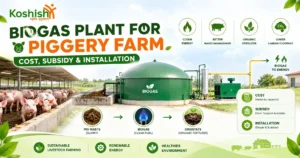
A Piggery Biogas Plants uses anaerobic digestion to convert pig manure and organic farm waste into biogas and nutrient-rich slurry. The biogas produced mainly consists of methane and carbon dioxide and can be used for electricity generation, heating, or as vehicle fuel. The leftover digestate works as a natural fertilizer for crops.
The system works by feeding waste into an airtight tank, where microorganisms break it down in the absence of oxygen. This process produces clean energy while improving waste management, reducing harmful emissions, and maintaining better hygiene on pig farms.
Piggery Biogas Plants are often integrated with pig housing, creating an efficient cycle of energy and nutrient reuse.
Pig Farm Owners Adopting Biogas Technology
As we already know, biogas technology is being adopted worldwide, especially in areas with large-scale farming and livestock. Since a large amount of organic waste is being collected from there, biogas is generated.
Pig farming generates large amounts of organic waste, including manure and wastewater, which, if not managed properly, can lead to serious environmental and health issues such as foul odour, groundwater contamination, and the spread of diseases. To address these challenges, an increasing number of pig farm owners are adopting biogas technology as a sustainable and cost-effective waste management solution.
By installing biogas plants, pig farm owners can convert pig manure into biogas through anaerobic digestion. The biogas produced is rich in methane and can be used for cooking, heating, electricity generation, or even to run farm machinery. This significantly reduces dependence on conventional fuels such as LPG, diesel, and grid electricity, leading to long-term operational cost savings for farms.
In addition to energy generation, biogas plants help in effective manure management. The digestion process reduces pathogens and odour, creating a cleaner and healthier farm environment. The leftover by-product, known as digestate or bio-slurry, is a nutrient-rich organic fertiliser that can be used on agricultural fields, improving soil health and reducing the need for chemical fertilisers.
From an environmental perspective, adopting biogas helps pig farms reduce their carbon footprint by capturing methane emissions that would otherwise escape into the atmosphere. It also prevents water pollution from untreated waste discharges, making pig farming more compliant with environmental regulations.
High Methane Potential of Pig Manure
The Organic waste from Pigs is said to be very high in methane, and the manure range also comes good. Due to its rich organic content, it makes an excellent support for the anaerobic digestion to produce Pig waste Biogas.
Why Does Pig Waste Have High Potential?
It is said Poultry Litter has the richest and highest potential of generating Methane Gas, after that Biogas from pig manure is rated, and why it has high potential, is as follows:
- Contains High Organic Content: The Pig manure or waste contains degradable matter that is easily digestible; the microbes easily can easily break it down and convert it into methane gas.
- Volatile Solids (VS): The methane gas is measured per gram of Volatile Solids, since piggery waste is rich in volatile solids.
- Contains Lipid: The higher lipid content generally correlates with higher methane production.
Odor, Waste, and Pollution Control Benefits of Piggery Biogas Plants in Farms
Piggery farms are often associated with strong odour, unmanaged waste, and environmental pollution due to the large volume of manure generated daily. Installing a biogas plant offers an effective, sustainable solution to address these challenges and improve overall farm operations.
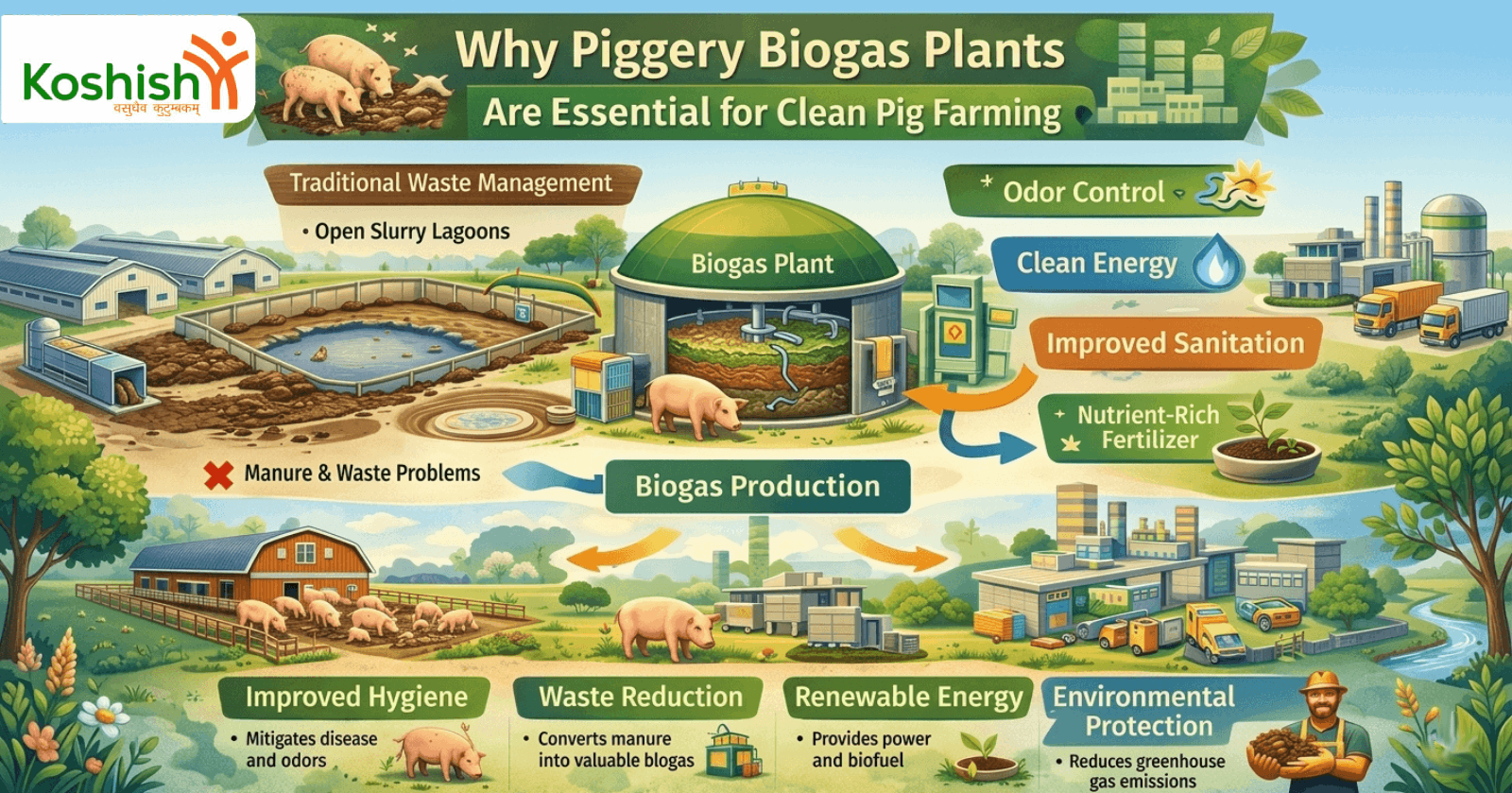
Odour Control: One of the most immediate benefits of a biogas plant at a piggery farm is a significant reduction in odour. During anaerobic digestion, volatile organic compounds and foul-smelling gases present in raw pig manure are broken down. As a result, the digestate released after biogas production is almost odorless compared to untreated manure, creating a cleaner and more acceptable working environment for farm workers and nearby communities.
Waste Management: Biogas plants convert pig manure into useful energy, eliminating the need for open dumping or uncontrolled waste storage. The digestion process stabilises organic matter, reduces pathogens, and minimises fly and pest breeding. This ensures hygienic waste handling and reduces the risk of disease outbreaks within the farm.
Pollution Control: Untreated pig waste biogas can contaminate soil and water bodies through runoff and leaching. A biogas plant prevents such pollution by safely processing manure in a closed system. It also captures methane, a potent greenhouse gas, thereby reducing air pollution and greenhouse gas emissions. Additionally, the treated slurry can be safely reused as an organic fertiliser without harming the environment.
What are the Biogas Plant Installation Requirements in a Piggery Farm?
Installing a biogas plant in a piggery farm requires careful planning to ensure efficient operation, safety, and long-term performance. The key plant installation requirements are outlined below:
- Availability of Feedstock (Pig Manure): A consistent and sufficient supply of pig manure is essential. The number of pigs, daily manure generation, and moisture content determine the size of the biogas plant and the digester capacity.
- Adequate Space: Sufficient land area is required for the digester, slurry mixing tank, gas holder, pipelines, generator (if power is generated), and slurry storage pits. The site should be easily accessible for operation and maintenance.
- Water Supply: Water is required to mix with pig manure to form a uniform slurry. A reliable water source ensures smooth digestion and prevents operational issues.
- Proper Site Selection: The biogas plant should be installed near pig sheds to reduce manure-handling costs while remaining a safe distance from residential areas. The site must have good drainage and should not be flood-prone.
- Temperature Conditions: naerobic digestion performs best in a stable temperature range. In most Indian climatic conditions, underground digesters are preferred to maintain consistent temperature for optimal biogas production.
- Gas Utilization System: Depending on the application, proper infrastructure is needed for gas usage—such as burners for cooking, boilers, biogas engines, or generators for electricity production.
- Slurry Handling and Storage: Provision must be made for the safe collection, storage, and utilization of digested slurry as organic manure. Proper slurry pits or composting areas are recommended.
- Skilled Operation and Maintenance: Basic training for operators is required to handle daily feeding, monitor gas production, check pipelines, and maintain safety systems.
- Safety Measures: Gas pipelines, valves, pressure relief systems, and flame arresters must be installed to prevent leaks and accidents.
By meeting these installation requirements, piggery farm owners can ensure smooth biogas plant operation, maximum energy recovery, and effective waste and pollution control.
Wrapping Up
Installing a biogas plant in a piggery farm is a practical and sustainable solution to address the persistent challenges of odour, waste accumulation, and environmental pollution. By efficiently converting pig manure into clean energy, biogas plants not only improve farm hygiene and working conditions but also reduce dependence on conventional fuels and lower operating costs.
The controlled digestion process minimises harmful emissions, prevents soil and water contamination, and produces nutrient-rich bio-slurry that supports sustainable agriculture.
With proper installation and operation, biogas technology transforms piggery waste from an environmental liability into a valuable resource, making pig farming more eco-friendly, regulation-compliant, and economically viable in the long run.
Frequently Asked Questions
Is pig manure suitable for biogas production?
Yes, pig manure is highly suitable for biogas production due to its high organic content and moisture level, which support efficient anaerobic digestion.
How much biogas can a piggery farm generate?
Biogas production depends on the number of pigs and the daily availability of manure. On average, a medium-sized piggery farm can produce enough biogas to meet cooking, heating, or partial electricity needs.
Does a biogas plant completely eliminate bad odour?
While it may not eliminate odour 100%, a biogas plant significantly reduces foul smell by processing manure in a closed system and producing low-odour digestate.
Is the digested slurry safe to use as fertilizer?
Yes, the bio-slurry is pathogen-reduced and rich in nutrients, making it safe and beneficial as an organic fertilizer for crops and fodder.
What is the maintenance requirement for a Piggery Biogas Plants?
Maintenance is minimal and mainly involves regular feeding, checking gas pipelines, and occasional cleaning of slurry channels.