

Sustainable power ensures Long-Term Savings, Reliability, and Environmental Responsibility, driving your Business toward a Smarter, Future-ready Growth Path.
Our Commercial Biogas Plant is a sustainable and efficient solution designed for industries, farms, restaurants, and institutions that generate significant organic waste. By converting organic matter, such as food waste, agricultural residue, and animal dung, into renewable energy. Our system not only produces biogas for cooking, heating, or electricity but also generates nutrient-rich organic slurry that can be used as a high-quality fertiliser.
The plants are scalable, catering to the energy requirements of small to large commercial operations, and provide a cost-effective and eco-friendly alternative to conventional fuels.

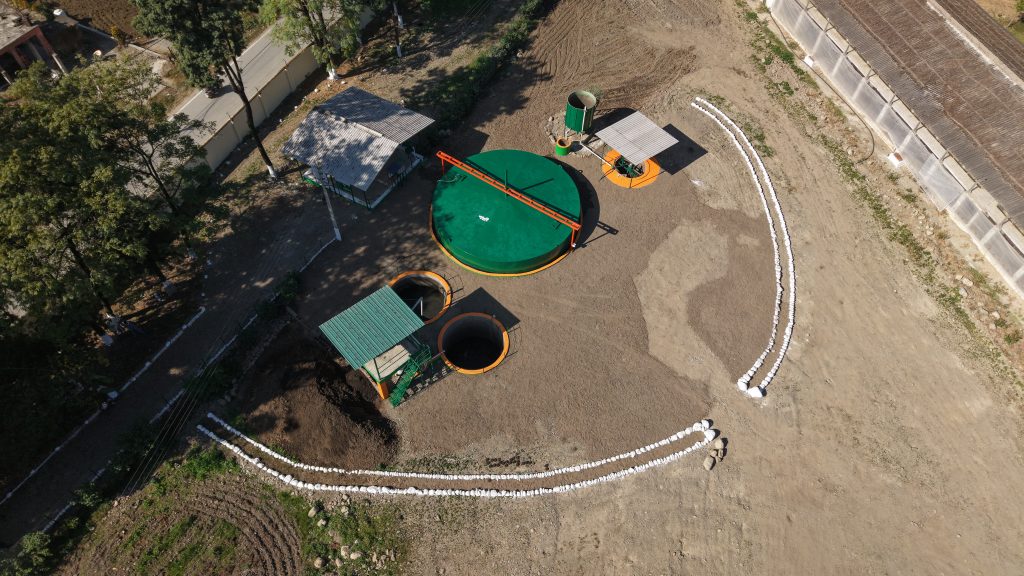
Our Commercial Biogas Systems are basically for large-scale Farms such as Poultry, cattle, piggery, and other resources (Organic kitchen Waste, Napier Grass, & Press mud or Bagasse) from which Biogas can be produced in large quantities.
KOSHISH is an initiative by a team of young professionals from the Indian Institute of Technology.

Reduction in Costing
Operational costs are reduced as they become self-sufficient and capable of generating their own energy.

Process organic waste effectively to greatly reduce landfill use and support a cleaner, greener environment.

Produce Organic Fertilizer
Boost soil fertility & crop productivity by generating nutrient-rich organic fertilizer through biogas slurry.
KOSHISH is an initiative by a team of young professionals from the Indian Institute of Technology.
Collection of Organic Waste: The process begins with gathering organic waste from sources such as food processing units, restaurants, farms, or industrial kitchens. This includes vegetable peels, leftover food, agricultural residue, and animal dung
Feeding the Digester: The collected organic waste is fed into a large-scale biogas digester. The digester is an airtight, oxygen-free (anaerobic) chamber, where the decomposition process takes place
Anaerobic Digestion: Inside the digester, microorganisms break down the organic material over a period of 45 days (depending on plant size and feedstock). This process produces a mixture of gases, primarily methane (CH₄) and carbon dioxide (CO₂), collectively known as biogas.
Gas Collection and Storage: The biogas rises to the top of the digester and is collected in a robust gas holder or storage dome. The gas is purified and, if required, pressurised, making it ready for industrial use.
Gas Utilisation: The stored biogas is supplied to industrial kitchens, boilers, generators, or turbines, providing clean, renewable energy for cooking, heating, or electricity generation.
Slurry Collection: The leftover material after digestion, called bio-slurry, is rich in nitrogen, phosphorus, and potassium (NPK). This nutrient-rich slurry is collected and can be used as organic fertiliser for crops, gardens, or landscaping
Continuous Operation: Our commercial biogas plant is designed for continuous operation, with new organic waste being fed regularly, ensuring a steady production of biogas while efficiently managing large volumes of organic waste.
Get personalized guidance on designing, installing, and optimizing your residential solar system for maximum savings and efficiency.
Due to the Size of the Commercial Biogas, unlike a Gobar Gas Plant for home, a lot of other Organic Waste can be used in making Biogas. Food waste from kitchens or restaurants, agricultural residue like crop leftovers, Cow dung & Poultry Litter from farms & food processing or industrial organic waste. Non-organic materials like plastics or metals should be avoided.
The anaerobic digestion process inside the digester typically takes 45 days, depending on the plant size, type of feedstock, and environmental conditions. After this period, the biogas is ready for use.
Yes. By converting organic waste into renewable energy and organic fertiliser, the plant reduces carbon emissions, minimises landfill waste, and supports sustainable business practices, making it a strong contributor to ESG goals.
Yes. The system is designed for continuous operation. New organic waste can be added regularly, ensuring a steady supply of biogas while efficiently handling large volumes of waste.

Any Question?
You can ask anything you want to know Feedback