
Types of Organic Waste Suitable for Digestion
Anaerobic digestion works best with biodegradable organic waste that is rich in moisture and organic matter. A wide variety of waste streams from households, agriculture, industries, and municipalities can be effectively used to produce biogas and organic manure. Key categories include:- Agricultural Residues and Crop Waste: Crop residues such as straw, husk, stalks, leaves, and spoiled grains are excellent feedstock for biogas plants. Waste from crops like paddy, wheat, maize, sugarcane, and vegetables contains high organic content that decomposes well under controlled anaerobic conditions. When properly pre-treated, these residues help farmers manage waste while generating clean energy.
- Animal Manure and Livestock Waste: Cattle dung, poultry litter, pig manure, and goat or sheep waste are among the most commonly used substrates for anaerobic digestion. These wastes are naturally rich in anaerobic bacteria, making digestion more stable and efficient. In rural and semi-urban areas, livestock waste forms the backbone of many biogas installations.
- Food and Kitchen Waste: Leftover food, vegetable peels, fruit waste, cooked food scraps, and expired food items from households, hotels, hostels, canteens, and restaurants are highly suitable for digestion. Food waste has a high biogas yield and helps reduce landfill burden while promoting decentralised waste-to-energy solutions.
- Municipal Solid Waste (Organic Fraction): The biodegradable portion of municipal solid waste, such as vegetable waste from markets, flower waste, garden clippings, and food waste from public areas, can be efficiently processed in large-scale MSW-based biogas plants. Proper segregation at the source is critical to ensure smooth plant operation and consistent gas production.
Industries and Municipalities using Food Waste Biogas
Industries and municipalities are increasingly using food waste–based biogas plants to manage organic waste sustainably while generating clean energy. Food processing units, hotels, hospitals, institutions, and commercial complexes convert kitchen and cafeteria waste into biogas for cooking, heating, or power generation, reducing landfill disposal and fuel costs. Municipal corporations process segregated wet waste from households, markets, and bulk generators through centralised or decentralised biogas and biogas-to-power plants, easing landfill pressure and supporting renewable energy goals. This approach not only ensures efficient waste management but also helps industries and urban local bodies meet environmental regulations, carbon reduction targets, and circular economy objectives.Environmental Impact of Food Waste
The Biogas Plant from Food Waste has various impacts on the environment as well, which are as follows:- Greenhouse Gas Emissions: Food waste decomposing in landfills releases methane, a highly potent greenhouse gas that significantly contributes to climate change.
- Wastage of Natural Resources: Large amounts of water, energy, fertilisers, and labour used in food production are wasted when food is discarded.
- Landfill Overload: Food waste occupies central landfill space, reducing landfill life and increasing waste management challenges.
- Soil and Water Pollution: Leachate from decomposing food waste can contaminate soil and groundwater if not properly managed.
- Public Health Issues: Open dumping of food waste causes foul odours, attracts rodents and insects, and increases the risk of disease.
- Energy Loss: Discarded food represents lost potential energy that could have been recovered through biogas or composting.
- Impact on Food Security: Wasting edible food misuses agricultural resources that could otherwise support growing populations.
Benefits of diverting waste from Landfills
Diverting waste from landfills offers significant environmental, economic, and social benefits. It reduces methane emissions generated from decomposing organic waste, thereby helping mitigate climate change. Landfill diversion conserves valuable land resources and extends the operational life of existing landfill sites. By recycling and processing organic waste through composting or biogas plants, valuable resources such as energy and nutrients are recovered and reused. This practice also prevents soil and groundwater contamination caused by landfill leachate. Additionally, reduced landfill dependency lowers waste transportation and management costs for municipalities, improves urban hygiene, and supports circular economy principles by turning waste into a productive resource instead of an environmental burden.Conversion process from Waste to Biogas
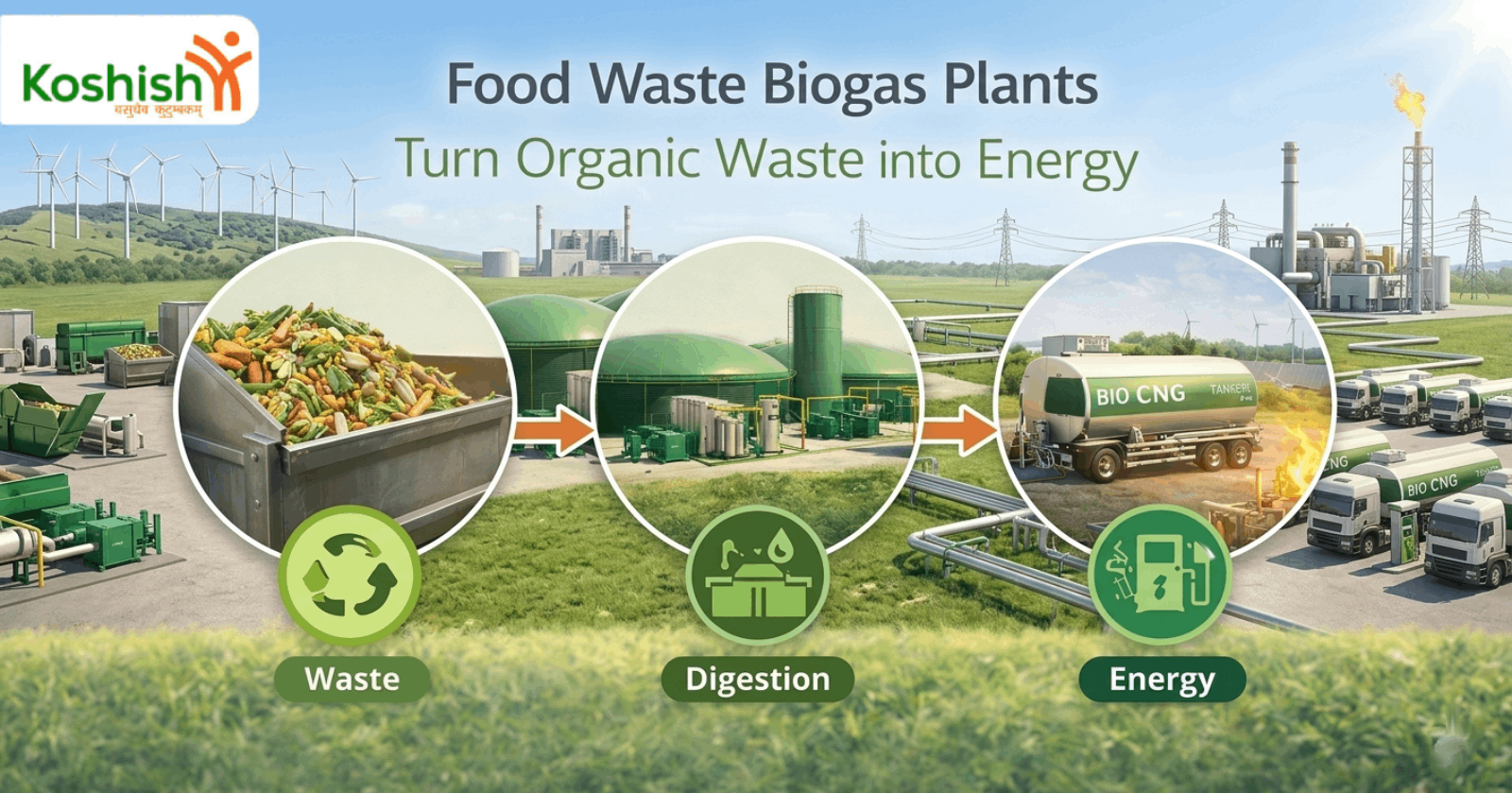
The conversion of organic waste into biogas is carried out through a biological process known as anaerobic digestion, which occurs in the absence of oxygen. The process begins with waste collection and segregation, where biodegradable waste such as food scraps, agricultural residues, and organic industrial waste is separated from non-biodegradable materials. The segregated waste is then shredded and mixed with water to form a uniform slurry, ensuring easier digestion by microorganisms. This slurry is fed into an anaerobic digester, a sealed tank designed to maintain optimal temperature and pH conditions. Inside the digester, the breakdown of waste occurs in four key stages. First, hydrolysis converts complex organic compounds like carbohydrates, fats, and proteins into simpler molecules. Next, acidogenesis transforms these molecules into volatile fatty acids. In the acetogenesis stage, these acids are further converted into acetic acid, hydrogen, and carbon dioxide. Finally, methanogenesis takes place, where methanogenic bacteria produce biogas mainly composed of methane and carbon dioxide. The generated biogas is collected at the top of the digester and can be used for cooking, heating, electricity generation, or upgraded to Bio-CNG. The remaining digested slurry, known as digestate, is rich in nutrients and can be used as organic manure, completing the waste-to-energy cycle sustainably.Wrapping Up
Food waste biogas plants play a vital role in converting organic waste into a valuable energy resource through anaerobic digestion. By processing food waste in a controlled, oxygen-free environment, these plants generate biogas that can be used for cooking, heating, electricity generation, or upgraded into Bio-CNG. At the same time, they significantly reduce landfill burden, methane emissions, and environmental pollution. The nutrient-rich digestate produced as a by-product serves as an organic manure, supporting sustainable agriculture. Overall, food waste biogas plants promote efficient waste management, renewable energy production, and circular economy principles, making them an ideal solution for urban, industrial, and institutional waste challenges.Frequently Asked Questions
What is a food waste biogas plant and how does it work?
A Food waste biogas plant is an innovative system designed to convert organic waste—such as leftover food, vegetable peels, and kitchen scraps—into renewable energy. This process is a core part of the broader concept of Organic waste to energy, which aims to reduce landfill dependency while generating sustainable fuel.
The working mechanism is based on anaerobic digestion, a natural biological process where microorganisms break down organic material in the absence of oxygen. When food waste is fed into the plant, it is first sorted and sometimes pre-treated to remove non-biodegradable contaminants. It is then transferred into a sealed digestion chamber.
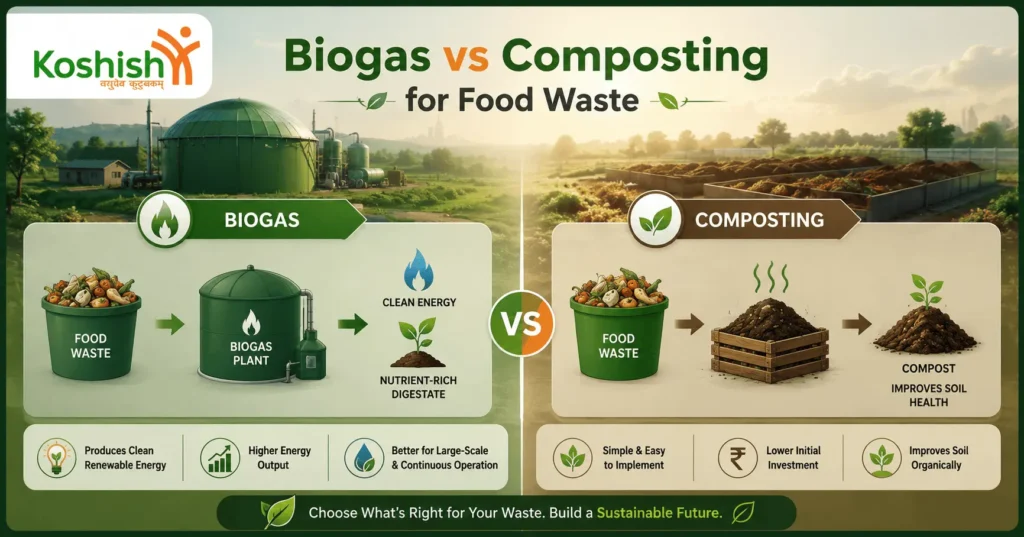
Inside this chamber, bacteria decompose the waste and produce Biogas from food waste, which mainly consists of methane and carbon dioxide. The methane-rich gas can be used for cooking, electricity generation, or even as vehicle fuel after purification. The remaining material, known as digestate, is a nutrient-rich slurry that can be used as organic fertilizer.
This system supports Zero waste solutions by ensuring that food waste is not discarded uselessly but instead becomes a valuable resource. With rising environmental concerns, food waste biogas plants are becoming an essential part of sustainable waste management strategies worldwide.
What types of food waste can be used in a biogas plant?
A Food waste biogas plant is highly versatile when it comes to the types of organic materials it can process. Almost all biodegradable kitchen and food-related waste can be utilized, making it an efficient solution for Organic waste to energy conversion.
Common inputs include fruit and vegetable peels, leftover cooked food, expired food items, dairy products, bread, grains, and even small amounts of meat waste. This flexibility makes it ideal for households, restaurants, hotels, and large-scale food processing units. However, certain materials like plastics, metals, and excessive oils should be avoided as they can disrupt the digestion process.
One of the biggest advantages of generating Biogas from food waste is that it transforms materials that would otherwise end up in landfills into useful energy. In landfills, food waste decomposes uncontrolled and releases methane directly into the atmosphere, contributing to greenhouse gas emissions. In contrast, a biogas plant captures and utilizes this methane efficiently.
By accepting a wide variety of food waste inputs, these plants play a significant role in promoting Zero waste solutions. They not only reduce the volume of waste but also help in creating a circular economy where waste is continuously repurposed into energy and fertilizer. This makes food waste biogas plants both environmentally and economically beneficial.
What are the environmental benefits of converting food waste into biogas?
Converting waste through a Food waste biogas plant offers numerous environmental benefits, making it a cornerstone of sustainable development. One of the primary advantages is the reduction of landfill waste. Food waste constitutes a large portion of municipal solid waste, and diverting it to Organic waste to energy systems significantly decreases landfill overflow.
Another major benefit is the controlled production of Biogas from food waste. In landfills, decomposing food releases methane directly into the atmosphere—a greenhouse gas far more potent than carbon dioxide. Biogas plants capture this methane and use it as a renewable energy source, thereby reducing overall emissions.
Additionally, the process produces a by-product called digestate, which can be used as organic fertilizer. This reduces the need for chemical fertilizers, lowering soil and water pollution. It also improves soil health by adding essential nutrients naturally.
Food waste biogas plants are integral to achieving Zero waste solutions, as they close the loop in waste management. Instead of a linear system where waste is discarded, they promote a circular approach where waste is continuously reused.
Moreover, these plants help conserve fossil fuels by providing an alternative energy source. This reduces dependence on non-renewable resources and contributes to energy security. Overall, the environmental impact is highly positive, making food waste biogas plants a key tool in combating climate change.
Can food waste biogas plants be used at home or only on an industrial scale?
A Food waste biogas plant is not limited to industrial use; it can be effectively implemented at both small and large scales. In fact, compact and user-friendly models are now available for households, making Organic waste to energy accessible to everyday users.
For homes, small biogas units can process daily kitchen waste and produce enough Biogas from food waste for cooking purposes. These systems are relatively easy to install and maintain, requiring minimal technical knowledge. They are especially popular in urban areas where waste management is a growing concern.
On a larger scale, commercial establishments like hotels, restaurants, and food processing industries use bigger plants to handle substantial amounts of organic waste. These industrial systems can generate electricity, heat, or fuel for vehicles, making them highly efficient.
The scalability of biogas plants makes them an ideal component of Zero waste solutions. Whether at a household level or in large industries, they help reduce waste disposal costs and create valuable resources from what would otherwise be discarded.
Additionally, governments and environmental organizations are encouraging the adoption of these systems through subsidies and awareness programs. This widespread applicability ensures that food waste biogas plants can play a significant role in sustainable living across different sectors of society.
How does a food waste biogas plant contribute to zero waste solutions?
A Food waste biogas plant is a powerful tool in achieving Zero waste solutions, as it transforms organic waste into valuable resources instead of allowing it to go to landfills. This aligns with the principles of sustainability and circular economy, where waste is minimized and reused effectively.
In traditional waste management systems, food waste is often discarded and transported to landfills, leading to environmental pollution and resource wastage. However, with Organic waste to energy systems, this waste is redirected into biogas plants where it is converted into renewable energy and organic fertilizer.
The production of Biogas from food waste ensures that methane emissions are controlled and utilized productively. Instead of contributing to climate change, this gas is used for cooking, electricity, or heating, reducing reliance on fossil fuels.
Moreover, the leftover digestate serves as an eco-friendly fertilizer, closing the nutrient loop. This reduces the need for chemical fertilizers and promotes sustainable agriculture. By converting both waste and its by-products into useful outputs, biogas plants ensure that nothing goes to waste.
These systems also encourage responsible consumption and waste segregation at the source, which are essential components of Zero waste solutions. By integrating food waste biogas plants into daily life, individuals and organizations can significantly reduce their environmental footprint while contributing to a cleaner and more sustainable future.