


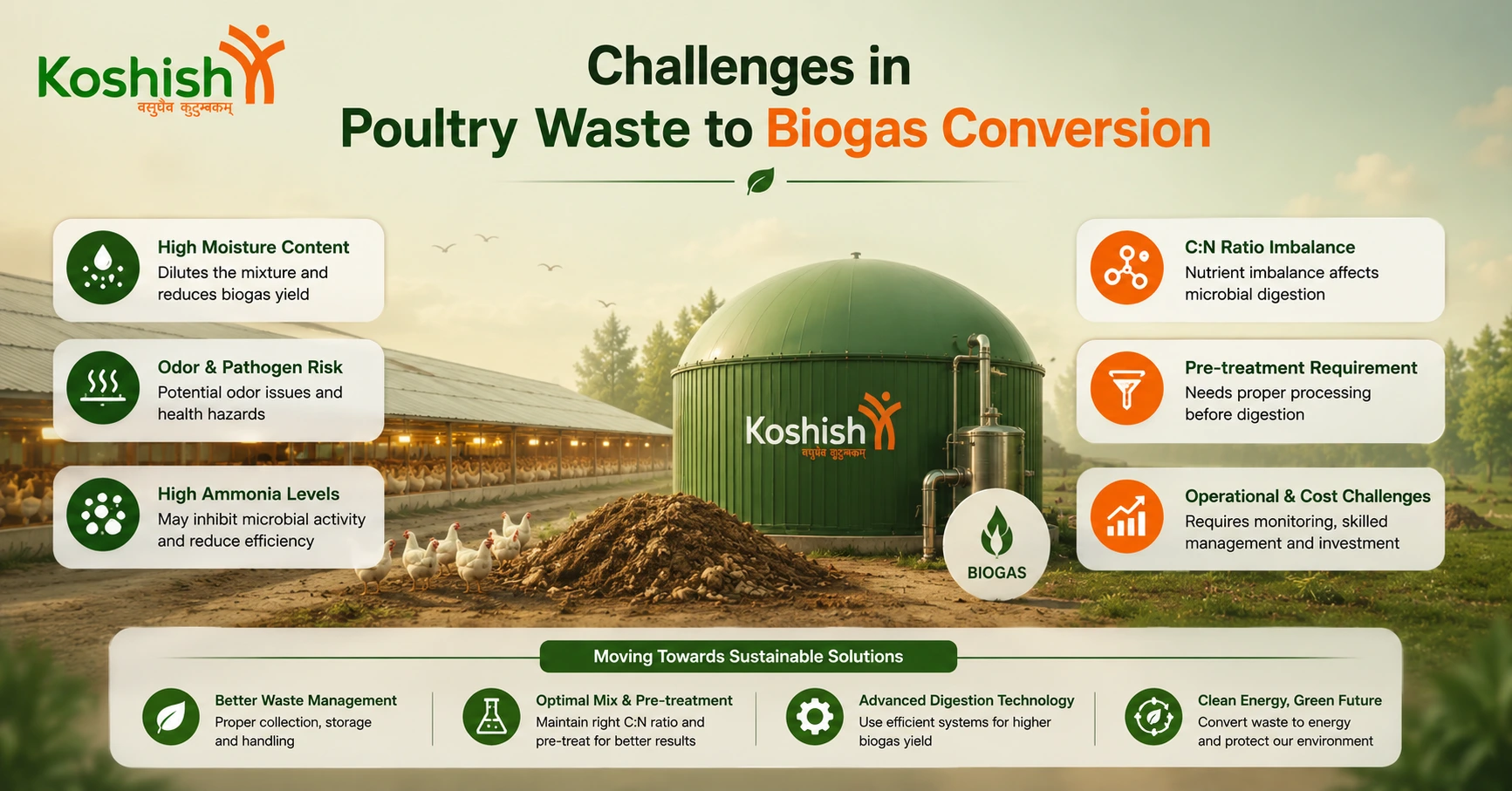
Common Poultry Biogas Challenges and Solutions
High Nitrogen Poultry Waste: Fortunately, farmers can solve these problems with the right steps. By doing this, they produce more biogas, reduce waste, and save money. Mix poultry waste with cow dung or crop waste. Then, feed the digester in small amounts. Also, keep the carbon-to-nitrogen ratio balanced. This helps the bacteria stay healthy. Ammonia Inhibition in Biogas Plants: Ammonia inhibition biogas happens when too much ammonia builds up inside the digester. As a result, the good bacteria become weak and produce less methane gas. Therefore, the biogas plant produces less biogas. First, feed the digester with a small amount of poultry waste. Then, add straw, crop waste, or other carbon emission materials. Also, keep the digester at a steady temperature. Finally, check the ammonia level often. As a result, the bacteria stay healthy and produce more biogas. Digestion Problems in Poultry Waste: Digestion problems poultry waste happen when feathers, stones, bedding, or plastic get into the digester. Also, adding too much or too little waste can slow the digestion process. First, remove feathers, stones, plastic, and other unwanted materials from the waste. Then, mix the waste well with water. Next, feed the digester with the same amount every day. As a result, the bacteria work better, and the digestion process stays smooth. Technical Issues in Biogas Plants: Technical issues biogas plants face include blocked pipes, broken pumps, gas leaks, and faulty mixers. As a result, the plant works poorly and produces less biogas. First, check the plant often. Then, fix gas leaks as soon as you find them. Next, clean the pipes and pumps regularly. Also, service the equipment on time. As a result, the plant runs well and produces more biogas. Poor Temperature Control: The digester bacteria need a steady temperature to work well. However, if the temperature changes too much, the bacteria slow down. As a result, the plant produces less biogas. Keep the digester warm. Also, cover it well to stop heat loss. Then, avoid sudden temperature changes. As a result, the bacteria stay active and make biogas every day. Poor Mixing Inside the Digester: Poor mixing causes solid waste to settle at the bottom. At the same time, thick waste floats on the top. As a result, the bacteria cannot break down the waste evenly, and the plant produces less biogas. First, install a good mixing system. Then, stir the slurry often. Also, stop solids from collecting inside the digester. As a result, the waste mixes well, and the plant produces more biogas. Low Carbon-to-Nitrogen Ratio: Poultry manure has more nitrogen than carbon. As a result, it creates too much ammonia. Then, the bacteria make less methane gas. Therefore, the biogas plant produces less biogas. First, mix poultry waste with straw, crop residue, dry leaves, rice husk, or cow dung. This adds more carbon to the waste. As a result, the carbon-to-nitrogen ratio stays balanced. Therefore, the bacteria work better and produce more biogas.How Koshish India Helps Solve Poultry Biogas Challenges
At Koshish India, we help poultry farms solve common poultry biogas challenges. First, we design the right biogas plant for your farm. Then, we choose the right feed mix and install a good mixing system. We also provide safe gas collection, regular plant checks, easy maintenance, and proper slurry handling. As a result, your biogas plant works better and produces more biogas. In addition, it reduces waste and keeps the plant running smoothly for many years.Wrapping Up
Poultry biogas challenges are common. However, farmers can solve them with the right steps. High nitrogen poultry waste, ammonia inhibition biogas, digestion problems with poultry waste, and technical issues with biogas can reduce biogas production. Fortunately, regular maintenance, proper feeding, and frequent monitoring help prevent these problems. As a result, poultry farms produce more biogas, reduce waste, save money, and protect the environment. With Koshish India, farmers can build a reliable biogas plant that works well for many years. However, farmers can solve these problems with regular maintenance, proper feeding, and daily monitoring. As a result, the biogas plant works better and produces more gas. At the same time, farms reduce pollution, save money, and make good use of chicken waste. With Koshish India, farmers can build a strong and reliable biogas system that performs well for many years.Frequently Asked Questions (FAQ)
What are the biggest poultry biogas challenges?
The biggest poultry biogas challenges are too much nitrogen, ammonia buildup, poor mixing, temperature changes, broken equipment, and poor waste handling.
Why is high nitrogen poultry waste a problem?
High nitrogen poultry waste makes too much ammonia. As a result, the good bacteria cannot work well. Therefore, the biogas plant produces less biogas.
What is ammonia inhibition in biogas plants?
Ammonia inhibition happens when too much ammonia builds up inside the digester. As a result, the bacteria that make methane gas become weak. Therefore, the plant produces less biogas.
How can farmers reduce digestion problems in poultry waste?
Farmers should remove unwanted materials, mix the waste well, feed the digester every day, and check the temperature and ammonia levels regularly.
How does Koshish India help poultry farms with biogas plants?
Koshish India designs, installs, and maintains poultry waste-to-biogas plants. In addition, the company provides technical support to improve biogas production and plant performance.