
Imagine a situation where your farm waste can be turned into fuel that will save your money! Biogas plant will help you to transform the waste from cows or other farm animals into a valuable fuel. This plant can also supply rich manure to your farm lands. But the initial cost of installation might deter many farmers and entrepreneurs.
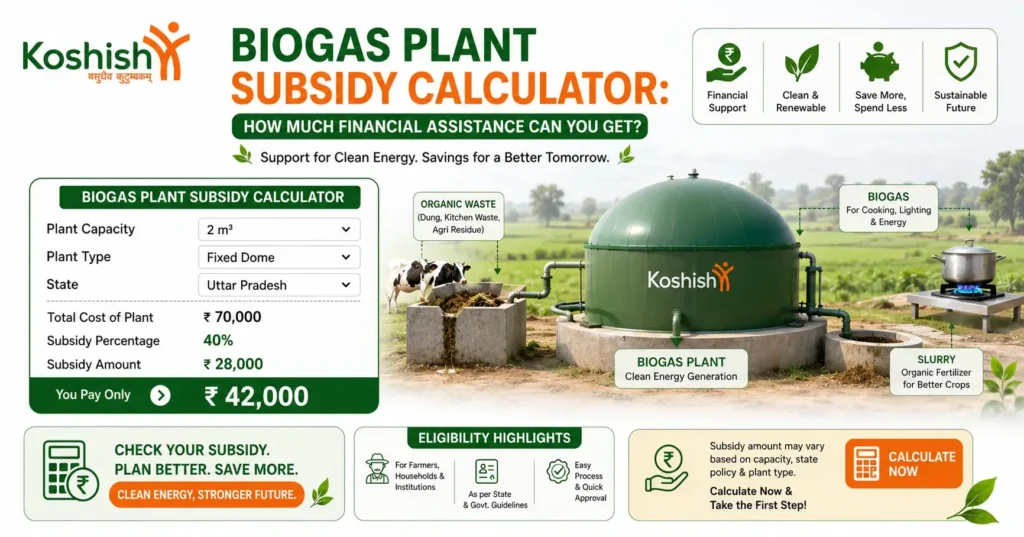
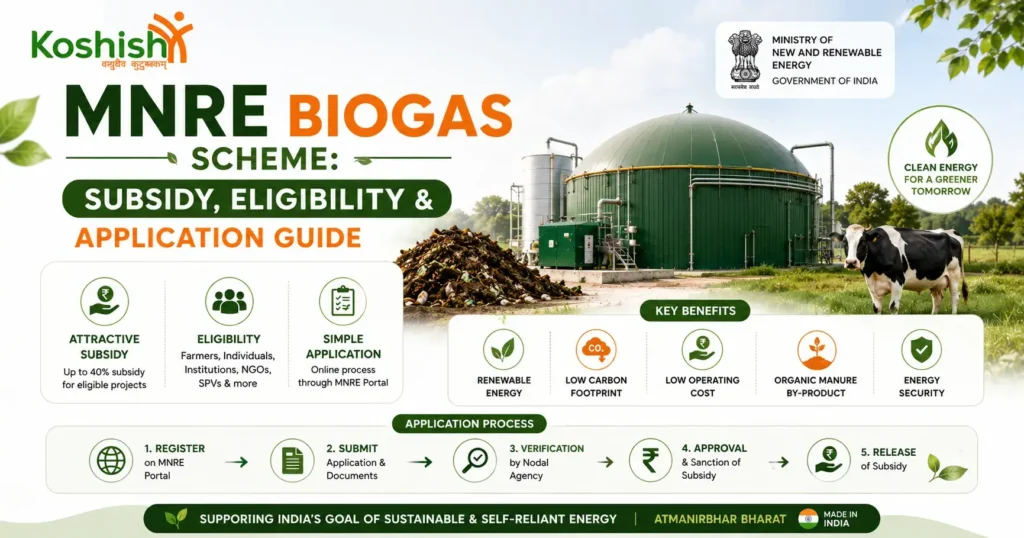
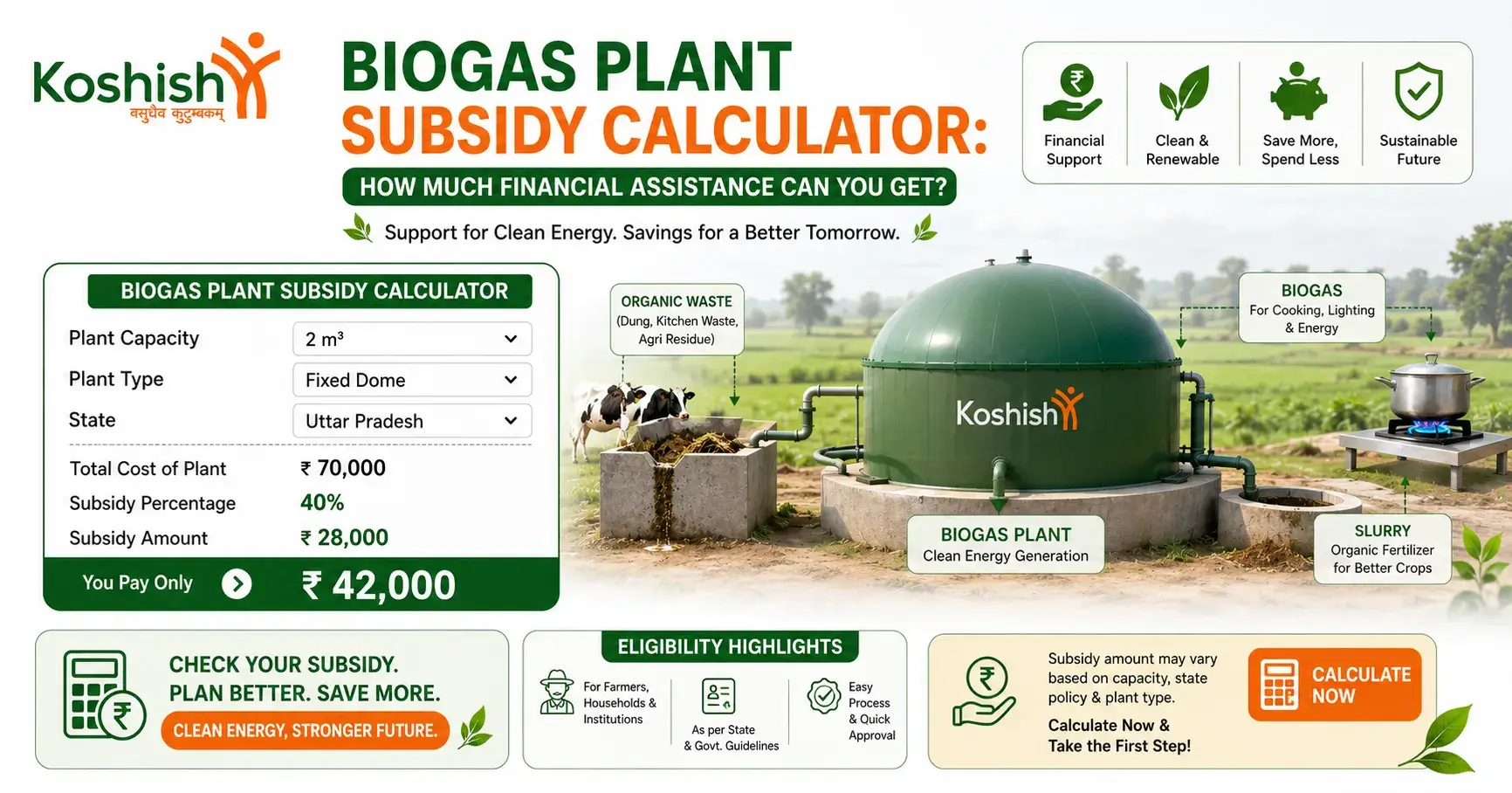
But there is hope as various government schemes can help in reducing this biogas plant cost and subsidy. A subsidy on biogas plant will make clean energy easily affordable. But the amount of subsidy depends upon the capacity, location, and nature of the project. Let us find out about this subsidy in detail. A biogas plant subsidy in India is financial help offered by the government to eligible people or projects. In India, the Ministry of New and Renewable Energy (MNRE) supports biogas plants through Central Financial Assistance (CFA).
First, the plant uses organic waste to produce gas. Then, the gas can support cooking, heating, or power generation. Meanwhile, the leftover slurry can serve as organic manure. Therefore, a biogas plant subsidy helps reduce the money you need to invest. However, you must meet the scheme rules to receive this support.
How Much Biogas Plant Subsidy in India Can You Get in 2026?
The amount depends on the plant’s daily gas output and your eligibility. According to the MNRE biogas plant cost program information, small plants can receive the following assistance under the published rates.
| Power Generation | Subsidy by the Government of India |
| 3 kW – 50 kW | 45,000 |
| 50 kW – 200 kW | 40,000 |
| 200 kW – 250 kW | 35,000 |
(CUM × 1.3 kW ÷ Total Working Hours × Subsidy Amount )
For example, 100 cum × 1.3 kW = 130 kWh ÷ 10 hrs = 13 units × 45000 = 585,000/- subsidy amount.
The Government of India have made Special categories, including specified hill and northeastern states, island regions, and eligible SC/ST beneficiaries. Check the current scheme rules before applying.
Biogas Plant Cost and Subsidy: What Affects the Amount?
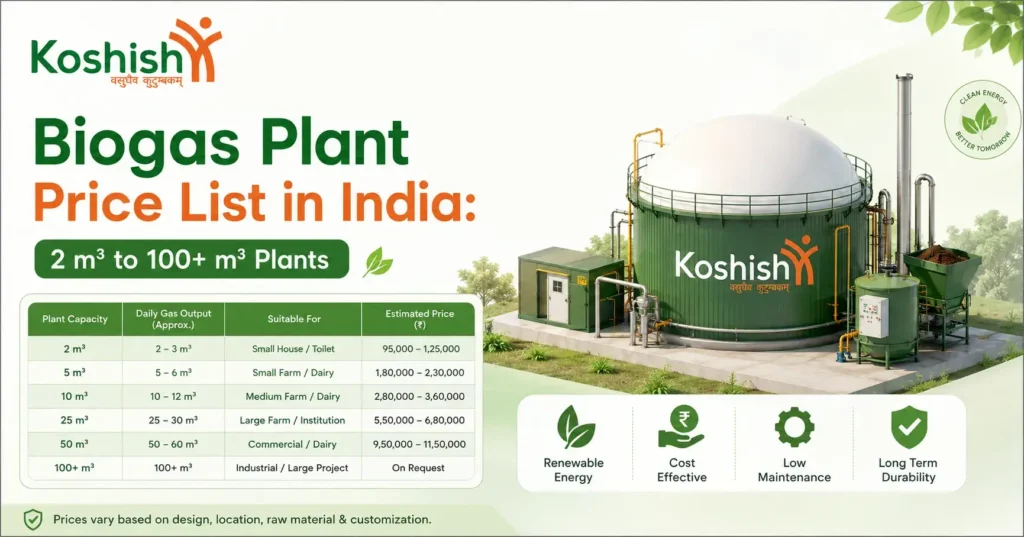
The total biogas plant subsidy in India cost depends on several factors. For example, a larger plant needs more space, materials, and equipment. Likewise, transport and labour costs can vary by location. Here are the main factors:
- Plant size: Larger plants usually cost more to build.
- Location: Local labour and transport can change the final cost.
- Waste supply: You need a steady supply of cow dung or other suitable feedstock.
- Plant design: Fixed-dome and prefabricated models may have different costs.
- Extra features: Gas storage, pipelines, and power equipment can increase the budget.
Therefore, it also compares the full installation cost with the approved support. As a result, this helps you plan the amount you must pay yourself.
Who Can Apply for a Biogas Plant Subsidy in India?
Eligible farmers, households, and other applicants may apply under the relevant scheme. However, the rules depend on the plant type and programme. For small plants, the MNRE portal lists key requirements:
- Need suitable Land and Location
- Must have a regular supply of cow dung or other accepted feedstock.
- Need a steady water supply.
- Must be able to pay your share of the project cost.
In addition, medium-sized biogas plant projects may need technical documents and approval through a designated implementing agency.
Wrapping Up
A biogas plant can help you manage organic waste, produce clean fuel, and make organic manure. In addition, a biogas plant subsidy may reduce your initial investment. However, the amount depends on your plant capacity, category, and the scheme rules in force.
Before spending money, check the latest MNRE biogas subsidy 2026 guidelines and confirm your eligibility. This simple step can help you plan your project with greater confidence.
Frequently Asked Questions (FAQ)
Is the MNRE biogas subsidy 2026 applicable?
MNRE has published subsidy rates under its biogas program. However, the published Phase-I period ran from 2021–22 to 2025–26. Therefore, applicants should confirm whether a current phase, fresh allocation, or other scheme is open in 2026. Visit the official MNRE Biogas Portal or contact your state’s implementing agency to check current application dates, funds, and eligibility requirements.
Can farmers apply for a biogas plant subsidy?
Yes, qualified farmers are free to apply in the pertinent biogas program. Nevertheless, they have to satisfy the conditions of the program. They might require proper land, availability of cow dung or other types of waste approved by the program, water, and the capability to pay their portion of the total expenses. Moreover, they are supposed to verify the capacity of the plant and make the necessary paperwork.
Is the biogas plant cost and subsidy paid before or after installation?
According to the official guidelines for MNRE biogas subsidy 2026, the subsidy is normally made available after completion, installation, and verification of the plant. You may have to mobilize funds for your project before this is done. The disbursement process will be guided by the terms of the scheme and whether you applied for the loan. This should be done even before beginning the project.
How much subsidy can I get for a biogas plant in India?
It will depend on your capacity, geographical location, and the category to which the beneficiary belongs. The published rates by MNRE for small solar power plants begin from ₹30,000 per plant within the stated categories and capacities. However, the above figures do not necessarily reflect the current rates of subsidy in October 2026. Hence, kindly verify the same through the portal.