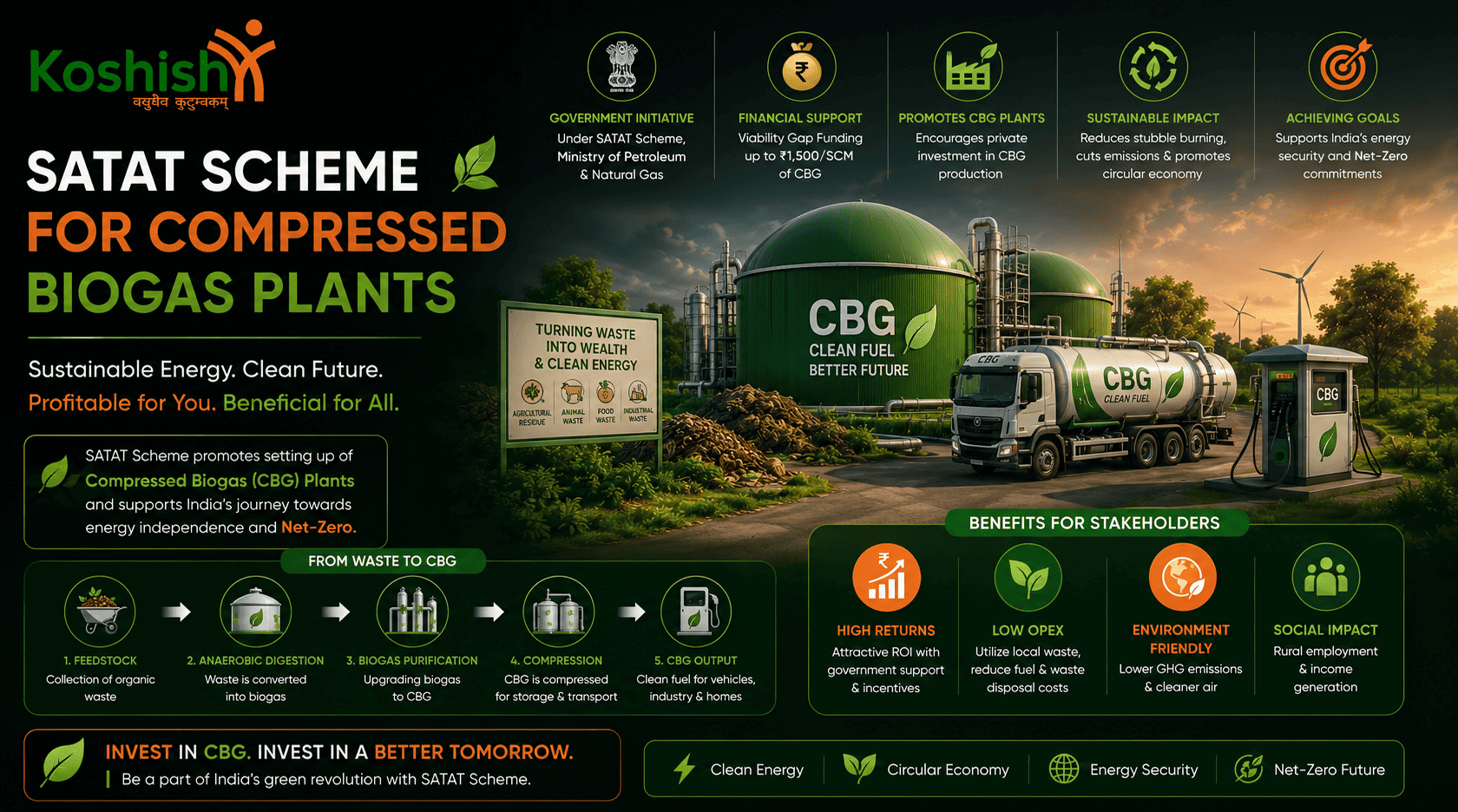
Overview of SATA Scheme
The SATAT scheme objective is to develop a system where CBG production is done on a wide scale and is used all over India. By processing the biogas further, CBG is produced. The procedure for producing the biogas is simple, through anaerobic digestion of organic materials such as food waste, cow dung, poultry litter, agricultural residue, and municipal solid waste. Compressing it to deliver a fuel that is compositionally similar to natural gas. The goal of the government under SATAT scheme is to establish 5000 CBG plants capable of producing around 15 million metric tons of CBG per year, creating a clean fuel alternative that not only fuels transportation and industry but also supports the National Biofuel Policy and India’s net-zero 2070 commitments. Under this program, all the companies that deal in Oil Market Companies, such as IOCL, BPCL, and HPCL, along with other public-sector entities, invite entrepreneurs to set up CBG plants and enter into long-term offtake agreements guaranteeing the purchase of CBG, a major structural advantage in project economics.Eligibility Criteria to Get CBG Plant Established
The government has made an eligibility criteria which companies can get a CBG plant installed. To get the benefits from the SATAT Scheme, the certain Eligibilty criteria conditions are as follows: Entrepreneurial Entity: The applicants must be entrepreneurs (individuals, partnerships, or corporations) that want to set up and operate a CBG plant, managing planning, execution, operations, and maintenance. Letter of Intent (LOI): The parties that are interested must contain an LOI from participating OMCs, which qualifies them to enter into commercial agreements for CBG purchase. CBG Offtake Agreement: Holding a commercial offtake agreement with OMCs, often with assured pricing and long-term contracts, is crucial for bank financing and priority lending. Plant Capacity: Minimum plant capacities are typically specified (e.g., 2 tons per day and above as per recent guidelines).SATAT Scheme Financial Incentives
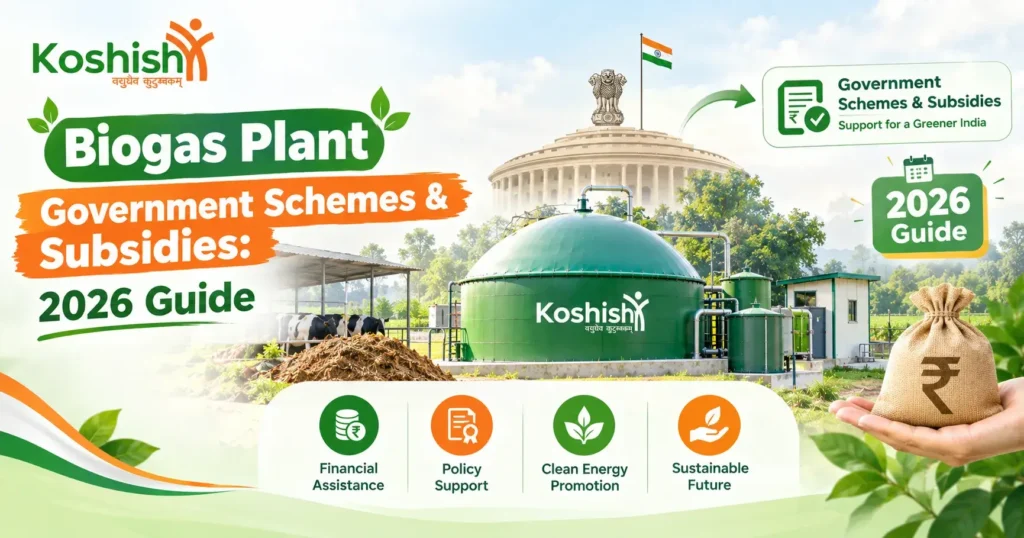
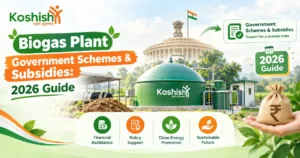
There are various financial incentives provided by the government of India, which are mentioned below: Central Financial Assistance (CFA) & Subsidies: The government offers capital subsidies and financial assistance to offset high upfront costs associated with CBG plant development. For instance, up to ₹4 crore per CBG plant capacity is available, subject to scheme conditions, while additional capital aid may be extended for biomass procurement machinery and infrastructure. Priority Sector Lending: CBG plant projects under SATAT are included under priority sector lending by RBI-approved banks, opening up low-interest loans and easier financing structures for developers. Market Development Support: Producers can also benefit from market development incentives such as payments for organic manure by-products (e.g., ₹1,500 per tonne), improving overall revenue streams. GST and Tax Benefits: Favorable GST treatment and exemptions on equipment procurement and raw material purchases further enhance viability, while tax incentives like accelerated depreciation and relevant income tax holidays can improve investment returns. Infrastructure Grants: The government has earmarked significant funding to build pipeline infrastructure and CGD integration for smoother CBG transport and distribution, reducing logistics costs for producers.Developer Advantages under SATAT Scheme
Participating in the SATAT scheme offers multiple advantages for developers and investors: Guaranteed offtake: One of the biggest draws is the long-term offtake agreements signed with large OMCs, often with assured pricing mechanisms, reducing market risk and providing predictable revenue streams. Strong Business Model: Through integrated supply contracts, priority sector lending, subsidies, and by-product monetisation, CBG projects under SATAT present a strong business case compared to other renewable energy ventures. Environment & Social Impact: CBG production helps transform waste into wealth, contributing to sustainable waste management, rural employment generation, farmer income augmentation, and greenhouse gas reduction, aligning with ESG and sustainability goals. Market Expansion: With mandatory blending obligations being phased in for CBG with CNG/PNG from FY26 onwards, the domestic market demand for CBG is expected to grow, ensuring expanded consumption avenues over the coming years.Wrapping Up
The SATAT scheme for Compressed Bio-Gas plants represents a transformative push in India’s transition towards a cleaner, more circular energy economy. By providing structured financial incentives, guaranteed offtake with OMCs, supportive lending frameworks, and a ready market with blending mandates, SATAT is unlocking significant opportunities for entrepreneurs and investors while delivering tangible environmental and social benefits. For businesses looking to be part of India’s green energy future, SATAT offers a balanced mix of policy support, revenue certainty, and environmental impact, making CBG plant projects not just profitable but purposeful in shaping a sustainable energy landscape.
What is the SATAT scheme?
The SATAT scheme (Sustainable Alternative Towards Affordable Transportation) is a government initiative launched in October 2018 to promote the production and use of Compressed Bio-Gas (CBG) from waste and biomass, with the goal of establishing 5,000 CBG plants across India.
What financial incentives are available under SATAT?
Incentives include central financial assistance (capital subsidy), priority sector lending, market development support, GST benefits, and infrastructure grants for biomass procurement and grid connectivity.
What is a CBG offtake agreement?
A CBG offtake agreement is a long-term contractual commitment with OMCs to purchase the CBG produced by a plant, often with price support and assured volumes, enhancing investment security.
Can farmers participate in the SATAT scheme?
While direct plant setup is usually undertaken by entrepreneurs or developers, farmers benefit indirectly by selling biomass feedstock and organic manure by-products, creating additional income streams.
Is CBG blending mandatory?
From FY26 onwards, the government has mandated CBG blending obligations with CNG/PNG, starting at 1% and gradually increasing, which is expected to spur demand for CBG.