

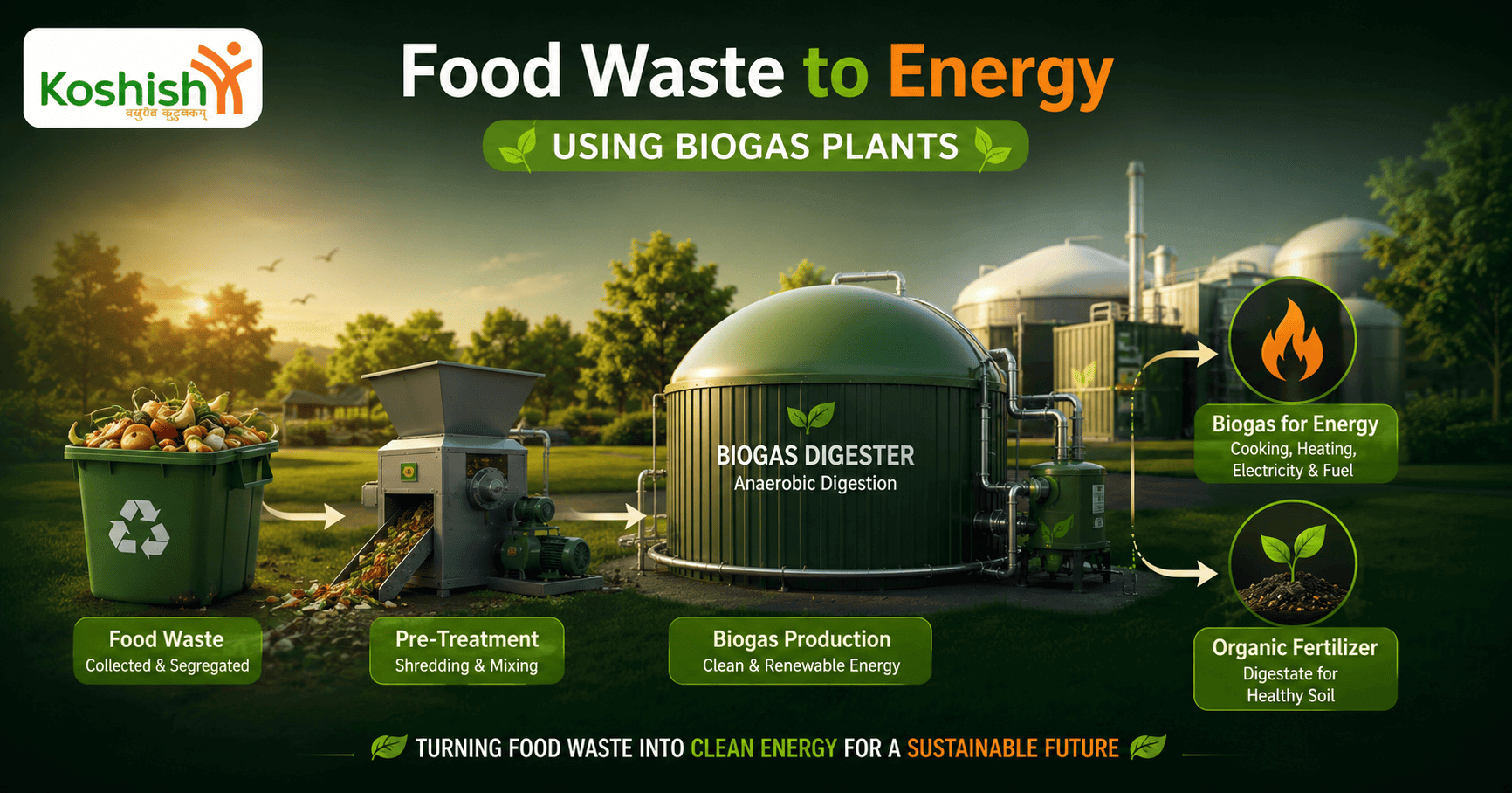
By installing the food waste management system, you can manage organic waste efficiently and produce usable energy that can be used for cooking, heating, or electricity. The anaerobic digestion converts daily kitchen waste and leftovers into renewable energy.
The food waste biogas plant reduces the landfills’ reliance, greenhouse gas emissions, and produces nutrient-rich fertilizers. The nutrient-rich fertilizer is helpful for organic farming and crop growth, which reduces the use of chemicals.
In this blog, we will give an overview of food waste management and the benefits of a food waste biogas plant, whether you are looking for domestic or industrial food waste treatment solutions.
What is a Food Waste Biogas Plant?
The food waste biogas plant is a food waste management system that organically converts daily kitchen waste and leftovers into usable energy, which can be used for cooking, heating, or electricity. This process is done by the anaerobic digestion process.Step-by-Step Process of Converting Organic Waste to Energy
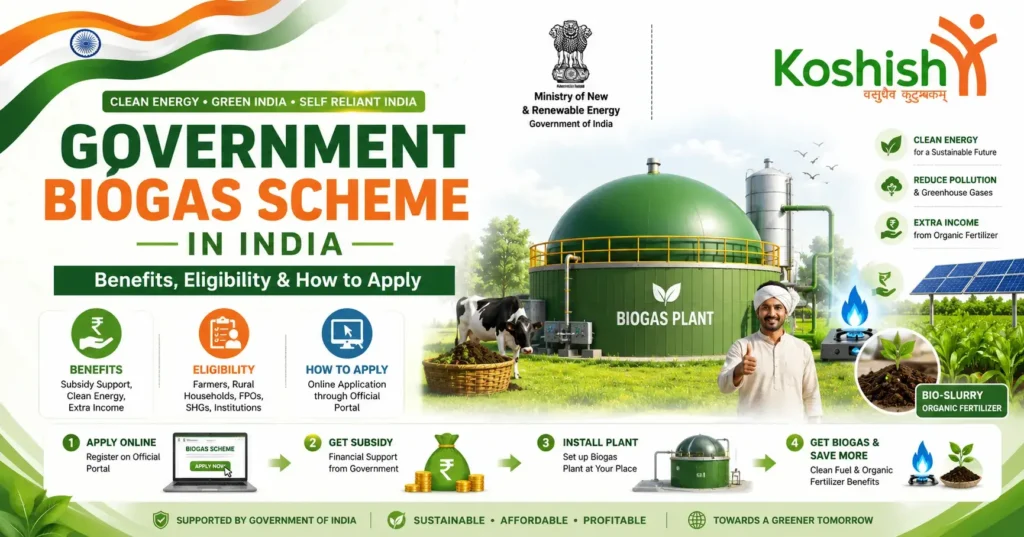
Look at the steps below to understand the process of converting organic waste to energy. Step 1: Collect Organic Waste: The first step is to collect organic waste in enough quantity. The organic waste includes kitchen waste, home waste, agriculture residue. Step 2: Segregation: In this stage, it removes biodegradable waste, like plastic, metals, etc. After segregation, it is ready for further processing. Step 3: Feeding into the Digester: The prepared organic waste is sent into the air-tight tanks, which are called biogas digester. Step 4: Anaerobic Digestion: The Anaerobic Digestion process breaks down the microorganisms and produces biogas in the absence of oxygen. Step 5: Biogas Collection: The produced biogas is stored in the airtight tanks for future use. Step 6: Use Biogas: The produced biogas can be used for multiple purposes, like cooking, heating, or electricity.Key Benefits of Food Waste Biogas Plant System
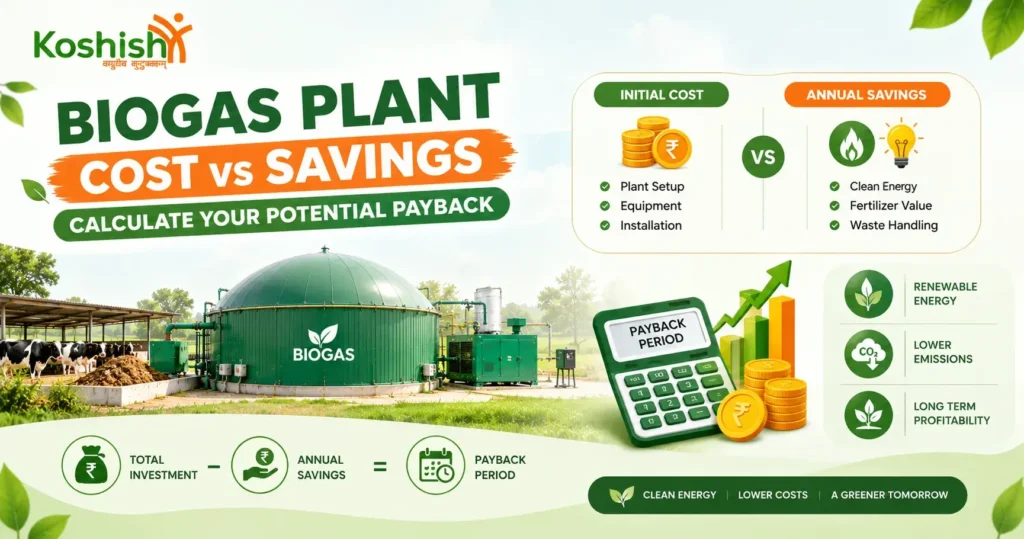
There are key benefits of a food waste biogas plant, such as controlling bad smells, producing clean energy, cost savings, and being easy to maintain. Lower Greehouse Gas Emissions: The food waste management system prevents food waste to sending into the environment. It helps in lowering the emissions by 90-95%. Turn Kitchen Waste into Biogas: The food waste biogas plant efficiently converts the daily kitchen waste into clean, renewable energy. Easy to Maintain: Managing the food waste biogas plant does not require heavy maintenance. It is easy to operate. Manage Bad Smell: This system easily manages bad smells and makes the surrounding environment healthy. Cost Savings: Businesses and households can significantly reduce energy bills and avoid waste disposal fees. For example, large-scale systems can achieve a full return on investment in 4 to 7 years.Why Koshish India is the Best Food Waste Management Solution?
If you’re looking for a reliable solution to convert food waste into biogas, choose Koshish India. We have over 10 years of experience in sustainable waste management. We understand customer needs and analyze available waste. After a site visit, we design a custom system that easily meets environmental goals and manages food waste efficiently. We offer domestic and commercial biogas solutions, which are specifically designed to meet customer requirements and ensure long-term performance.Frequently Asked Questions (FAQ)
How long does the food waste management system process take?
The food waste management system process generally takes up to 20-30days, which depends on your feedstock.
Can food waste be used for biogas?
Yes, food waste can be used to produce biogas, so you can use the produced biogas for cooking or electricity.
Which factors affect the food waste biogas plant's performance?
There are many factors that affect the industrial food waste treatment system’s performance, such as carbon-to-nitrogen ratio, moisture, feedstock, particle size, temperature of the digester, and process stability, among others.
How much biogas does 1 kg of food waste produce?
Food waste can produce 76 to 421 liters of biogas per kilogram of dry matter. This wide range is influenced by several factors, including the type of waste, the amount of carbohydrates and fiber it contains, and other environmental factors.