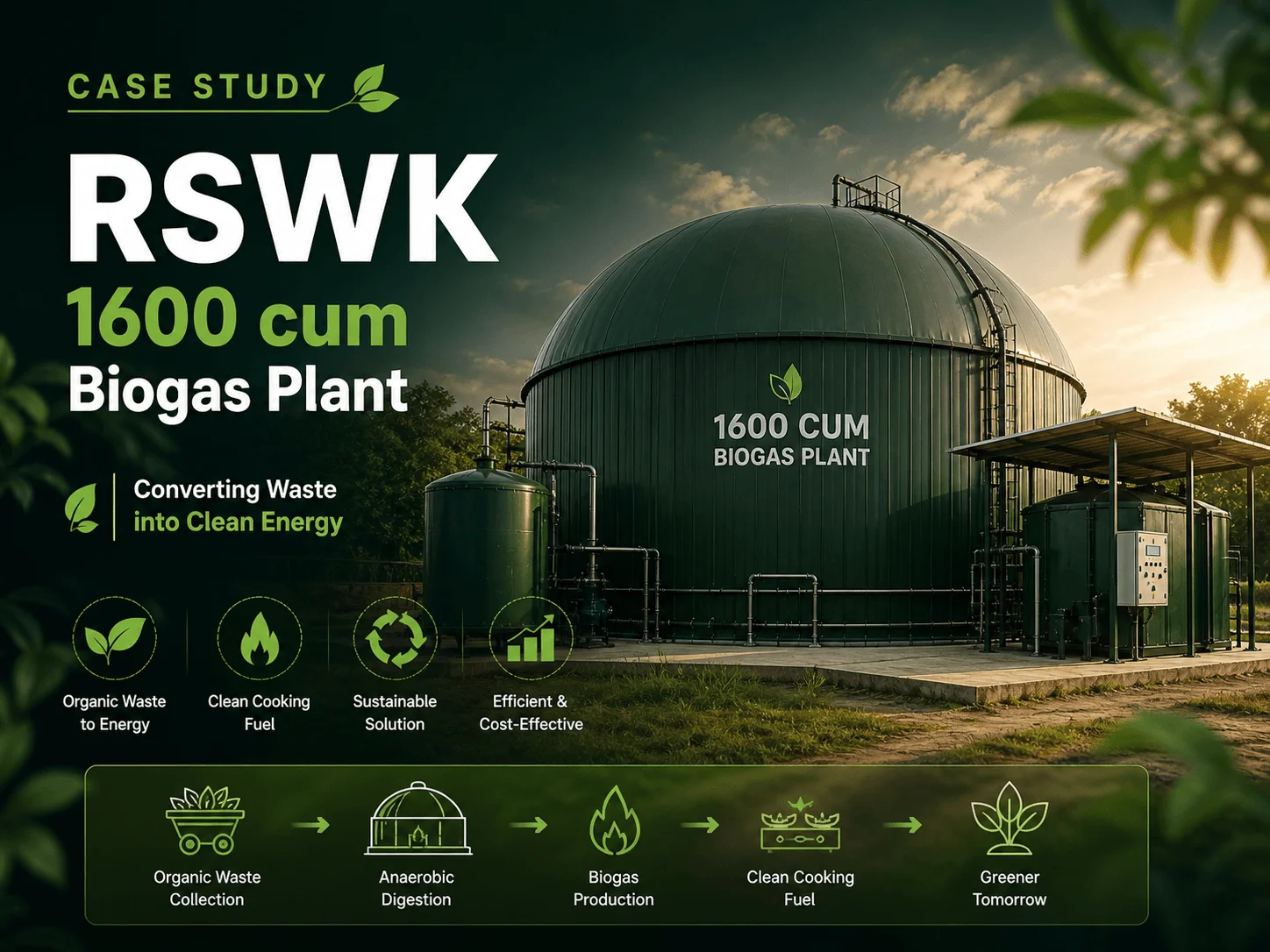
250 CUM Biogas Plant, Radha Rani Enterprises in Jharkhand
A 5kW residential solar solution installed for Rekha Pathak in Ghaziabad to power a sustainable home.

250 CUM Biogas Plant, Radha Rani Enterprises in Jharkhand
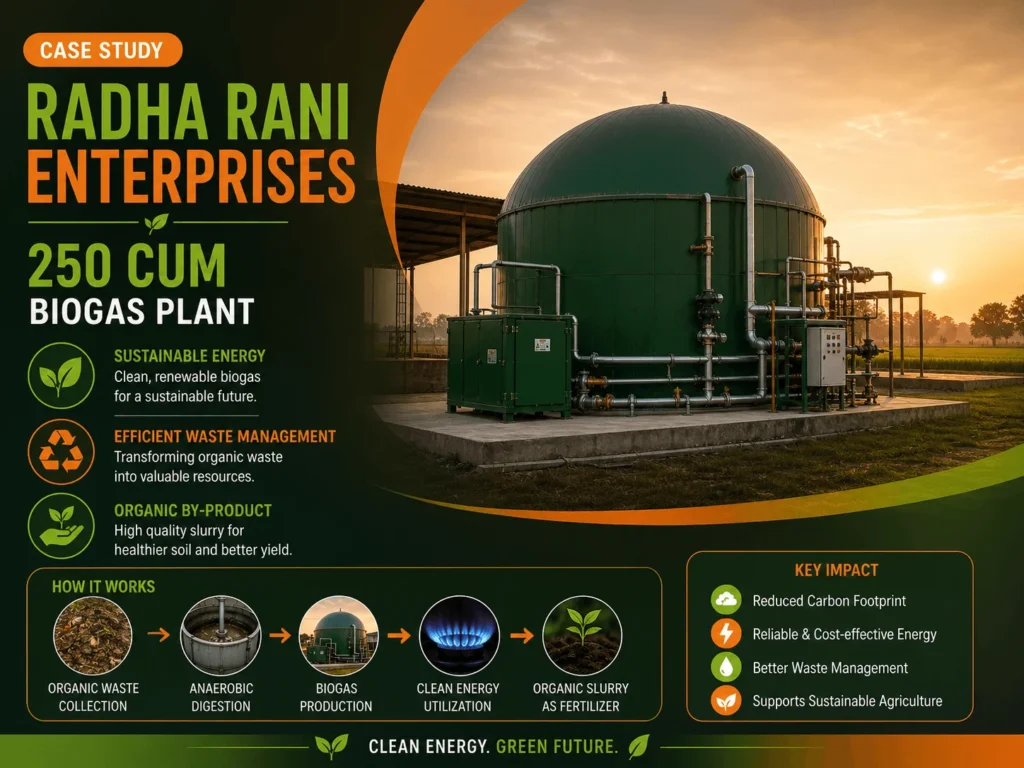
Radha Rani Enterprises, situated in Jharkhand, was managing poultry operations with approximately 25,000 birds. A significant challenge was managing the large volume of poultry litter generated daily. Alongside waste management, rising electricity costs, fuel dependency, and increasing carbon emissions were impacting overall efficiency.
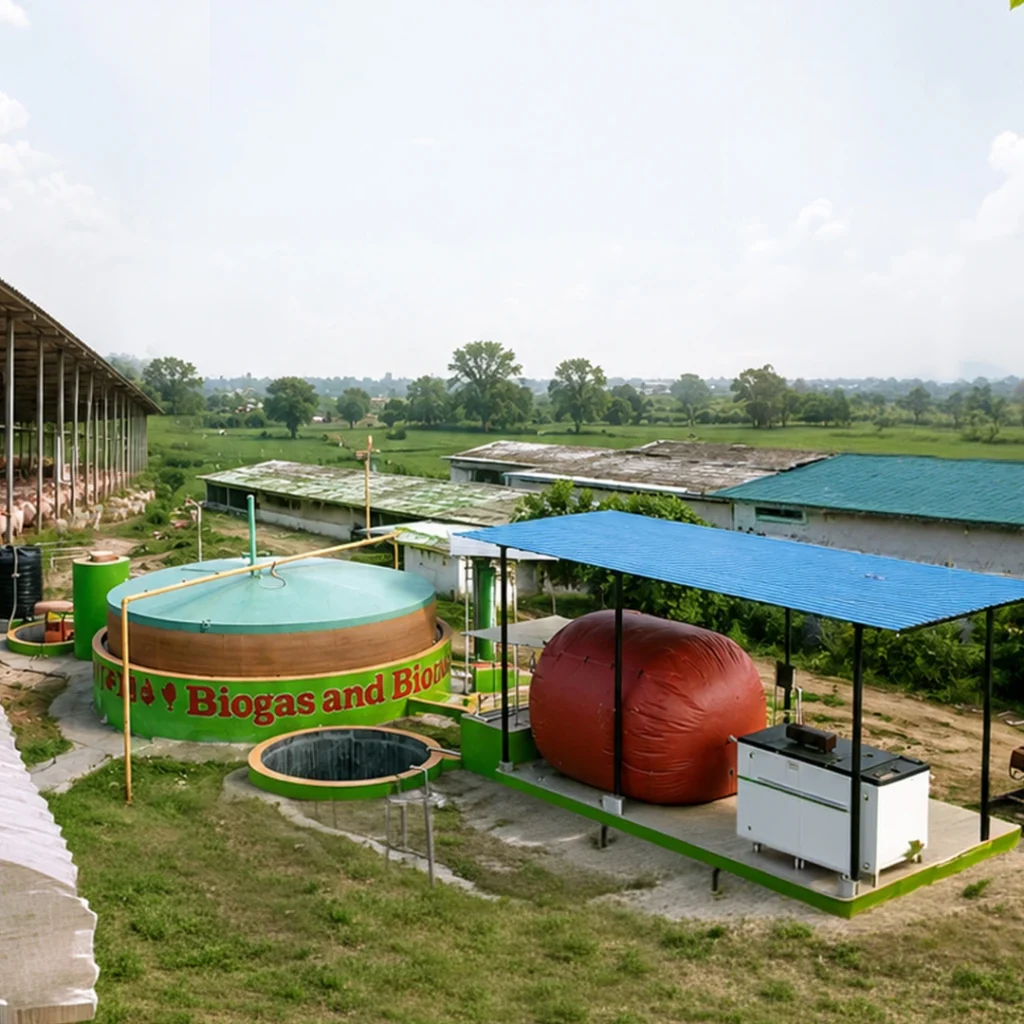
To address these concerns, a Commercial Biogas Plant with a capacity of 250 CUM was installed. The system was designed to convert poultry waste into renewable energy and organic manure. The solution was adopted following strong recommendations via word of mouth, highlighting trust in reliable, sustainable biogas technology.
Powering Sustainability: Inside a 250 Cum Biogas Success Story
Watch how a 250 Cum biogas plant by Radha Rani Enterprises in Jharkhand transforms organic waste into clean energy. This case study highlights real-world implementation, efficiency, and environmental benefits.
Objectives
Creating a Sustainable and Energy-Efficient Poultry Operation
01.
To establish an effective poultry litter management system
02.
To reduce dependence on conventional electricity and fuel
03.
To minimize carbon emissions and environmental impact
04.
To generate renewable energy and organic manure from waste
Challenges
Addressing Key Operational and Environmental Issues is their focus.
Large-Scale Poultry Waste Generation
25,000 birds produce waste daily, making disposal complex and inefficient.
High Electricity Dependency
The farm operations relied heavily on external power sources, resulting in higher costs.
Environmental Concerns
Carbon emissions were being generated through traditional waste handling and energy use.
Impact
Creating measurable environmental and economic value with a Commercial Biogas Plant.
Proper management of Waste
Poultry litter waste is now efficiently processed into useful energy, reducing disposal issues.
On-Site Energy Support
Partial electricity requirements are met through biogas-based generation, reducing reliance on grid power.
Resource Recovery through Manure
Biogas slurry is being converted into organic manure, supporting sustainable agriculture practices.
Lower Carbon Emissions
The carbon footprint has been reduced, resulting in a cleaner operational environment.
Other case Studies
KOSHISH is an initiative by a team of young professionals from the Indian Institute of Technology.