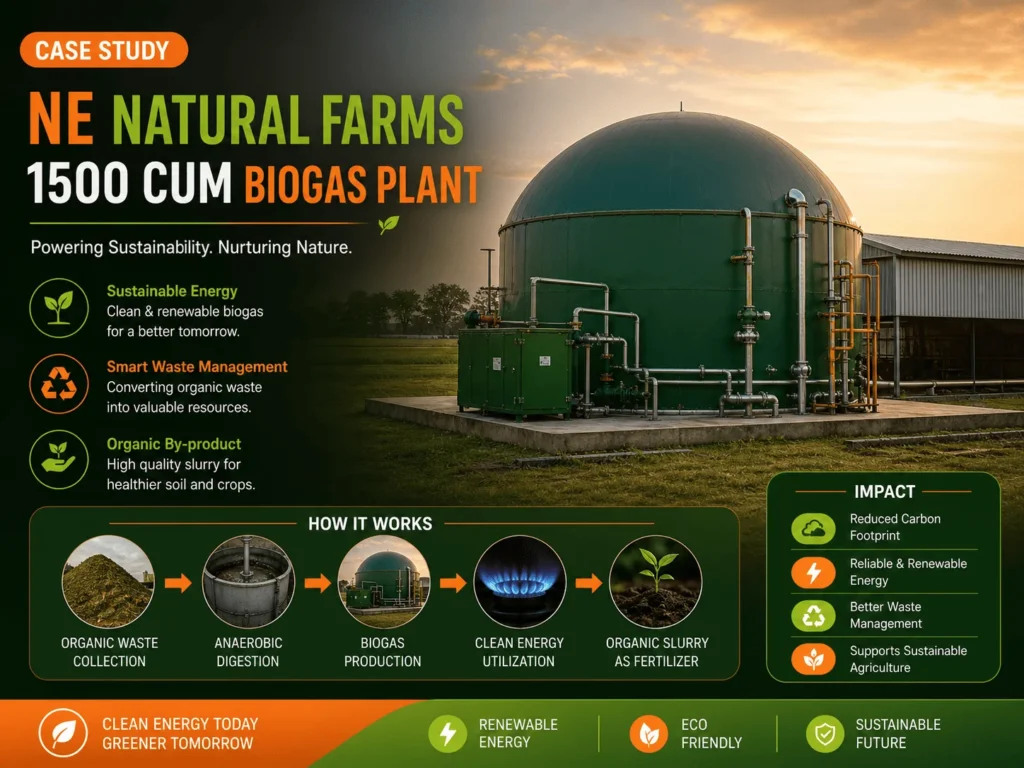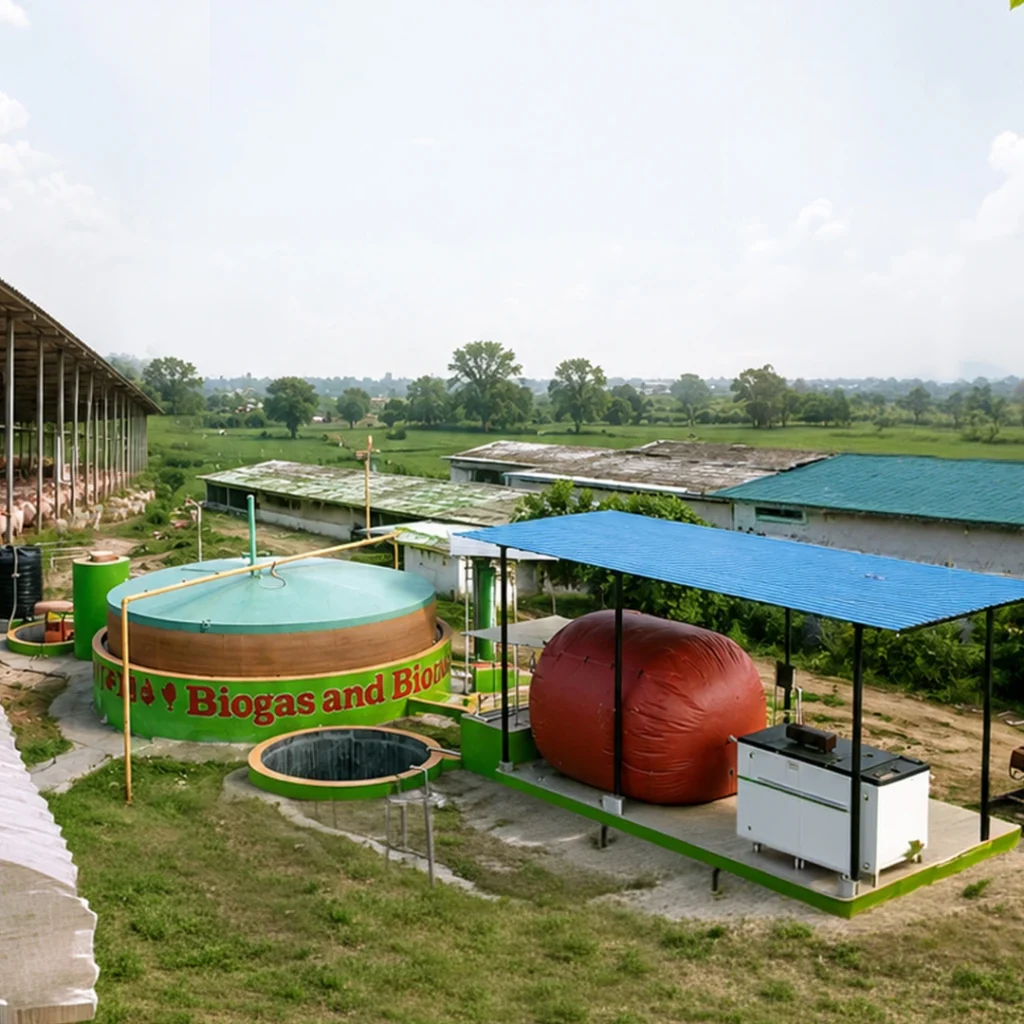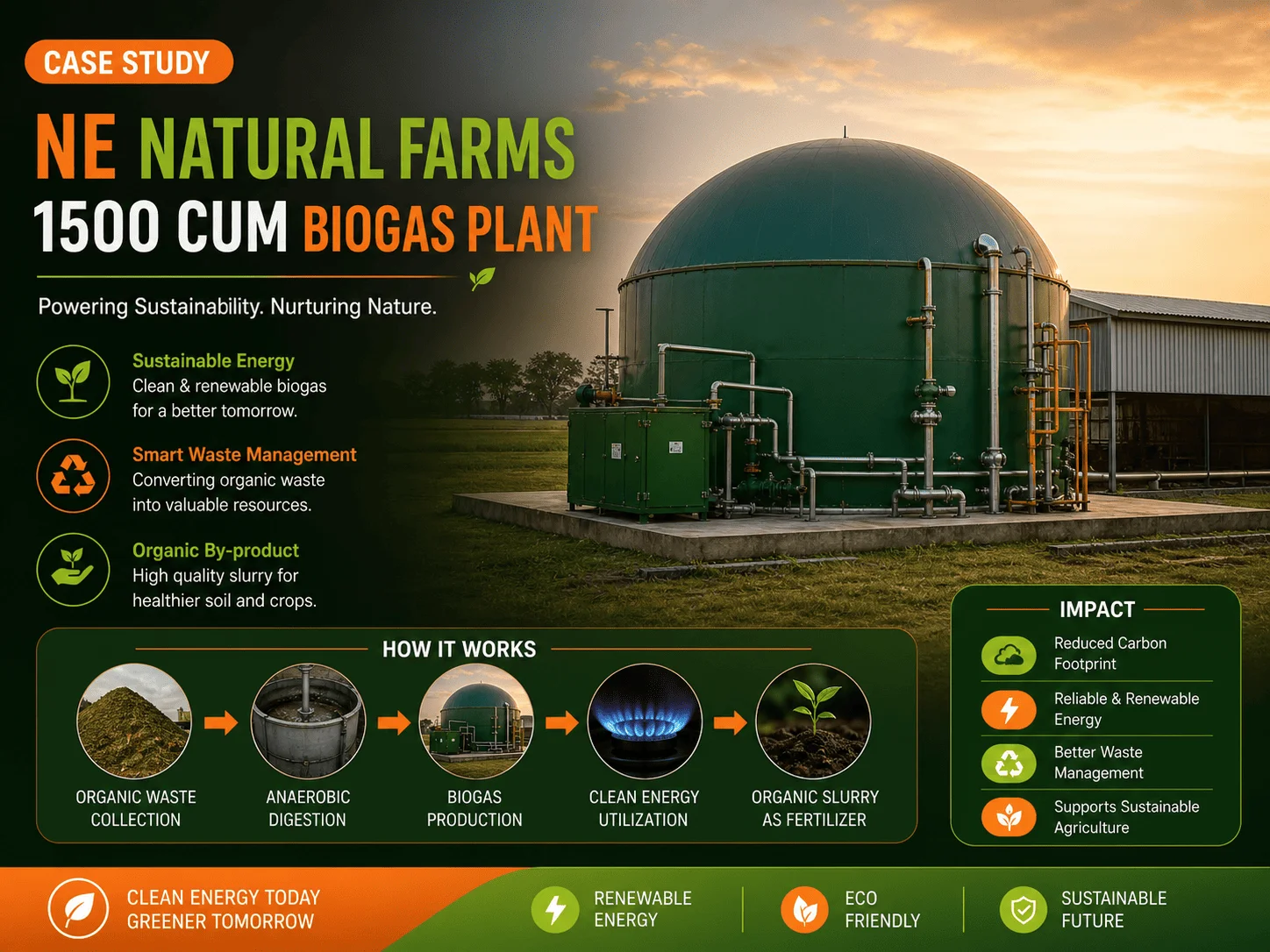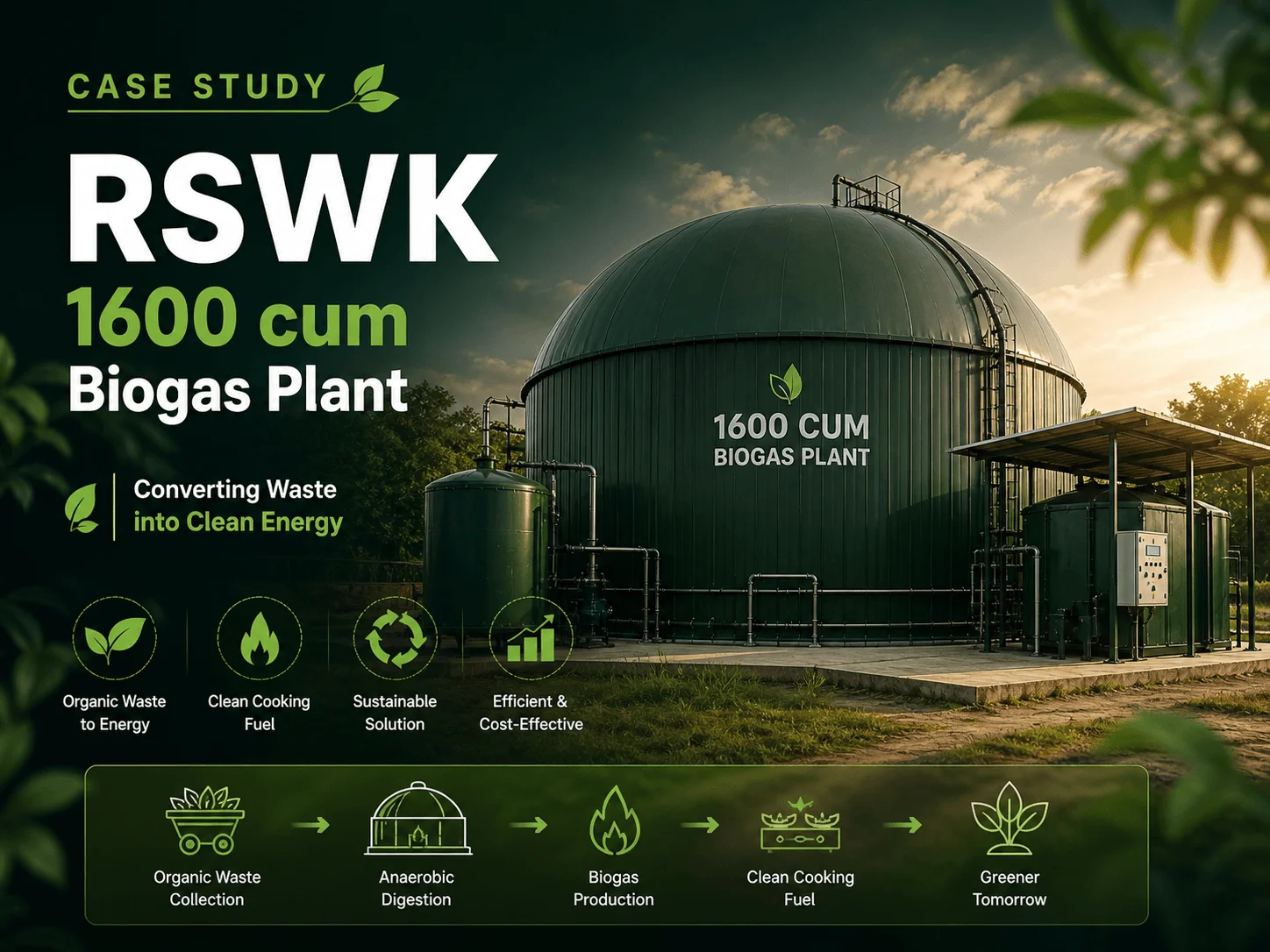
1,500 CUM Biogas Plant, NE Natural Farms in Meghalaya
A 5kW residential solar solution installed for Rekha Pathak in Ghaziabad to power a sustainable home.

1,500 CUM Biogas Plant, NE Natural Farms in Meghalaya
NE Natural Farms, located in Meghalaya, faced a major challenge in managing the daily volume of poultry litter waste. Traditional disposal practices were proving inefficient, while electricity and fuel costs were steadily rising. Environmental concerns, particularly related to carbon emissions, were also increasing.
To address these issues, a Commercial Biogas Plant with a 1,500 CUM capacity was installed. Through this system, poultry waste is being efficiently converted into biogas and organic manure. The project was initiated through strong references and word of mouth, ensuring trust and reliability in execution.
Transforming Organic Waste into Sustainable Energy
Discover how the 1500 CUM Biogas Plant at NE Natural Farms, Meghalaya converts organic waste into clean and sustainable energy, supporting eco-friendly farming and renewable energy development in Northeast India.
Objectives
Enabling large-scale waste conversion and sustainable energy generation.
01.
To establish an efficient system for handling bulk poultry litter waste
02.
To generate renewable energy from organic waste sources
03.
To reduce dependence on conventional electricity and fuel
04.
To enhance long-term environmental sustainability
Challenges
Managing scale, cost pressures, and environmental impact effectively.
Large-Scale Waste Accumulation
Daily poultry litter production generated huge volumes, making disposal difficult and resource-intensive.
Rising Energy Expenses
High electricity and fuel consumption were increasing operational costs.
Environmental Impact Concerns
Improper waste handling was contributing to carbon emissions and environmental stress.
Impact
Delivering measurable sustainability and efficiency through a Commercial Biogas Plant.
Efficient Waste Management
Poultry litter is now processed systematically, significantly reducing disposal issues.
Partial Energy Independence
A portion of the farm’s electricity needs is being met through biogas-based power generation.
Organic Fertiliser Production
Biogas slurry is being utilised to produce high-quality organic manure, creating additional value.
Reduced Carbon Footprint
Carbon emissions have been lowered, resulting in a positive environmental impact.
Other case Studies
KOSHISH is an initiative by a team of young professionals from the Indian Institute of Technology.