A 5kW residential solar solution installed for Rekha Pathak in Ghaziabad to power a sustainable home.

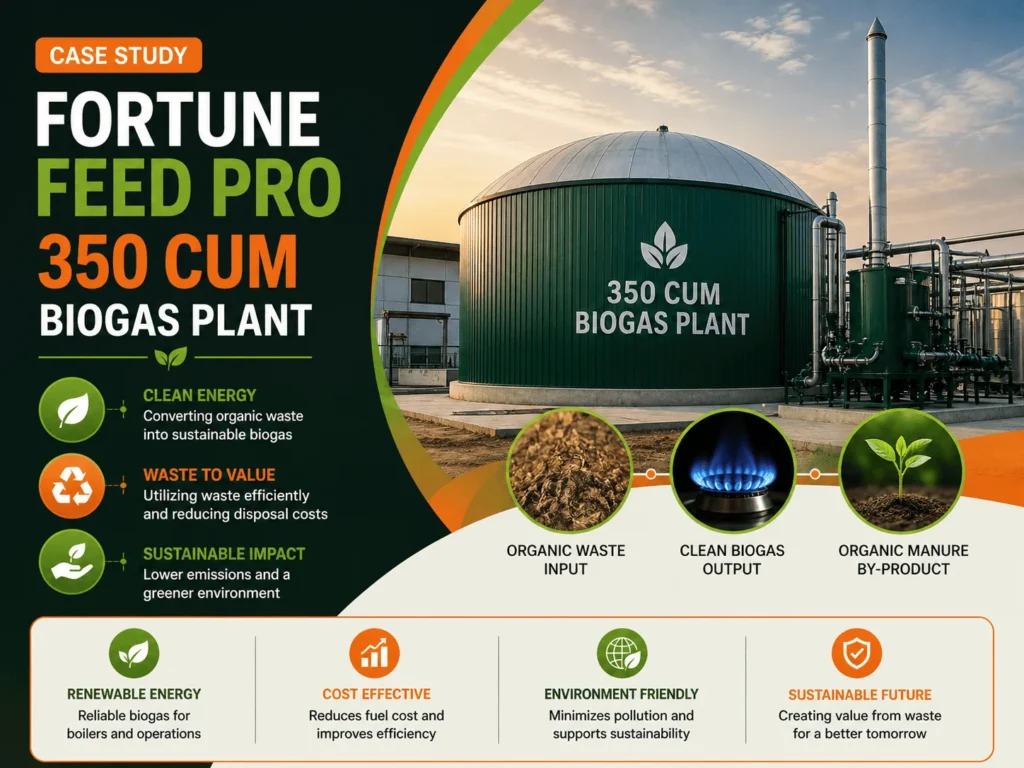
350 CUM Biogas Plant, Fortune feed Pro in Haryana
Fortune Feed Pro, based in Haryana, was struggling with the daily management of nearly 3500 kg of poultry litter waste. Traditional disposal methods were becoming inefficient, and rising electricity and fuel costs were adding financial pressure. Environmental concerns, including increased carbon emissions, were also becoming significant.
To solve these challenges, a Commercial Biogas Plant of 350 CUM capacity was installed. Through this system, organic waste is being converted into clean biogas and valuable by-products. The project was initiated through strong industry references and word-of-mouth trust.
Inside the 350 CUM Biogas Plant Project at Fortune Feed Pro, Haryana
Watch how the 350 CUM Biogas Plant at Fortune Feed Pro Haryana transforms organic waste into clean energy, improving sustainability, reducing operational costs, and supporting eco-friendly industrial growth.
Objectives
Enabling efficient waste conversion, cost optimisation, and long-term sustainability.
01.
To establish a reliable system for continuous poultry waste processing
02.
To convert organic waste into a consistent source of renewable energy
03.
To reduce dependency on conventional and costly fuel sources
04.
To support environmentally responsible farm operations
Challenges
Managing scale, cost pressures, and environmental impact effectively.
Continuous Waste Accumulation
Large volumes of poultry litter were being generated daily, creating disposal inefficiencies.
High Operational Expenses
Energy costs were rising steadily, affecting overall profitability.
Limited Energy Alternatives
The farm lacked a dependable renewable energy source before implementation.
Impact
Driving efficiency, sustainability, and cost savings with a Commercial Biogas Plant.
Optimised Waste-to-Energy Conversion
Poultry litter is now being systematically converted into biogas, improving overall efficiency.
Reduced Energy Costs
A portion of the farm’s energy needs is being met internally, lowering electricity and fuel expenses.
Sustainable By-Product Utilisation
Organic slurry is being processed into nutrient-rich manure, enhancing resource utilisation.
Improved Environmental Performance
Carbon emissions have been reduced, and a cleaner, eco-friendly operation has been established.
Other case Studies
KOSHISH is an initiative by a team of young professionals from the Indian Institute of Technology.