





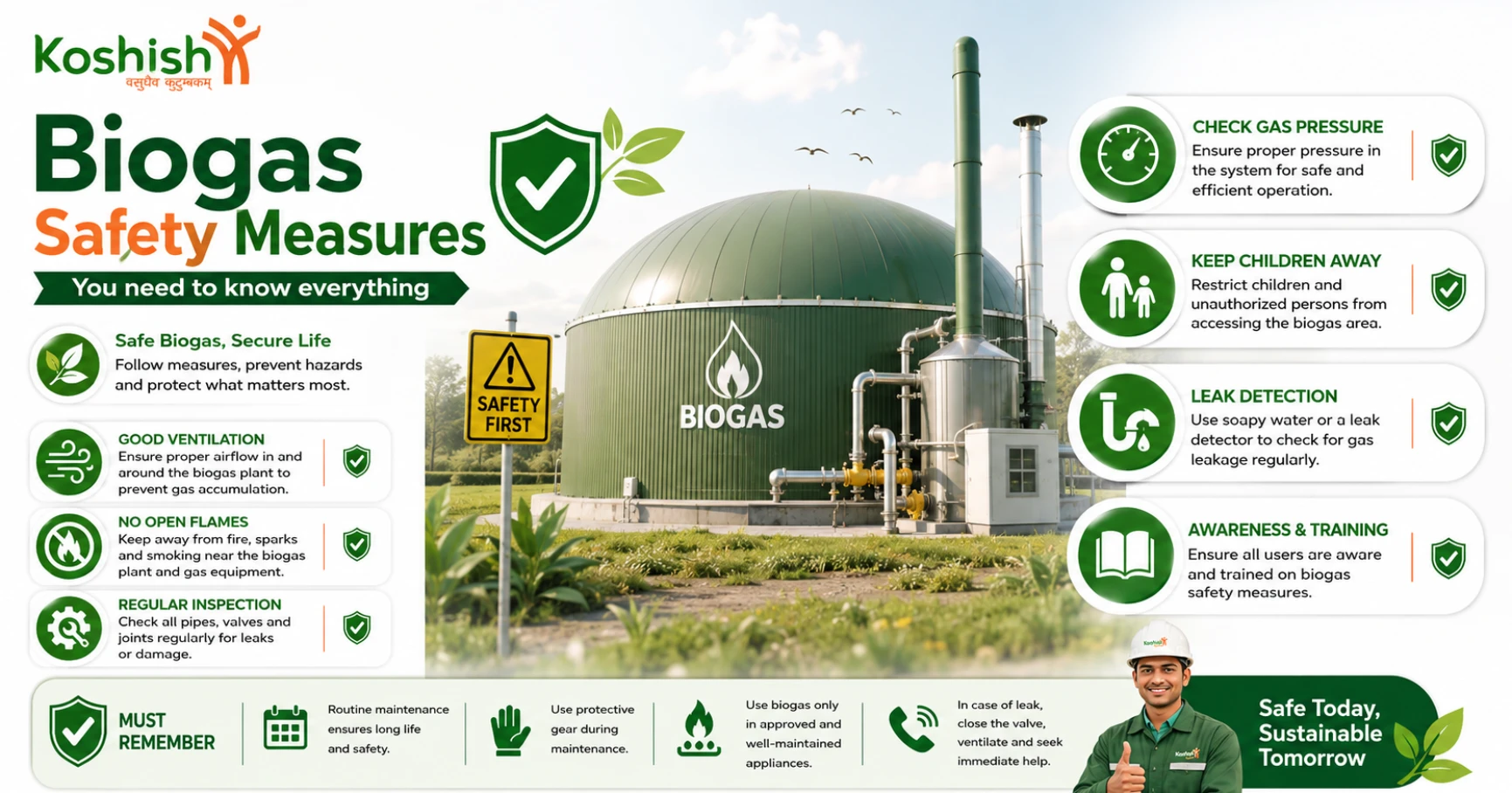
Sustainable solutions are in demand worldwide. Mostly, the farmers are adopting a commercial biogas plant. A biogas plant converts the organic matter into renewable energy. It is used for power generation, generating cooking gas, and producing organic fertiliser. Moreover, it also helps in waste management, reducing carbon emissions, and lowering pollution. It is well known that the production of biogas from organic waste emits methane. This is harmful to the environment as well as humans. Therefore, biogas safety is important. Maintaining it and checking regularly is essential for any biogas plant hazards and gas leakage prevention.
 We will be discussing all the necessary methane safety precautions and biogas safety that are important to follow below in the blog.
We will be discussing all the necessary methane safety precautions and biogas safety that are important to follow below in the blog.
Why is biogas safety important?
A biogas plant turns organic waste into clean energy by producing methane gas. However, methane can be dangerous if it leaks. The gas also contains small amounts of hydrogen sulfide (H₂S) and carbon dioxide (CO₂). A biogas plant has a large digester, and its size depends on the plant’s capacity. When the plant is designed, installed, and maintained properly, it operates safely and reduces the risk of gas leaks and other biogas plant hazards. There are many reasons why biogas safety is important. It helps prevent accidents and keeps the plant running with methane safety precautions. Some of the main risks include:- Methane gas leaks can cause serious biogas plant hazards.
- Gas pressure can build up if there is not enough storage space.
- Workplace accidents can happen if safety rules are not followed.
- Toxic gases, such as hydrogen sulfide (H₂S), can leak and harm people.
- Protect workers from accidents.
- Prevent methane gas leaks.
- Reduce the risk of fires and explosions.
- Meet environmental safety rules and regulations.
- Keep the biogas plant safe and efficient.
Common Biogas Plant Hazards You Should Know
A biogas plant can face several biogas safety hazards during normal operation. Therefore, it is important to understand these risks and take the right safety measures. Some of the most common biogas plant hazards include:- First, methane gas can leak if the biogas plant is not designed or installed properly. As a result, it can create serious biogas safety and fire risks.
- Next, hydrogen sulfide (H₂S) is a toxic gas. Even small amounts can irritate the eyes, cause breathing problems, and, in severe cases, make a person unconscious.
- In addition, high pressure inside the digester can damage the pipelines, the digester, or the gas storage balloon if it is not controlled.
- Finally, poor maintenance can cause electrical faults and mechanical failures. Because of this, the risk of accidents increases.
Important Biogas Safety Measures
Now, let’s look at the important biogas safety measures you should follow during biogas plant installation.- Follow these Biogas safety measures to keep a biogas plant safe and running smoothly: First, install a methane gas leak detector. It quickly detects gas leaks and helps prevent accidents.
- Next, ensure proper ventilation, especially near generators and compressors. Good airflow reduces the risk of gas buildup and improves biogas safety.
- Also, maintain a safe operating pressure at all times. Check the pressure regularly to keep the plant running safely.
- In addition, inspect the biogas plant on a regular basis. Check pipelines, valves, flexible hoses, digesters, compressors, and gas storage systems to make sure they are in good condition. Repair or replace damaged parts as soon as possible.
- Finally, never smoke or use open flames near the biogas plant. Methane gas can catch fire easily and cause serious accidents.
What are the worker biogas safety guidelines for biogas plants?
Workers play an important role in keeping a biogas plant safe. They should always follow these biogas safety tips:- Give every worker proper training before they operate the biogas plant.
- Follow the standard operating procedures (SOPs) at all times.
- Never enter a confined space without proper permission and safety checks.
- Test the gas levels before starting any maintenance work.
- Keep emergency contact numbers easy to find so workers can get help quickly during an emergency.
- Report any unusual smell, gas leak, or pressure change immediately.
- Wear the required personal protective equipment (PPE) while working at the biogas plant.
Emergency Response During Gas Leaks or Accidents
Follow these steps if a gas leak or fire happens at a biogas plant. If a Gas Leak Happens:- Stop all plant operations immediately.
- Shut off the gas supply.
- Evacuate everyone from the affected area.
- Do not use electrical switches or create sparks.
- Inform trained personnel right away.
- Use the correct fire extinguisher if it is safe to do so.
- Shut off the gas supply.
- Call the emergency services immediately.
- Evacuate the area and follow the emergency evacuation plan.