
What Is the Biogas Scheme?
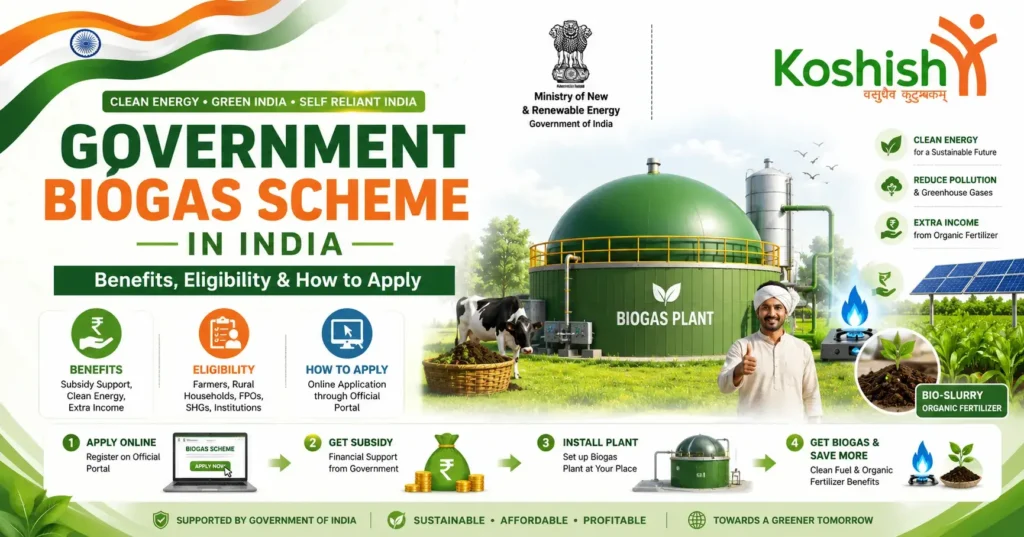
The MNRE Biogas Scheme is a government-supported program managed by the Ministry of New and Renewable Energy (MNRE). It supports the installation of small and medium biogas plants. The program can support plants from 1 to 2,500 cubic metres of biogas per day, depending on the project type. Small plants mainly serve household and farm needs. Meanwhile, larger plants can support power generation or thermal applications. The government biogas scheme also supports the use of digested slurry as organic-rich bio-manure. Therefore, farmers can get both energy and useful manure from waste.Key Benefits of the Biogas Scheme
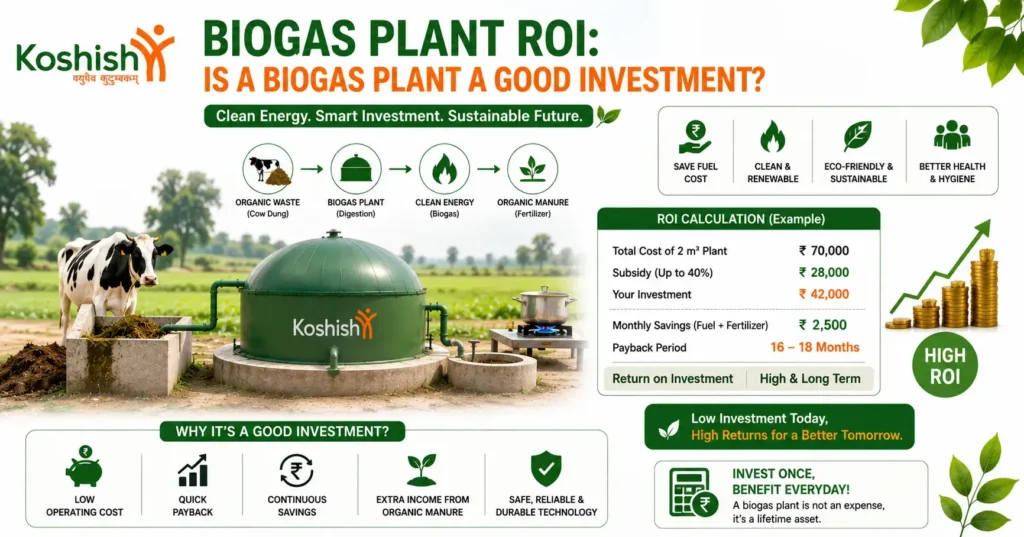
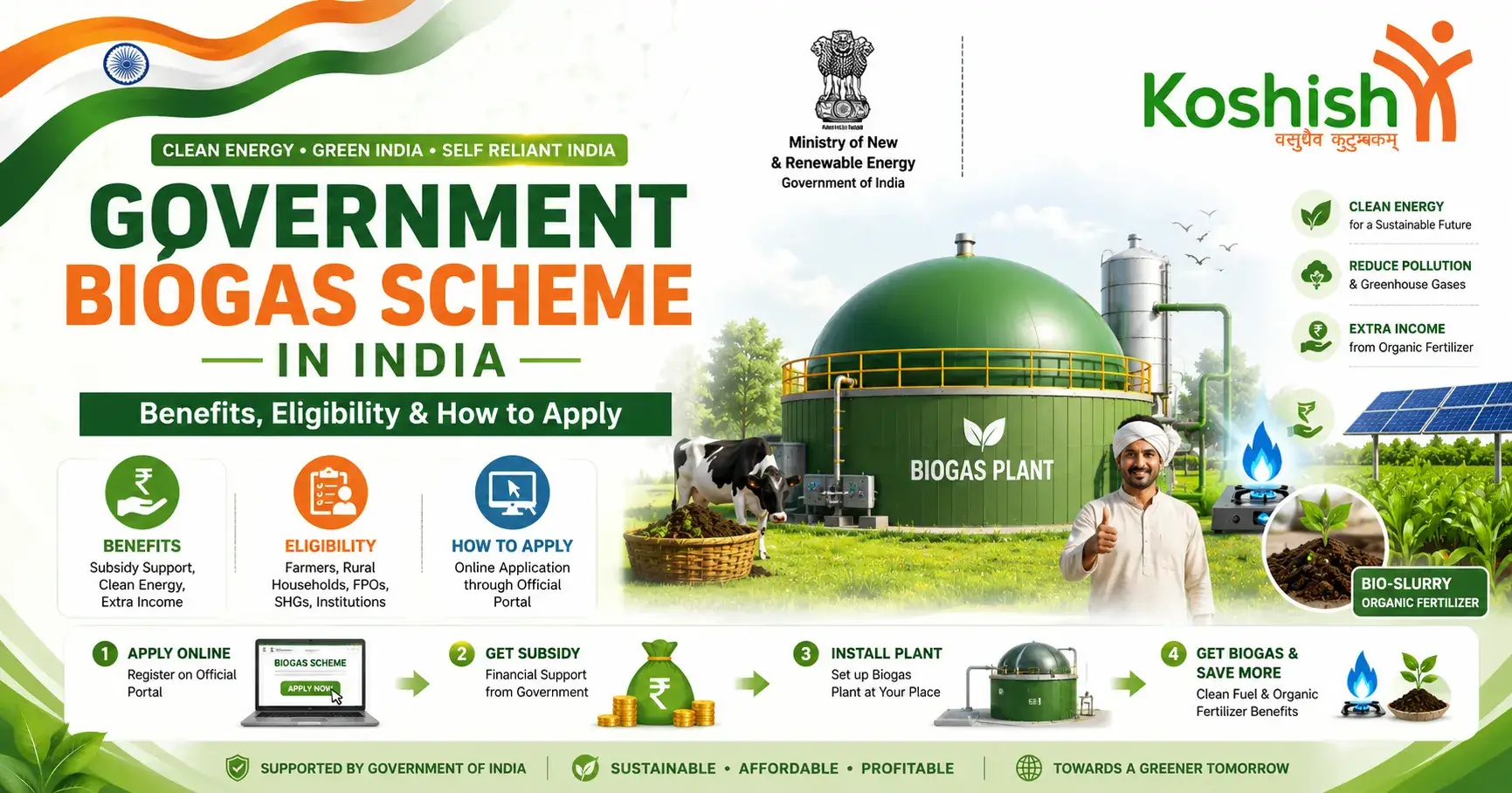
The MNRE Biogas Scheme offers several benefits. Here are the main ones: Financial Assistance: Eligible biogas plants can receive Central Financial Assistance (CFA). For small plants, the amount depends on plant size and beneficiary category. Under the published Phase-I rates, assistance ranged from ₹9,800 to ₹70,400 for small plants in general states and categories. Clean Cooking Fuel: Biogas can be used as a clean fuel for cooking. As a result, families can reduce their dependence on traditional cooking fuels. Bio-Manure Production: A biogas plant produces slurry after digestion. This slurry can be used as organic-rich manure. Thus, waste becomes a useful farm resource. Better Waste Management: The biogas government scheme encourages the useful treatment of cattle dung and other organic waste. This can support cleaner farms and better sanitation. Energy Generation: Medium-size plants can support electricity or thermal energy applications. The program also supports decentralized renewable energy applications. Rural Employment: The biogas government scheme program also supports training for users, masons, technicians, and other workers. Therefore, it can help create local skills and employment.Who Can Apply for the Biogas Scheme?
Eligibility depends on the plant size and program rules. For small plants, the MNRE portal states that applicants should generally have:- Suitable land or space of about 50–60 square metres.
- Regular access to cow dung or other suitable feedstock.
- A regular water supply.
- The ability to pay their required share of the project cost.
How much Financial Support is available?
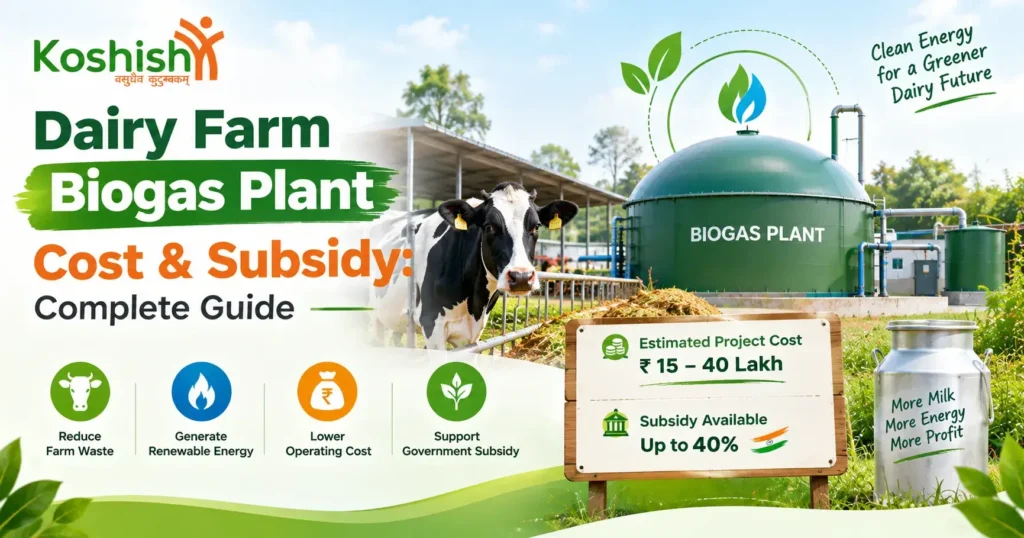
The support depends on the plant size, location, and beneficiary category. For small plants between 1 and 25 cubic metres per day, the MNRE portal has listed Central Financial Assistance ranging from ₹9,800 to ₹70,400 per plant for standard categories, depending on capacity. Higher assistance has been listed for certain hilly and North-Eastern states, islands, and SC/ST beneficiaries. There have also been additional provisions for certain toilet-linked plants and slurry filter units. Special incentives may also apply to registered Gaushalas and other eligible categories. Important: These amounts relate to the published program details for the relevant period. Do not assume that the same subsidy amount is available for a new application today. Always check the current MNRE notification before making an investment.How to Apply for Biogas Subsidies?
Applying for the Biogas government Scheme is simple if the correct steps are followed: Step 1: Check Eligibility: First, check your plant size, feedstock, land, water supply, and beneficiary category. Step 2: Register Online: For small biogas plants, users can register their interest through the official MNRE Biogas Portal. Step 3: Submit Details: Next, provide the required personal, site, and plant information. Keep your supporting documents ready. Step 4: Site Verification: After submission, the concerned implementing agency can process the application and verify the proposed site. Step 5: Plant Construction: Once approved and processed under the applicable program, the plant can be installed through the required process. Step 6: Commissioning and Payment: Under the published guidelines for small plants, financial assistance is released after successful construction and commissioning. The eligible amount is credited to the beneficiary’s bank account.Why is the Biogas Scheme India Important?
The MNRE Biogas Scheme India program connects waste management with renewable energy. Instead of allowing organic waste to become a problem, users can process it in a biogas plant. Moreover, the process gives two useful outputs: biogas and bio-manure. Therefore, the system can support cleaner energy, better waste handling, and farming needs.Frequently Asked Questions (FAQ)
Who can apply for the MNRE Biogas Scheme?
Farmers, households, and other eligible users can apply for the Biogas Scheme, provided they meet the required conditions. For example, applicants generally need suitable space, a regular supply of feedstock such as cow dung, and access to water. In addition, they may need to arrange their share of the project cost. Therefore, applicants should check the latest eligibility rules before submitting an application.
What are the main benefits of the Biogas Scheme?
The Biogas Scheme provides several useful benefits. First, it supports the production of renewable biogas from organic waste. Next, the gas can be used for cooking or other suitable energy needs. In addition, the digested slurry can be used as bio-manure. Therefore, the scheme can support cleaner energy, better waste management, and useful farming resources. Moreover, eligible users may receive financial assistance under the applicable program.
Is there a subsidy under the Biogas Scheme?
Eligible applicants may receive financial assistance under the Biogas Scheme. However, the amount is not the same for every applicant. Instead, it can depend on factors such as plant size, beneficiary category, location, and the current program guidelines. Therefore, applicants should check the latest MNRE notification or portal before planning their project. This step helps users understand the assistance available to them.
What raw materials can be used in a biogas plant?
A biogas plant mainly uses biodegradable organic materials. For example, cow dung is commonly used in small plants. In addition, suitable organic waste from farms, kitchens, dairies, and other sources can be used in properly designed plants. However, the feedstock should match the plant design. Therefore, users should choose the right material and maintain a regular supply for stable biogas production.
Can gaushalas benefit from the Biogas Scheme?
Eligible gaushalas can benefit from the Biogas Scheme when they meet the applicable program conditions. In particular, gaushalas can use cattle dung as feedstock for biogas production. Furthermore, the process can help manage dung while producing energy and bio-manure. Some program guidelines also provide specific incentives for eligible registered gaushalas. Therefore, gaushalas should check the current MNRE rules before applying.
Where can I get more information about the Biogas Scheme?
For the latest information, applicants should check the official MNRE website and Biogas Portal. In addition, they can contact the concerned State Implementing Agency for guidance on eligibility, documents, application status, and available targets. Since government programs can be updated from time to time, it is important to use the latest official information. Therefore, checking the current guidelines before starting a project is recommended.