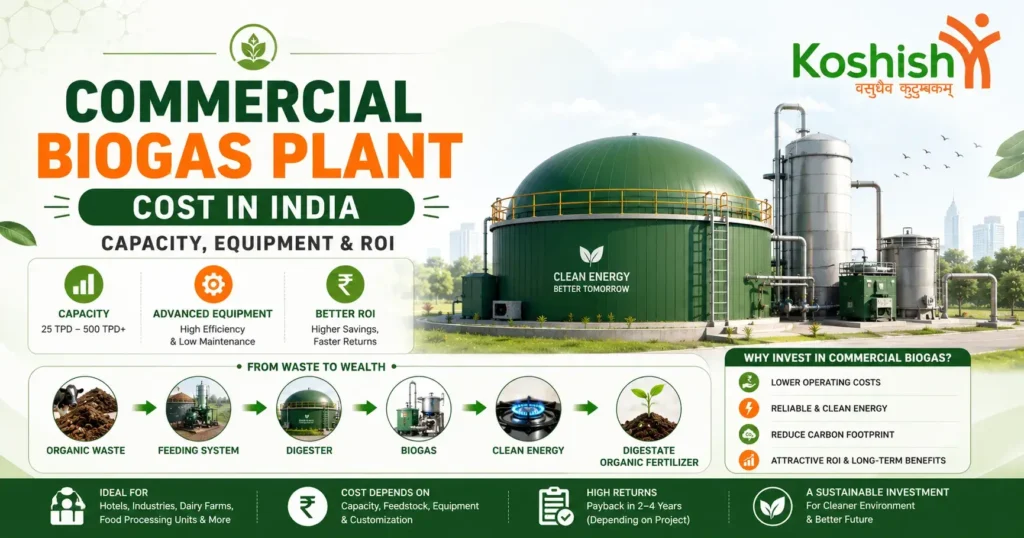

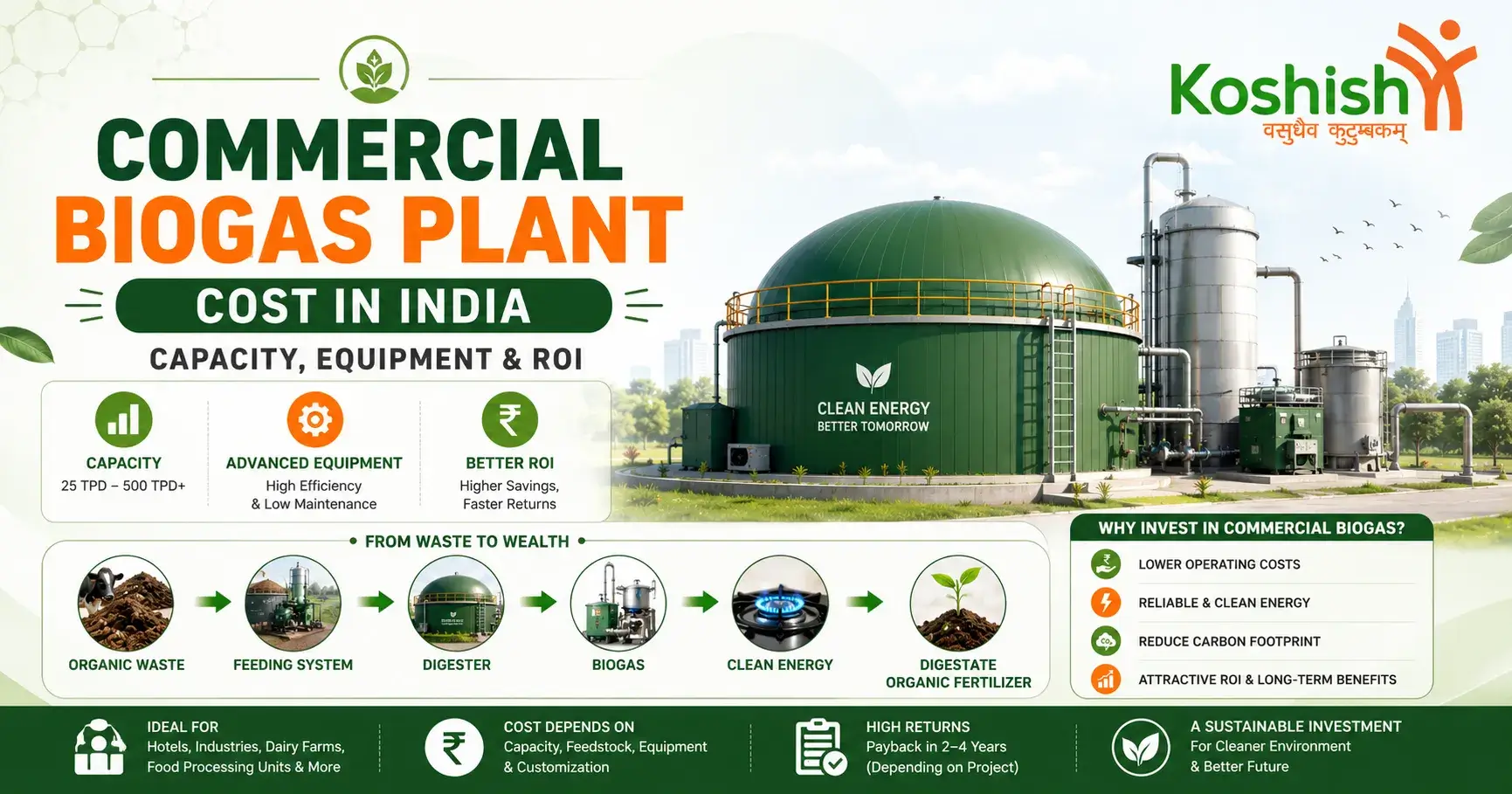
What if businesses could now turn organic waste into energy and save money at the same time? Well, it can all be possible with a commercial biogas plant. It uses organic waste, such as food waste, cow dung, and poultry litter, to produce biogas. This gas can be used for heating, cooking, or power generation.
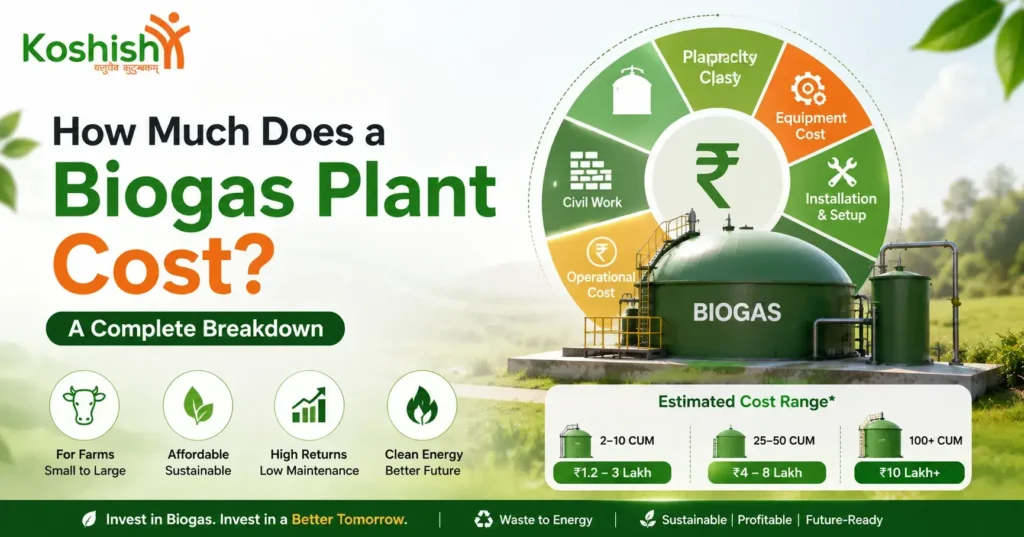
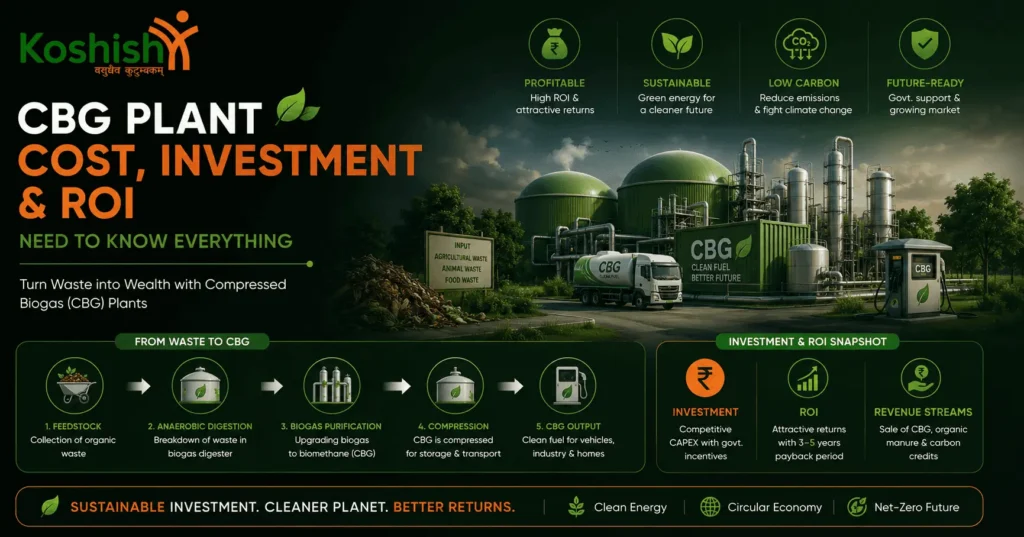
The commercial biogas plant cost varies with plant size and design. A small plant needs less space and equipment. In contrast, a large plant needs more tanks, machines, and safety systems. The final price also depends on the type of waste, site conditions, and the level of automation. Moreover, plants that clean biogas for use as Bio-CNG need extra equipment. As a result, two plants with the same capacity may have different prices. For this reason, businesses should ask for a project-based quote instead of relying on one fixed price.
How the Capacity Affects Commercial Biogas Plant Cost
Plant capacity shows how much waste a plant can process or how much gas it can produce. Therefore, it plays a key role in the total project cost.- Small commercial plants: These suit hotels, dairies, and small farms.
- Medium plants: These suit food factories, poultry farms, and large dairies.
- Large plants: These suit industries, waste collection centres, and major farms.
Key Equipment Needed for a Biogas Plant
Equipment makes up a major part of the commercial biogas plant cost. Each part has a clear role.- Waste feeding system: It collects and feeds waste into the plant.
- Digester Tank: It holds waste while microbes break it down and produce biogas.
- Gas Holder: It stores the gas until it is used.
- Gas cleaning unit: It removes moisture and unwanted gases.
- Pumps and Pipes: They move the waste, slurry, and gas.
- Biogas engine or boiler: It uses gas to make power or heat.
- Control and Safety Systems: They help manage pressure, gas flow, and safe operation.
Other Factors that Affect the Commercial Biogas Plant Price
The commercial biogas plant cost depends on more than capacity. First, the type and quality of waste affect the plant design. Next, land, civil work, transport, and installation add to the cost. Furthermore, automatic controls may raise the starting price but reduce manual work. Water use, power needs, labour, and repairs also affect running costs. Therefore, businesses should compare both the initial price and the long-term cost before choosing a plant.How to Calculate Biogas ROI
Biogas ROI means the return a business gets from its investment. In simple terms, it shows how the plant may pay back its cost. A basic payback formula is Payback Period = Total Project Cost ÷ Annual Net Savings. For example, if a plant costs ₹50 lakh and saves ₹10 lakh each year after running costs, its simple payback period is five years. Savings may come from lower fuel bills, lower waste disposal costs, and income from biogas or bio-manure. However, actual biogas ROI depends on waste supply, gas output, energy use, maintenance, and selling prices. Therefore, use real project data before making an investment.Tips to Reduce Biogas Plant Costs
Businesses can manage the commercial biogas plant cost with careful planning. Therefore, follow the below-mentioned tips for good functional biogas plants:- Check the daily amount and type of waste.
- Choose capacity based on real needs.
- Compare equipment quality and service support.
- Plan regular maintenance from the start.
- Check available government schemes and eligibility.
Frequently Asked Questions
How much does a large biogas plant cost?
The cost of a biogas plant, being a sizable one, varies from some lakhs to even crores, according to the size and usage. For instance, a biogas plant producing power would require different machines from the plant that generates Bio-CNG. Moreover, land requirement, waste availability, and automation all play roles in determining the overall cost. An elaborate project report is always beneficial to estimate costs for business organizations.