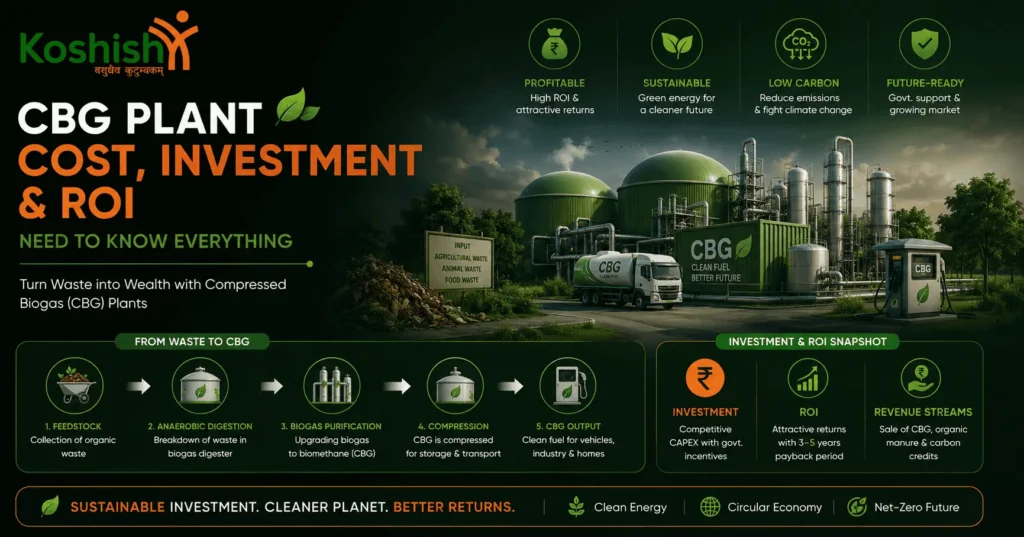

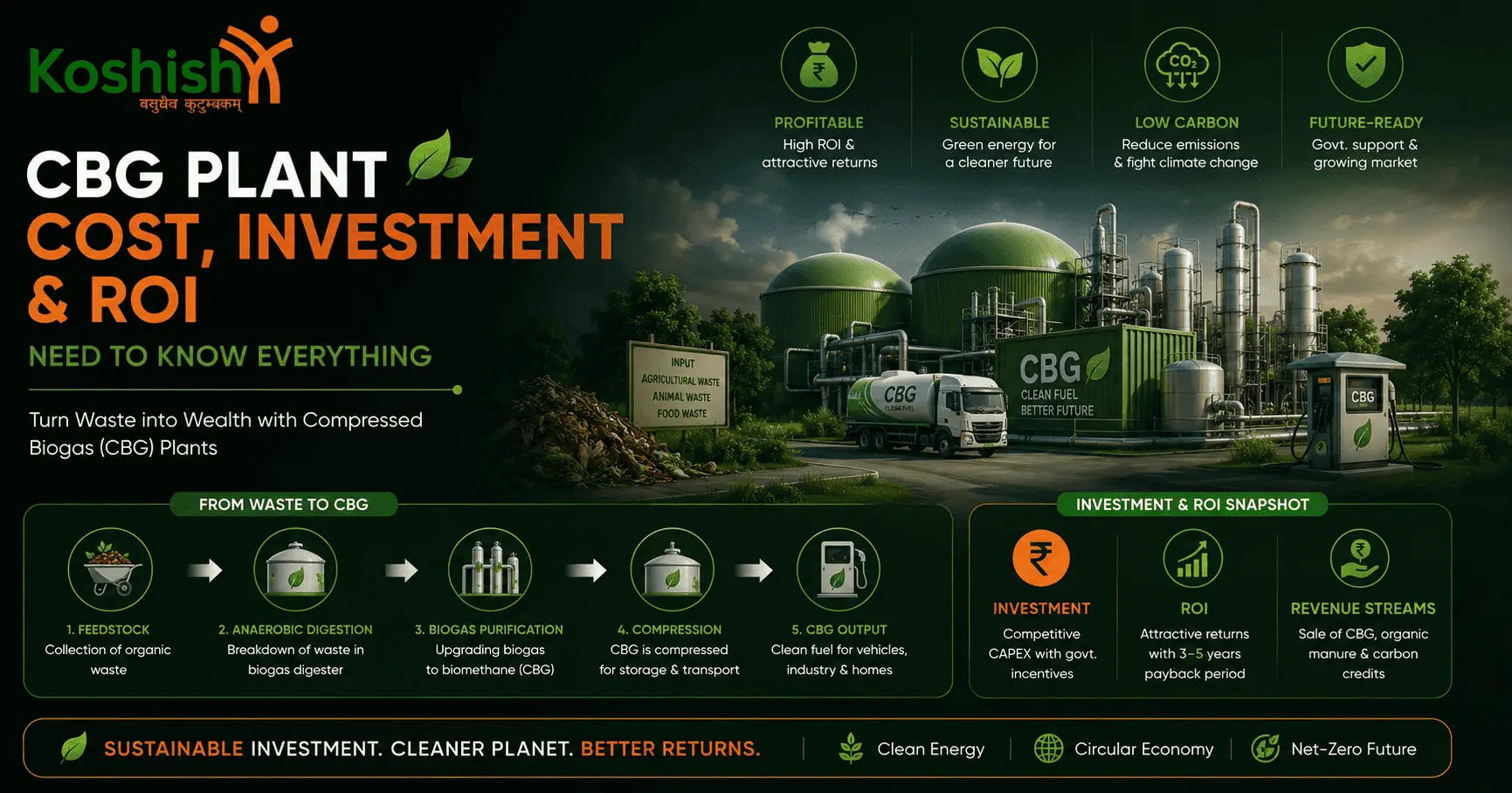
Have you ever thought that farm waste, cow dung, and food waste could become a source of income? A Compressed Biogas (CBG) plant makes this possible. It turns organic waste into this possibility. It turns organic waste into clean fuel and useful manure.
As a result, it can help in running a business and gaining profits while protecting the environment. However, before starting the business, one thing must be understood: the CBG plant cost, daily expenses, and expects a return. This guide explains the main CBG investment in India, CBG Plant costs, CBG plant ROI and profit factors in simple words.
To produce compressed biogas, the raw biogas is further processed and compressed into fuel. This fuel can be used in vehicles and industries. Moreover, the CBG plant can produce organic manure for farms.
What is the CBG Plant Cost in India?
The CBG plant cost depends on the plant size, waste type, location, and technology. Land, machinery, storage, and gas cleaning systems also affect the total cost. For example, a study by the Centre for Science and Environment estimated that a 5-tonne-per-day CBG plant could cost around ₹35–45 crore, depending on the feedstock. Therefore, you should get a detailed project estimate before the CBG investment in India. The main CBG plant costs include:
- Land and Site Work: Purchasing proper land in a suitable site affects the CBG operating cost.
- Plant Machinery: Installing a digester, gas cleaning units, and a compressor is a high cost, which again has a huge impact on the CBG plant cost.
- Waste Collection: Collecting cow dung, farm waste, or other organic waste is also not free; it incurs costs.
- Storage and safety: Building tanks and safety systems while constructing a CBG plant is also important since mishandling can lead to accidents.
- Approvals and setup: Meeting legal and technical requirements also CBG Plant costs money.
Thus, the final CBG Plant costs depend on the requirements of the projects and not just the plant’s daily output.
How Much CBG Investment is Needed in India?
The Government of India has taken an initiative to construct around 5000 CBG plants by 2030. So, CBG investment in India is very fruitful for businesses. It depends on the business plan and production target. First, the business needs to check how suitable waste is available nearby. Next, the business should find out who its potential buyers are. Tying up with nearby petrol pumps is the best example.
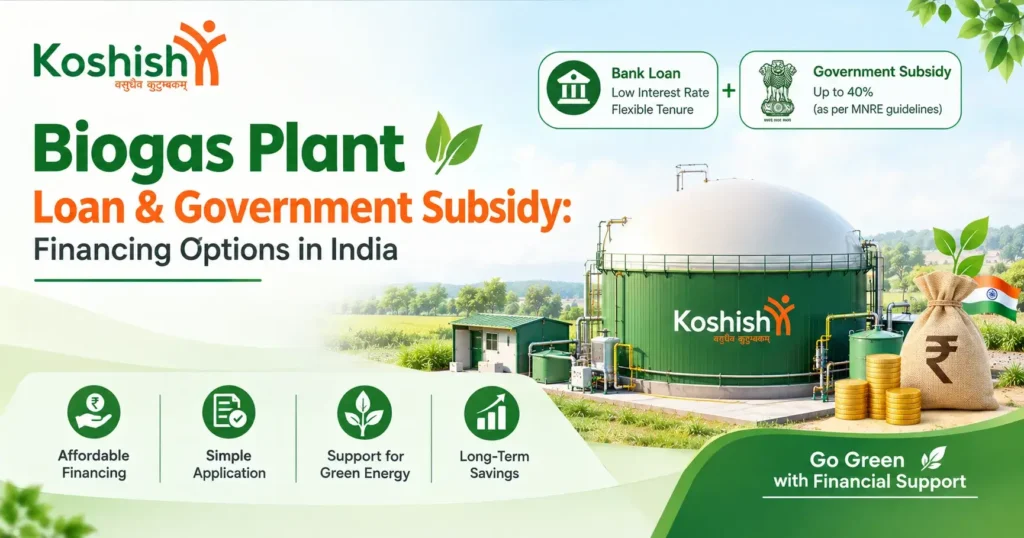
The government provides CFA (Central Financial Assistance) and bank loan support for the projects. For example, eligible projects may receive financial help under government schemes. However, support depends on the scheme rules, project type, and approval. Therefore, include the business funds, loan payments, and working capital when planning the CBG investment in India.
CBG Plant ROI
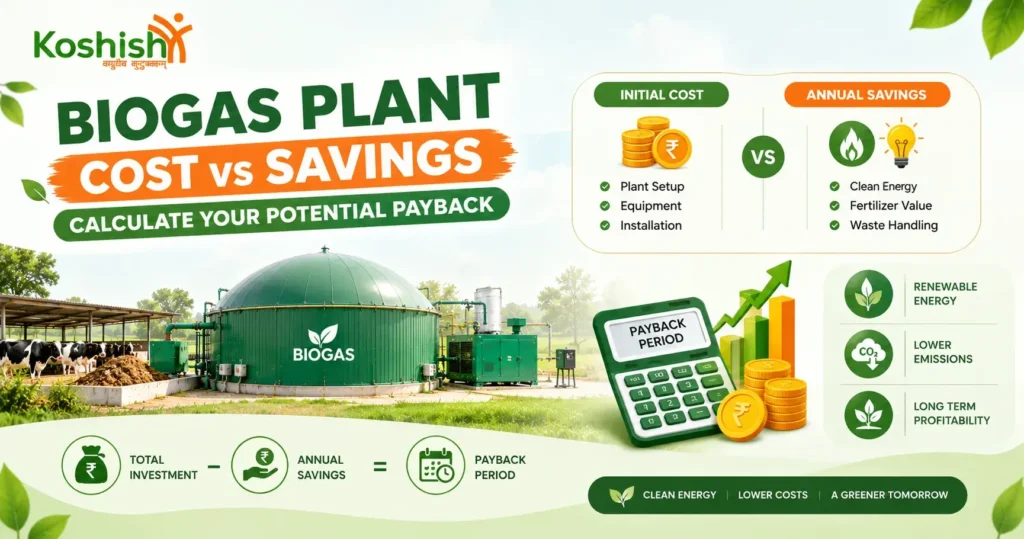
The return the business earns from the operation after 4-5 years of CBG investment in India is considered the CBG plant ROI. In simple words, it shows how well the plant performs financially. A plant can earn money by selling CBG and organic manure. However, its earnings depend on gas production, selling prices, and operating expenses. To estimate returns, compare your expected yearly profit with your total investment. Also, check how long it may take to recover your investment. Remember, no fixed payback period applies to every project.
What is CBG Project Feasibility?
CBG project feasibility means checking whether your project can work well and earn enough money. A proper study can help avoid costly mistakes. Before building the plant, check these points:
- Waste supply: Is enough waste available throughout the year?
- Market demand: Can you sell the gas and manure?
- Site location: Is the site suitable for transport and plant operations?
- Technology: Can the chosen system handle your waste?
- Financial plan: Can expected income cover CBG plant costs and loan payments?
How to Manage CBG Operating Costs?
CBG operating costs include the money needed to run the plant every day. It covers workers, electricity, waste transport, repairs, and other supplies. The business can control these expenses in several ways. First, arrange a steady supply of waste from nearby farms or businesses. Next, maintain machinery on time. Also, train workers to use equipment safely.
Finally, track gas output and daily expenses. These steps can help improve plant performance and protect profits.
Wrapping Up
The operation of the CBG plant is simple, turning organic waste into fuel, manure, and business income. However, success depends on good planning, a steady waste supply, and reliable buyers. Before investing, study the CBG plant costs, expected income, maintenance, and daily expenses. In addition, prepare a clear financial plan and check the support available for the project. A careful start can help in making better business decisions.
Frequently Asked Questions (FAQs)
Is a CBG plant profitable?
A CBG plant can earn income by selling compressed biogas and organic manure. But profits will depend on how much gas is extracted, the price of the gas and the cost per day. Consistent provision of garbage may be useful. Thus, draw up a good financial plan before investing in the venture. Do not trust profits claimed without investigating the CBG Plant costs and market demand.
What is included in CBG operating costs?
CBG operating costs include worker salaries, electricity, waste collection, transport, repairs, and routine supplies. Some plants may also face costs for waste treatment and product storage. These expenses can vary with plant size and location. To control them, track daily spending, maintain equipment, and arrange a reliable waste supply. This can help improve plant performance over time.
Are government subsidies available for CBG plants in India?
Yes, eligible projects can be supported through government schemes such as the Gobardhan scheme. The amount and terms will vary according to the scheme, project, and prevailing regulations. Some schemes assist in the establishment of plant facilities, while some schemes assist in infrastructure facilities. Therefore, check the latest official guidelines before making financial plans. Do not treat a subsidy as guaranteed until your project receives the required approval.
How long does it take to recover the investment in a CBG plant?
The payback period for the investment will be determined by the capital cost of the plant, productivity, income generated, and the expenditure incurred. Projects can have a payback period of several years, and the payback period of the CBG project should be analyzed during the feasibility study.
How does the GOBARdhan initiative support CBG projects?
The GOBARdhan program facilitates the management of organic wastes, such as the use of cattle dung and agricultural waste, by utilizing technology such as biogas and CBG. Interested investors can check the possibility of any government assistance based on the scheme and their eligibility for the projects.