
What is the CBG business model in India?
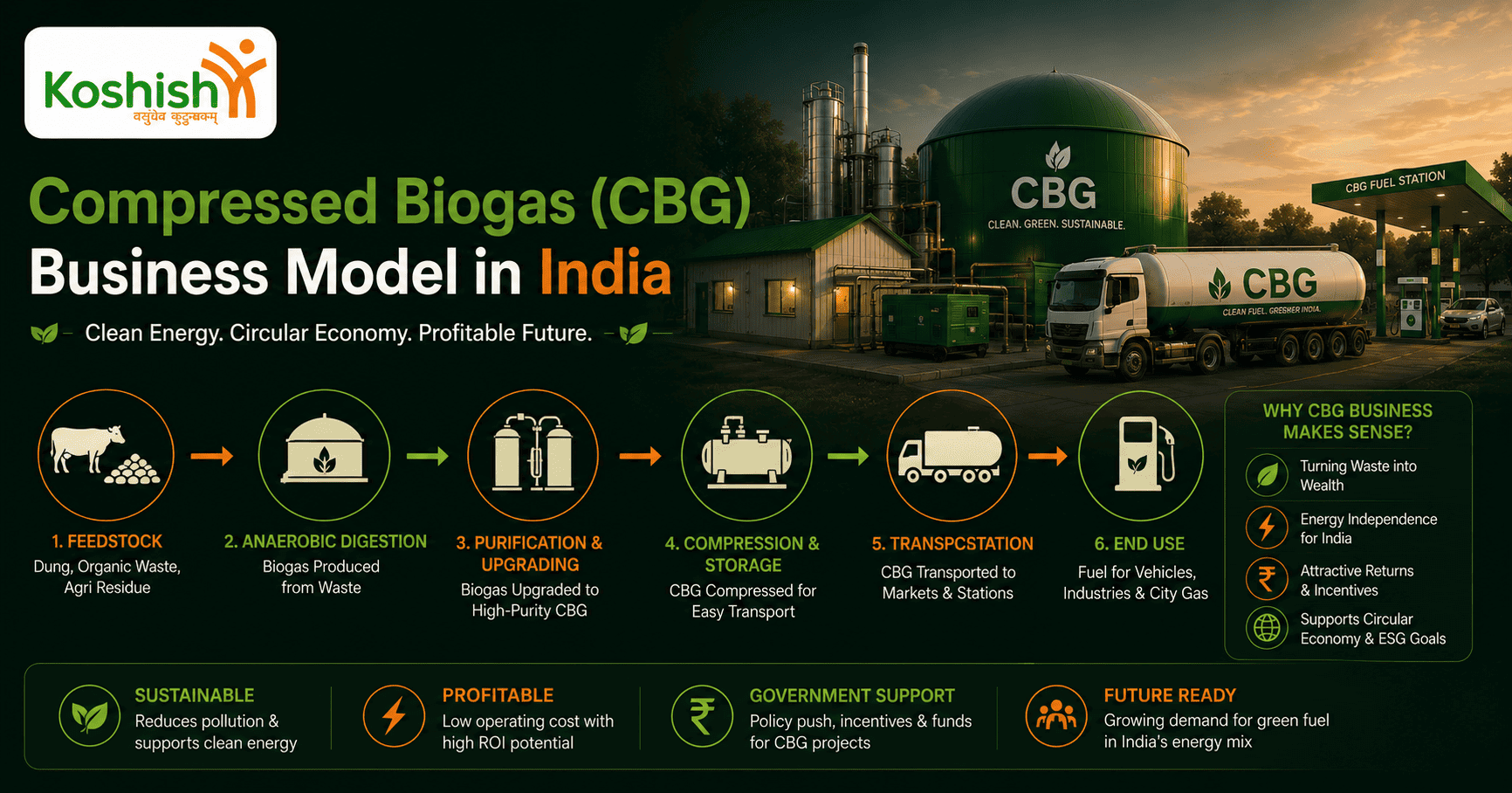
The CBG business model in India turns organic waste into clean fuel. First, it collects organic waste like poultry litter, cow dung, crop residue, and piggery waste. Next, this waste is put into an anaerobic digester. Inside the digester, natural bacteria break down the waste and produce biogas. Then, the raw biogas is cleaned and upgraded. After that, it becomes Compressed Biogas (CBG). As a result, the gas becomes pure and safe to use. Finally, CBG reaches the same quality as CNG and is ready to use as a clean fuel. Switching to green fuel helps manage waste in a better way. In addition, it reduces the use of fossil fuels. As a result, pollution also goes down. Moreover, businesses can earn carbon credits. Therefore, CBG investment in India becomes a smart choice. It gives both financial benefits and social benefits.- Collection of feedstock: All the available organic waste is collected at one place and dumped into the inlet tank.
- Anaerobic digestion: First, workers mix the organic waste with water in a 1:1 ratio. Then, they feed the mixture into the digester. Next, the mixture stays inside the digester for about 45 days. During this time, bacteria break down the waste without oxygen. As a result, the process produces methane gas along with other gases.
- Biogas purification: Next, the system separates methane from other gases like carbon dioxide and hydrogen sulfide. Then, it cleans the gas to increase the methane level. As a result, the final gas contains about 90% methane, 7% carbon dioxide, and 3% hydrogen sulfide.
- Compression into Bio-CNG: After raw biogas is extracted, it is further cleaned and then compressed to make Bio-CNG. As a result, the gas becomes more pure and ready to use. Then, Bio-CNG is used as fuel for vehicles and transport. It is also known as green fuel because it is clean and eco-friendly. Finally, this compressed biogas is supplied to industries and petrol pumps for daily use.
Investment Required for a Bio CNG Plant Setup
The compressed biogas (CBG) plant business model works on two main factors: CAPEX and OPEX. Therefore, everything in the business depends on these two factors, including CBG profitability. In fact, the entire CBG business model in India follows this structure. Now, let’s understand both key factors of a bio-CNG plant setup in a simple way. CBG Plant Cost (CAPEX Structure) The compressed biogas plant business model works on two main factors: CAPEX and OPEX. Therefore, everything in the CBG business depends on these two factors, including profitability. In fact, the entire CBG business model in India runs on them. Now, let’s understand both key parts of a bio-CNG plant setup step by step. Typical CAPEX Structure Ranges in India (2025–26)| Plant Capacity | Investment (₹ Crore) | Notes |
| 2.5 TPD | ₹4.1–4.8 Cr | Small plant, basic setup |
| 5 TPD (Most popular) | ₹6 – 7.5 Cr | Medium plant, balanced cost and output |
| 10 TPD | ₹10 – 13 Cr | Larger industrial setup |
| 20+ TPD | ₹15 – 25+ Cr | Commercial‐scale projects |
- Land
- Digester
- Gas purification system
- Compression unit
- Storage
- Civil works
- Utility infrastructure
| Expense Category | Monthly Cost (₹) |
| Labour | 2–2.5 Lakh |
| Electricity | 1.2 – 2 Lakh |
| Maintenance | 50,000 – 1 Lakh |
| Consumables & Safety | 40,000 |
| Feedstock (if not free) | 6 – 8 Lakh |
| Total | 10-14 lakh/month |
- Feedstock procurement
- Labour
- Electricity
- Plant maintenance
- Transportation
- Equipment servicing
Revenue Streams in a Compressed Biogas Plant Business
By installing the CBG business model in India, there are several revenue streams that are open:- Sale of Compressed Biogas: As we discussed above, with the growing demand for green fuel, the SATAT business model provides the transport fuel, industrial fuel, and the best replacement for CNG and other natural fuels.
- Sale of Organic Manure: Furthermore, after extracting and compressing the biogas, the leftover digestate remains as fertiliser. Selling it at market price in the form of soil conditioner, bio-liquid fertiliser, and solid fertiliser.
Market Demand and Growth Potential in India
Although the growth of the compressed biogas plant business is a little slow, on the other hand, the market demand is increasing. It has become an urgency; as a result, the natural resource is depleting quickly, so the nation demands a sustainable solution that is reliable and controls the rate of carbon emissions. It demands the potential growth of the CBG business model in India includes the following:- Rising demand for cleaner fuels.
- Government initiatives encouraging Bio-CNG.
- Increasing adoption by industries and transport sectors.
- Availability of agricultural residues, food waste, and municipal organic waste as feedstock.
- Long-term opportunities for entrepreneurs and investors.
Wrapping Up
Investing in a CBG business model in India is more profitable. With clear government support under the SATAT business model, there’s increasing demand for green fuel. From CAPEX planning through OPEX management and revenue modeling, strategic execution ensures that your CBG investment India journey delivers sustainable profits while contributing to India’s renewable energy goalsFrequently Asked Questions (FAQ)
What is the CBG business model in India?
The CBG business model in India turns organic waste into clean fuel. First, organic waste goes into a biogas plant. Then, the plant upgrades the biogas into compressed biogas (CBG). After that, the CBG is sold to industries, transport companies, or fuel distributors. At the same time, the plant also sells organic slurry as bio-fertiliser. As a result, the business earns income from more than one source.
How profitable is a compressed biogas plant business?
A compressed biogas plant business can be profitable when it has a steady supply of organic waste and runs efficiently. Besides selling CBG, plant owners can also earn money by selling organic slurry. In addition, government support and the growing demand for clean fuel can improve profits. Therefore, careful planning and good operations are important for long-term success.
What is the estimated investment for a Bio CNG plant setup?
The investment for a Bio CNG plant setup depends on the plant size, technology, and location. Usually, the cost includes land, the biogas digester, gas purification equipment, storage systems, and installation. Moreover, owners should also plan for operating costs such as labour, electricity, maintenance, and feedstock. Therefore, the total investment can vary from one project to another.
What is the CBG business model in India?
The SATAT business model encourages the production and use of compressed biogas in India. It helps connect CBG producers with fuel marketing companies through long-term purchase agreements. As a result, businesses gain better market access and more confidence to invest in new projects. In addition, the initiative supports cleaner energy and better waste management across the country.
What are the major revenue sources in a CBG plant?
A CBG plant earns income from several sources. First, it sells compressed biogas as a clean fuel for transport and industries. Next, it sells organic slurry, which farmers use as a natural fertiliser. In some cases, projects may also earn revenue from carbon credits. Therefore, these multiple income streams can improve the overall profitability of the plant.