
What is Composting?
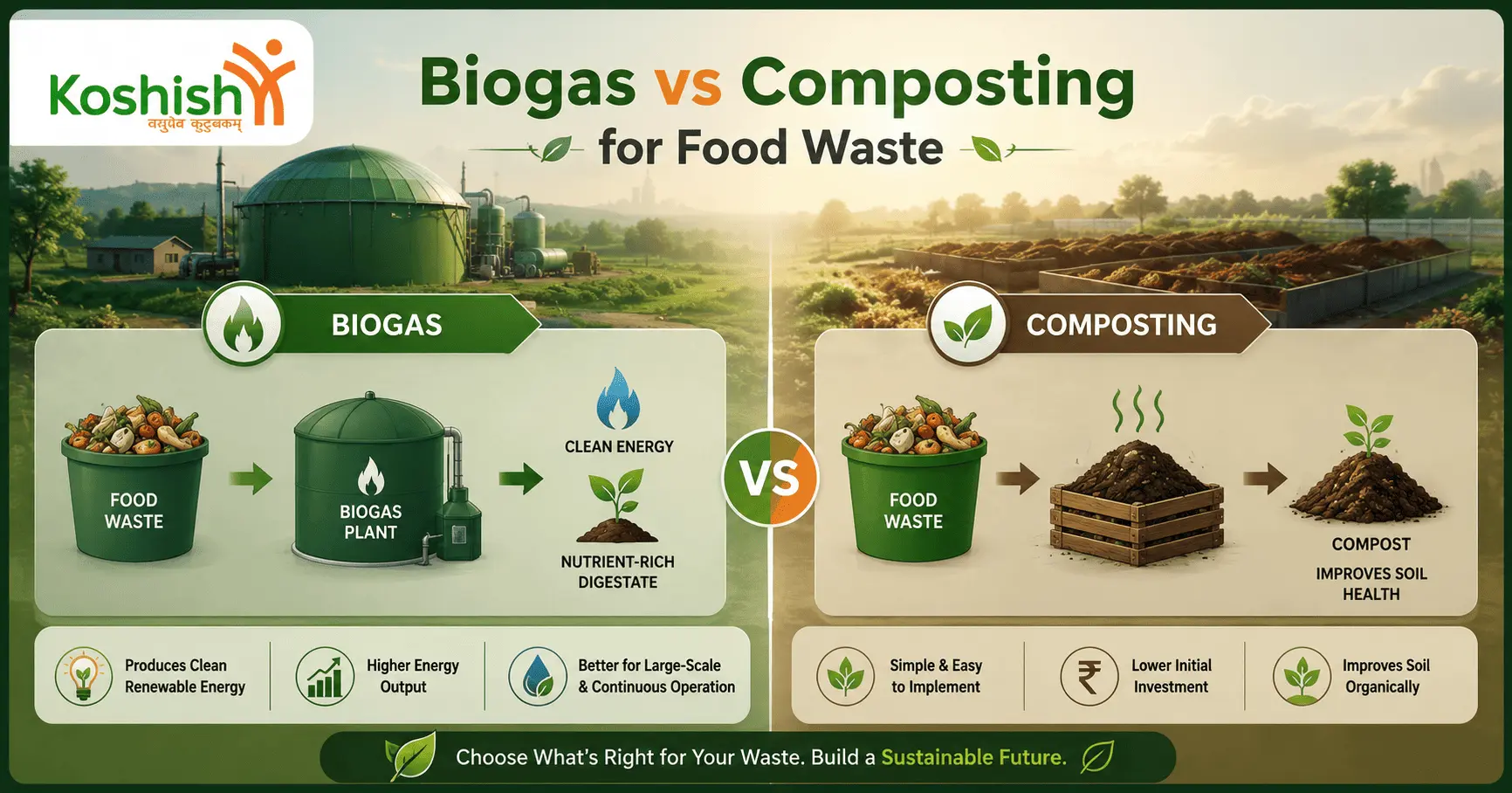
Composting is a natural process that turns food waste into compost. Tiny microorganisms break down the waste with the help of oxygen. The compost can be used to improve soil and help plants grow. Common materials used in composting are:- Fruit and vegetable peels
- Leftover food
- Tea leaves
- Coffee grounds
- Dry leaves
- Garden waste
What Is Biogas?
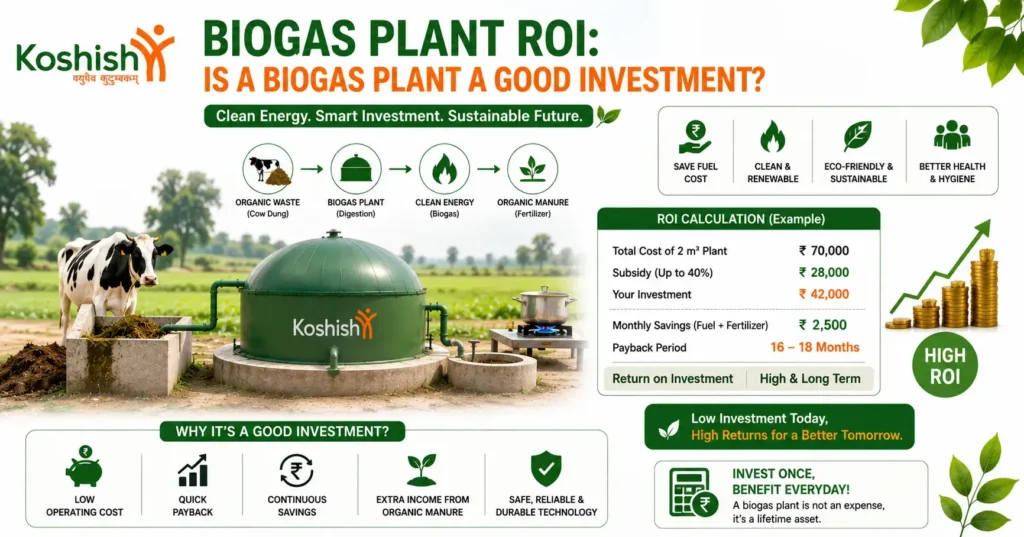
Biogas is made by breaking down food waste inside a closed tank without oxygen. This process is called anaerobic digestion. During this process, bacteria produce biogas. The gas can be used for cooking, heating, or making electricity. The leftover slurry becomes organic manure. So, a biogas plant gives you both clean energy and fertiliser.Composting vs Anaerobic Digestion
Many people compare composting vs anaerobic digestion because both recycle food waste.| Feature | Composting | Anaerobic Digestion |
| Oxygen Needed | Yes | No |
| Main Product | Compost | Biogas and Manure |
| Makes Energy | No | Yes |
| Smell | More smell comes out | It becomes less smelly |
| System | Open composting system | Closed biogas plant |
Space Requirement: Biogas vs. Composting
Space is an important factor. Composting: Composting needs a large open area. Also, the waste must be turned regularly. Biogas Plant: A biogas plant works inside a closed tank. Therefore, it needs less space. Which Needs Less Space?- First, composting needs more land.
- Second, biogas needs less land.
- Lastly, biogas also controls smell better.
Energy Output of Biogas vs. Composting
This is the biggest difference. Composting: Composting only makes compost. Therefore, it does not produce energy. Biogas: Biogas plants make renewable gas. Therefore, the gas can be used for:- Cooking
- Heating
- Electricity
Which Is Better for Industries?
The answer depends on how much food waste you have. Composting Is Good For- Homes
- Schools
- Gardens
- Small farms
- Hotels
- Restaurants
- Food factories
- Dairy farms
- Poultry farms
- Large canteens
Environmental Benefits
Both methods are good for the environment. Therefore, they promote renewable and sustainable activities. Composting: It helps with the following:- First, it reduces waste
- Then, it makes compost
- After that, it improves soil
- First, a biogas plant makes clean energy
- Secondly, it reduces landfill waste
- Thirdly, it lowers greenhouse gas emissions
- Fourthly, it produces organic manure
- Lastly, saves fossil fuel
Cost Comparison
Composting costs less to start. However, it does not produce energy. A biogas plant costs more at first. However, it saves money over time because it: First, reduces fuel costs Then, lowers waste disposal costs After that, produces useful gas Lastly, makes organic manureBiogas vs Composting: Quick Comparison
Below, we have provided a comparison table between biogas and composting. This will help you easily compare both options. In addition, it highlights their key differences. As a result, you can identify which solution best suits your needs. Therefore, you can choose the option that is more beneficial for the environment.| Factors | Composting | Biogas |
| Production of Renewable | Does not produce clean energy | Does produce clean energy |
| Production of Manure | Produces manure | Produces manure |
| Waste Management | Treats food waste | Treats food waste along with other organic waste |
| Needs Less Space | It requires a large space for the aerobic process. | Yes. It comes in many sizes. |
| Good for Industries | Limited | Yes |
| Long-Term Savings | Low chances | High Chances |
Which One Should You Choose?
Overall, both food waste treatment methods have their own advantages. However, the right choice depends on your needs. For example, comparing their benefits makes the differences easier to understand. Therefore, the table below provides a clear comparison and helps you identify which option is better for your requirements. Choose composting if: If you have a small amount of food waste, then composting is a suitable choice. In that case, you only need compost, not biogas. Also, make sure you have enough open space. This way, the composting process works properly. As a result, you can manage organic waste effectively. Choose biogas if: First of all, you produce food waste every day. Next, you want to convert that waste into clean energy. In addition, you want to save money in the long run. At the same time, you have limited space. Therefore, a biogas plant is the right choice. Overall, it provides a practical, cost-effective, and sustainable waste management solution.Wrapping Up
Overall, both composting and biogas are useful food waste treatment methods. In addition, they both support organic waste recycling and reduce waste. However, they are designed for different needs. For example, composting is a good choice for small amounts of food waste. On the other hand, biogas is a better option for industries because it produces clean energy, organic manure, and long-term savings. As a result, businesses can reduce waste disposal costs. Therefore, when comparing biogas vs composting, biogas is the better choice for businesses that generate food waste every day.Frequently Asked Questions (FAQ)
What is the difference between biogas and composting?
Simply put, composting turns organic waste only into compost. In contrast, biogas plants turn the same waste into clean energy and organic manure. As a result, they reduce waste and produce renewable energy at the same time.
In addition, the organic manure can be used as a natural fertilizer. Furthermore, this helps improve soil health. Therefore, biogas is a more efficient, practical, and sustainable solution for organic waste management.
Can food waste be turned into biogas?
Yes, absolutely. Food waste, such as vegetable peels, fruit waste, leftover food, and kitchen scraps, can be easily converted into biogas through anaerobic digestion. In this process, tiny microorganisms break down the waste without oxygen.
As a result, the waste turns into clean biogas and nutrient-rich organic manure. At the same time, businesses reduce the amount of waste sent to landfills. Therefore, biogas helps save money, produce clean energy, and support sustainable waste management.
Which industries should use biogas plants?
For example, hotels, restaurants, food processing units, dairy farms, poultry farms, and large canteens produce large amounts of organic waste every day. As a result, they have a steady supply of feedstock for biogas production.
Therefore, they can reduce waste disposal costs while producing clean renewable energy and nutrient-rich organic manure. Moreover, biogas helps reduce pollution and supports sustainable waste management. Overall, it is a practical, cost-effective, and long-term solution for these industries.
What are the main biogas benefits?
Overall, the main biogas benefits include clean renewable energy, lower waste management costs, and nutrient-rich organic manure. In addition, biogas helps reduce greenhouse gas emissions and supports sustainable waste management.
Moreover, it makes better use of organic waste instead of sending it to landfills. As a result, industries can save money, reduce waste, and improve efficiency. Therefore, biogas is an eco-friendly, practical, and cost-effective solution for many industries.