


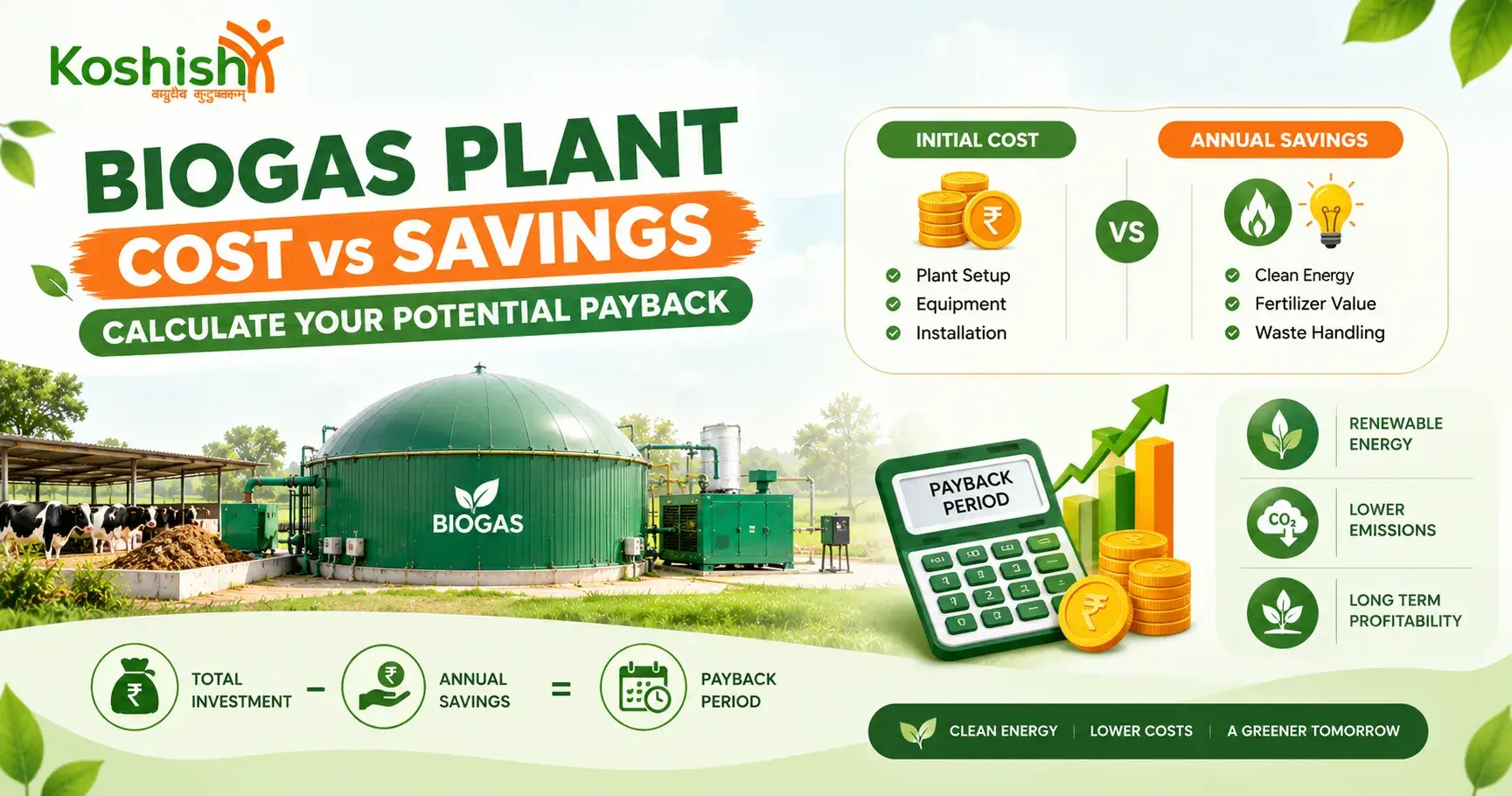
What Is a Biogas Plant Payback Period?
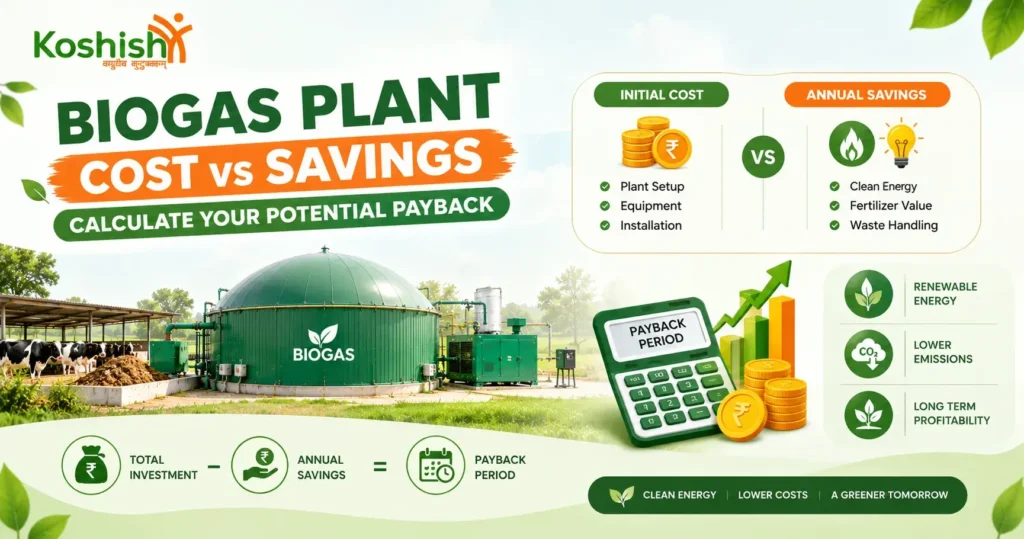
The biogas plant payback period is the time needed to recover the money spent on the plant. For example, suppose a plant costs ₹10 lakh. If it helps you save ₹3 lakh each year, the biogas plant payback period is about 3.3 years. You can use this simple formula: Payback Period = Total Plant Cost ÷ Annual Savings. Therefore, a lower biogas plant payback period usually means a faster return on your money.What Is the Cost of Installing a Biogas Plant?
The cost of a biogas plant can change from one project to another. It depends mainly on plant size and the type of waste used. The main cost factors include:- Plant size and design
- Digester construction
- Gas storage system
- Gas cleaning equipment
- Pumps and pipelines
- Biogas engine or other equipment
- Installation and civil work
- Operation and maintenance needs
How Can a Biogas Plant Help You Save Money?
A biogas plant can create savings in several ways. First, it can produce fuel from organic waste. This fuel can be used for cooking, heating, or power generation. Second, the plant produces digestate. This material can be used as organic manure after suitable treatment. Third, businesses may spend less on waste handling. These benefits together can improve your biogas savings. For example, a poultry farm can use poultry litter to produce biogas. A dairy farm can use cow dung. Similarly, food businesses can use food waste. Therefore, the type and amount of waste directly affect your biogas savings.Understanding Biogas ROI Calculation
A biogas ROI calculation shows how much value you receive compared with your investment. A simple ROI formula is ROI = (Annual Benefit − Annual Operating Cost) ÷ Total Investment × 100. For example, suppose:- Total investment = ₹10 lakh
- Annual benefit = ₹4 lakh
- Annual operating cost = ₹1 lakh
What Factors Affect the Biogas Plant Payback Period?
Several factors can change the biogas plant payback period. The biogas ROI calculation provides you with a good opportunity to compare your investment with other alternatives. Nevertheless, ROI is different from payback. ROI shows you the return rate, and the biogas plant payback period indicates the time that it will take you to cover the initial investment. Factors that Influence Biogas Plant Payback Period Several aspects can affect the payback period of your biogas plant. Volume of waste: High volume of usable waste leads to high biogas production. So, a stable waste supply helps to improve the project performance. Consumption of energy: A company with high fuel or electricity consumption will benefit from higher savings on energy. Investment into Commercial Biogas Plant: Higher starting investment can increase the biogas plant payback period. However, advanced equipment can help to improve the process efficiency. Bio-manure Value: Using digestate will allow you to save on fertilizer or earn money. Consequently, biogas savings will increase. State Incentives: Availability of subsidies and other types of state financial support can decrease the amount of your own investment. It means that the payback period of your biogas plant will be lower.How Can You Increase Your Biogas Plant ROI?
A good project starts with proper planning. First, measure your daily waste. Secondly, calculate the existing expenditure incurred for the purchase of fuel and electricity. Thirdly, make an estimate of the anticipated gas production. The cost of maintenance and labor and other expenses should also be included. Lastly, analyze the total cost against the anticipated benefits of the year. A well-detailed analysis of the ROI of biogas is helpful in making sound decisions about the biogas investment. Consider the long-term energy saving despite changing prices of energy.Is a Biogas Plant a Good Investment?
A biogas plant can be a good biogas investment when there is enough organic waste and a regular need for energy. It can reduce waste, produce renewable energy, and create useful manure. Moreover, it can support cleaner farming and business operations. However, every project is different. Therefore, do not use one fixed biogas plant payback period for every plant. Instead, calculate the numbers for your own site.Wrapping Up
A biogas plant is more than a waste treatment system. And it will become a valuable source of both energy and cost savings. Comparing initial investment for the plant, amount of waste, energy usage, running costs, and value of the manure, you can calculate the payback period of the biogas plant. What is more important, proper biogas ROI analysis will help to estimate the true worth of your biogas investment. With proper planning, regular waste generation, and efficient plant operation, biogas savings will make this project economically beneficial.Frequently Asked Questions (FAQ)
How do I calculate the biogas plant payback period?
You can calculate the biogas plant payback period by dividing the total plant cost by the expected annual savings. For example, if your plant costs ₹10 lakh and saves ₹2.5 lakh each year, the estimated payback is four years. However, the actual period can change because of maintenance costs, gas output, energy prices, subsidies, and the amount of waste available.
What are the main sources of biogas savings?
The main sources of biogas savings include lower fuel costs, lower electricity bills, reduced waste handling costs, and possible fertilizer savings. In addition, businesses can use the gas for cooking, heating, or power generation. Therefore, the total savings depend on how much energy the plant produces and how much energy the business normally buys from outside sources.
What is included in a biogas ROI calculation?
A biogas ROI calculation normally includes the total plant investment, yearly energy savings, waste management savings, manure value, income from energy, and operating costs. By comparing the yearly net benefit with the original investment, you can estimate the project’s return. This calculation gives a clearer picture before making a biogas investment.
How can I increase my energy savings from a biogas plant?
You can improve energy savings by using a suitable plant size, maintaining regular feeding, reducing gas leakage, and using biogas efficiently. In addition, regular biogas plant maintenance helps the plant work properly. Using the gas for a high-value energy need can also improve your savings. As a result, better plant operation may shorten the biogas plant payback period.
Is a biogas plant investment suitable for every business?
Not every business will have the same results from a biogas investment. A suitable project usually needs a steady supply of organic waste and a regular demand for energy. Dairy farms, poultry farms, food businesses, hotels, and institutions may have good opportunities. Before investing, it is best to study waste quantity, energy use, plant cost, expected biogas savings, and the estimated biogas plant payback period.