

India has always been a leading milk producer in the world. Since dairy farming is popular in rural livelihoods. Along with milk production, dairy farms generate cow dung in large quantities daily. Managing organic waste has become both a challenge and an opportunity for the farmers. The dairy farm biogas plant acts as a practical, eco-friendly, and economically viable solution.
By converting cow dung into clean energy, biogas systems help dairy farmers reduce costs, manage waste efficiently, and move towards sustainable dairy energy.
Dairy Farmers Adopting Biogas Systems
In India, the dairy farmers are increasingly adopting biogas technology. Rising electricity prices, petrol costs, and stricter environmental norms have increased the demand for renewable alternatives. A dairy farm biogas plant allows farmers to generate their own energy while providing a solution to their waste disposal problems. The government, providing incentives, state-level subsidies, and awareness programs, has further accelerated the adoption of the cow dung biogas plant. To manage this problem, many dairy milk producers and commercial dairy farmers are now getting the biogas plant installed.Cow Dung Availability and Energy Potential
A dairy farm produces a continuous and reliable supply of feedstock. In a single day, a cow produces approximately 10 kg of cow dung. This makes it a prime location for a cow dung biogas plant. 25 kg of cow dung can produce approximately 1 cubic meter of biogas. Biogas contains 55–65% methane, suitable for cooking, heating, and power generation When properly designed, a dairy farm biogas plant can meet a significant portion of a farm’s daily energy needs.Reasons Biogas Suits Dairy Waste
Cow dung is particularly suitable for biogas production because of the high organic content, ideal carbon-to-nitrogen ratio, and easy biodegradability. Unlike many other organic wastes, cow dung does not require extensive pre-treatment. This makes biogas for dairy farms more stable, predictable, and efficient. The digestion process also reduces pathogens and odour, improving farm hygiene. Moreover, integrating a cow dung biogas plant into daily farm operations is simple, as dung collection is already part of routine dairy management.Farm-Scale Installation Options of Biogas Plant
Selecting the right capacity is crucial to ensure optimal gas production and return on investment. Biogas systems can be customised based on herd size and energy demand. Common options include: Small-Scale Systems: Suitable for farms with 5–20 cattle, these plants primarily support cooking and basic heating needs. Medium-Scale Systems: Ideal for 20–100 cattle, these systems can power milk chillers, water pumps, lighting, and small machinery. Large-Scale Commercial Plants: Designed for large dairy farms or cooperatives, these dairy farm biogas plants can generate electricity using biogas engines or generators and even export surplus power where policies allow.Biogas Generation and Slurry Utilisation
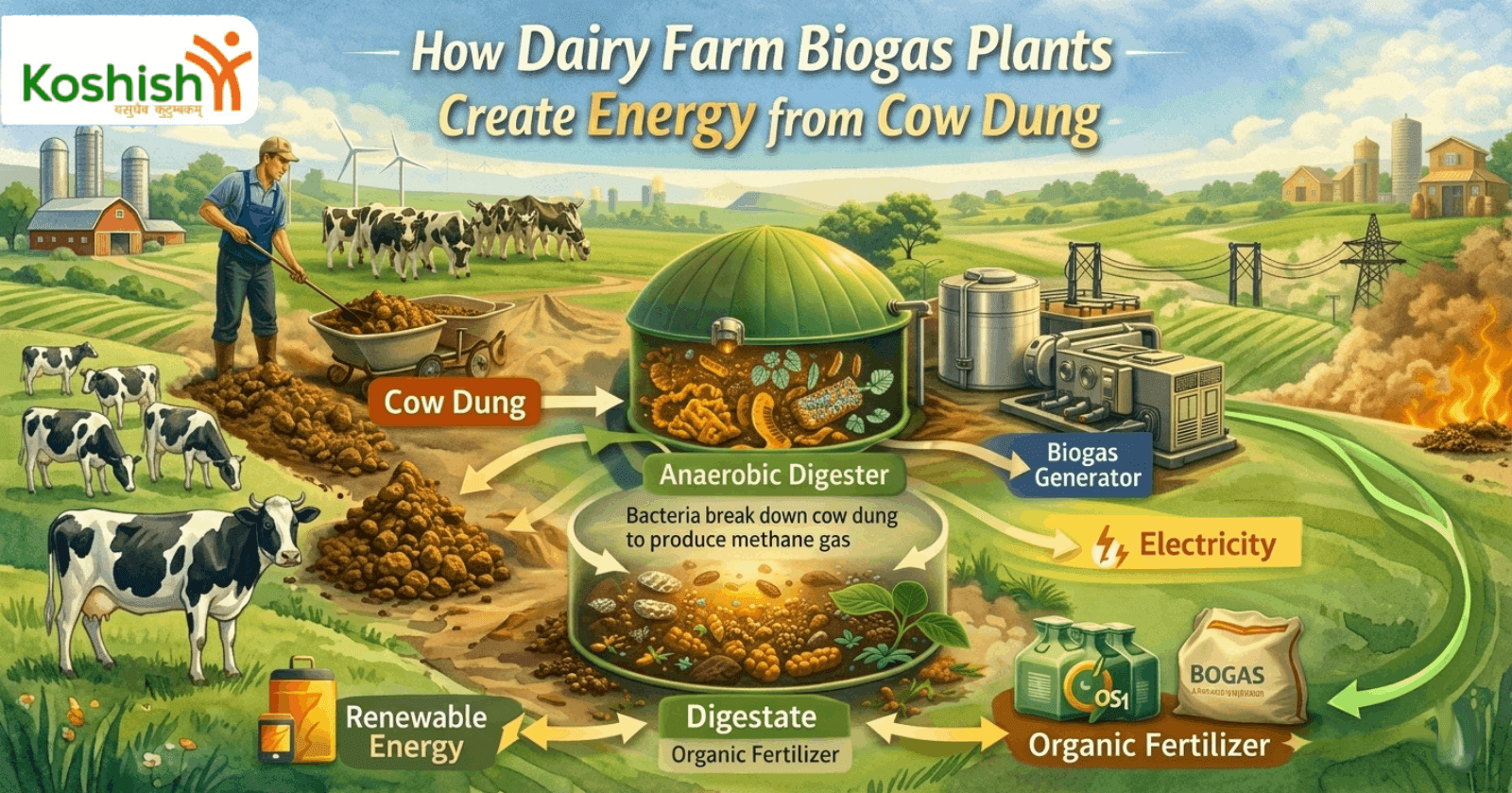
The process begins by mixing cow dung with water and feeding it into an anaerobic digester. In the absence of oxygen, bacteria break down organic matter, producing biogas. Energy Uses:- Cooking fuel for farm households
- Heating water for cleaning and dairy operations
- Electricity generation for farm equipment
Biogas for Dairy Farms: Economic and Environmental Benefits
A biogas for dairy farms has various advantages:- It reduces electricity and fuel costs
- Improves Waste Management and Hygiene
- Lower greenhouse gas emissions
- Additional income from fertiliser savings
- Compliance with environmental standards
Role of Dairy Farm Biogas Plants in Sustainable Dairy Energy
As climate concerns grow, sustainable dairy energy is no longer optional, it is essential. Biogas reduces methane emissions from open dung decomposition while replacing fossil fuels. This dual benefit makes biogas for dairy farms one of the most impactful renewable solutions in the agricultural sector. With proper planning and technical support, a dairy farm biogas plant becomes a long-term asset that supports energy security, environmental protection, and farm profitability.Wrapping Up
A dairy farm biogas plant transforms cow dung from a waste burden into a valuable energy resource. By leveraging the natural availability of dung, dairy farmers can adopt cleaner energy, improve operational efficiency, and contribute to sustainable dairy energy goals. Whether it is a small family-run dairy or a large commercial operation, investing in a cow dung biogas plant is a practical step towards a resilient and environmentally responsible dairy industry.Frequently Asked Questions
How many cows are required to run a dairy farm biogas plant?
A small dairy farm biogas plant can operate with as few as 5–10 cows, while larger systems require 20 or more cattle.
Is biogas for dairy farms suitable for electricity generation?
Yes, medium and large plants can use biogas engines or generators to produce electricity for farm operations.
What happens to the slurry after biogas generation?
The slurry is an excellent organic fertiliser that enhances soil fertility and crop yield.
Is a cow dung biogas plant difficult to maintain?
No, routine feeding and basic maintenance are sufficient. With proper training, farmers can manage it easily.