
What Is the Best Feedstock for a Biogas Plant?
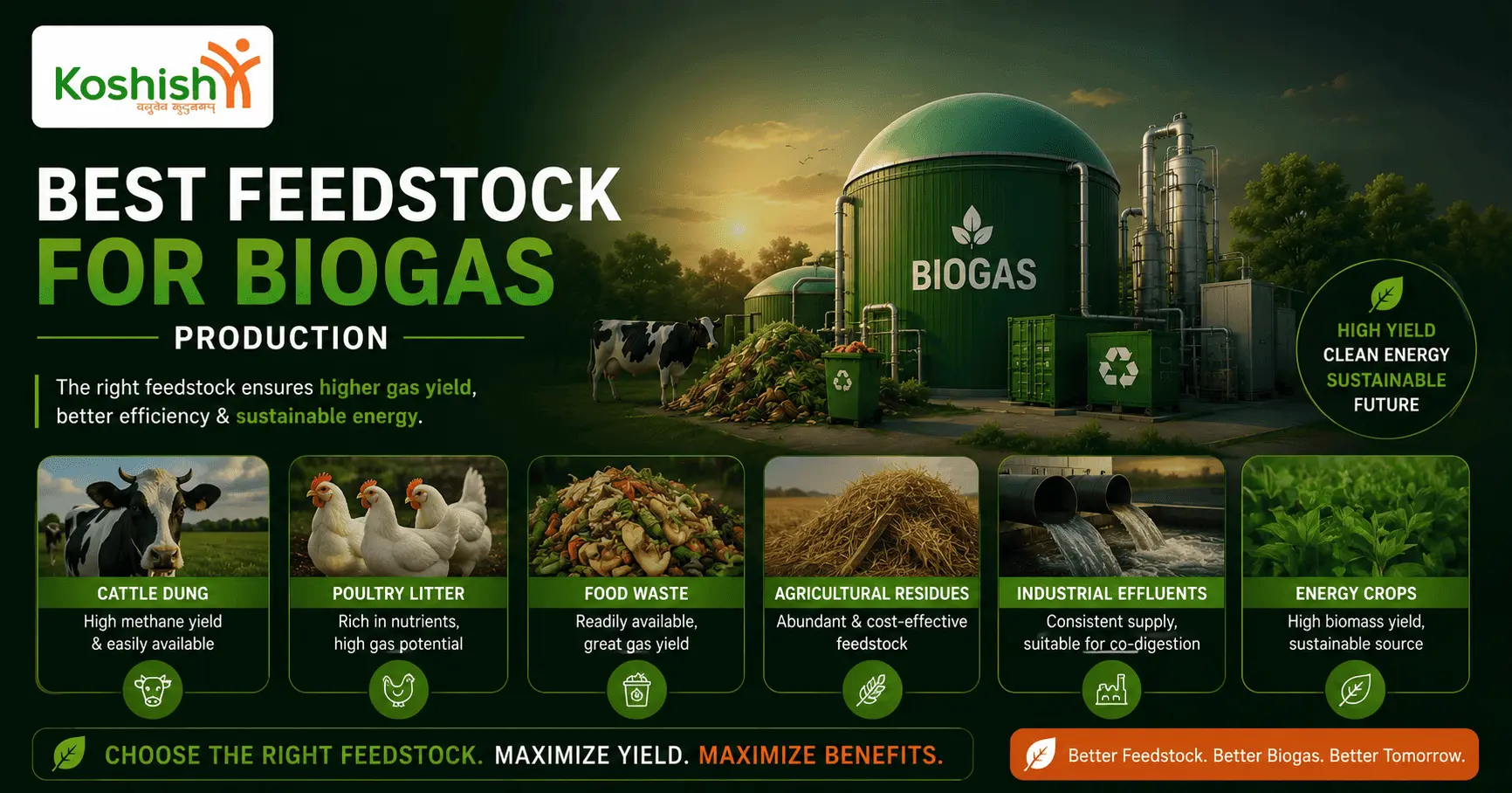
Feedstock means the raw organic material used to make biogas. In simple words, it is the “food” for the biogas plant. For example, cattle dung, food waste, poultry litter, and agri waste biogas materials are common feedstocks. Then, small microbes break this material inside the digester. As a result, they produce gas. This process is called anaerobic digestion. So, when microbes eat organic waste for biogas, they create energy in the form of methane gas.Why does feedstock choice matter?
Feedstock choice is very important. Because it directly affects gas output. First, some materials produce high-methane feedstock results. However, some produce less gas. Second, availability also matters. If feedstock is not available daily, the plant may stop. Therefore, both gas quality and supply matter a lot. In addition, cost and handling also affect performance. So, the right choice improves profit and stability.Best Feedstock for Biogas Comparison Table for Commercial Biogas Plants
Now let’s understand the best feedstock for biogas in a simple way. From this biogas yield comparison, we clearly see one thing. Poultry litter and food waste give high output. So, they are often called best feedstock for biogas plants. Different materials give different results. So, we compare them below.| Type of Feedstock | Typical Methane Yield | Availability | Handling Capacity | Commercial Stability |
| Poultry Litter | Very high | Whole Year | Medium | Excellent |
| Food waste | High | Whole Year | Medium | Very Good |
| Cattle Dung | Low moderate | Year-round | Easy | Good |
| Napier Grass | High | Depends on seasons | Medium | Excellent |
Availability of Best Feedstock for Biogas Production
Below, we show the time period when organic waste is available for biogas production. In addition, this helps you understand when different types of waste are easily available. There are many types of organic waste for biogas production. Year-Round Waste First, some waste is available all year. For example:- Food waste
- Cattle dung
- Poultry litter
- Pig manure
- Paddy straw
- Press mud
- Crop residues
How seasonal variations impact Plants Operations?
Seasonal changes can affect supply. For example, crop waste is not available all year. So, plants may face shortages. However, storage solves this problem. In addition, mixing year-round waste keeps plants running. Therefore, proper planning is very important.Why Co-Digestion Is Better Than Single Feedstock Operation
Co-digestion is much better than using only one type of feedstock for biogas production. In addition, it improves the overall efficiency of the process. Therefore, mixing different feedstocks helps produce more biogas in a better and more stable way. This increases the methane gas yield and improves the nutrient balance; also, studies show that mixing multiple organic wastes together produces more biogas for the operations. For example, mixing poultry litter and cow dung or piggery waste and organic waste produces maximum biogas.Wrapping Up
Choosing the best feedstock for biogas is very important. Because it controls gas output, cost, and plant performance. In addition, high-methane feedstock gives better results. So, using a mix of organic waste for biogas is the best approach. Also, agri waste biogas helps reduce pollution and create clean energy. Therefore, the right feedstock choice leads to better profit and sustainability.Frequently Asked Questions (FAQ)
What is the best feedstock for biogas?
Poultry litter and food waste are the best feedstock for biogas because they give high gas output. They are rich in organic matter and decompose quickly under anaerobic conditions, producing a large amount of methane. These materials are also widely available from farms, households, and food industries, making them cost-effective and environmentally friendly for sustainable biogas production.
What is high-methane feedstock?
High-methane feedstock means materials that produce more methane gas, such as poultry litter and food waste. These organic materials break down efficiently in the absence of oxygen, producing a higher amount of biogas. Because of their high energy content and easy availability, they are considered excellent feedstock for biogas production and help improve the efficiency of biogas plants.
What is biogas yield comparison?
Biogas yield comparison means checking which feedstock produces more gas than others. It helps identify the most efficient organic materials for biogas production by comparing the amount of biogas generated from each type of feedstock. This comparison is useful for selecting suitable materials, improving energy output, reducing waste, and increasing the overall efficiency of biogas plants.
Is agri waste useful for biogas?
Yes, agri waste biogas is very useful. It turns crop waste into clean energy and reduces pollution. It also helps farmers manage agricultural waste efficiently, lowers greenhouse gas emissions, and reduces the need for fossil fuels. The leftover slurry from biogas production can be used as a nutrient-rich organic fertilizer, improving soil fertility and supporting sustainable farming practices.