


What Is an STP (Sewage Treatment Plant)?
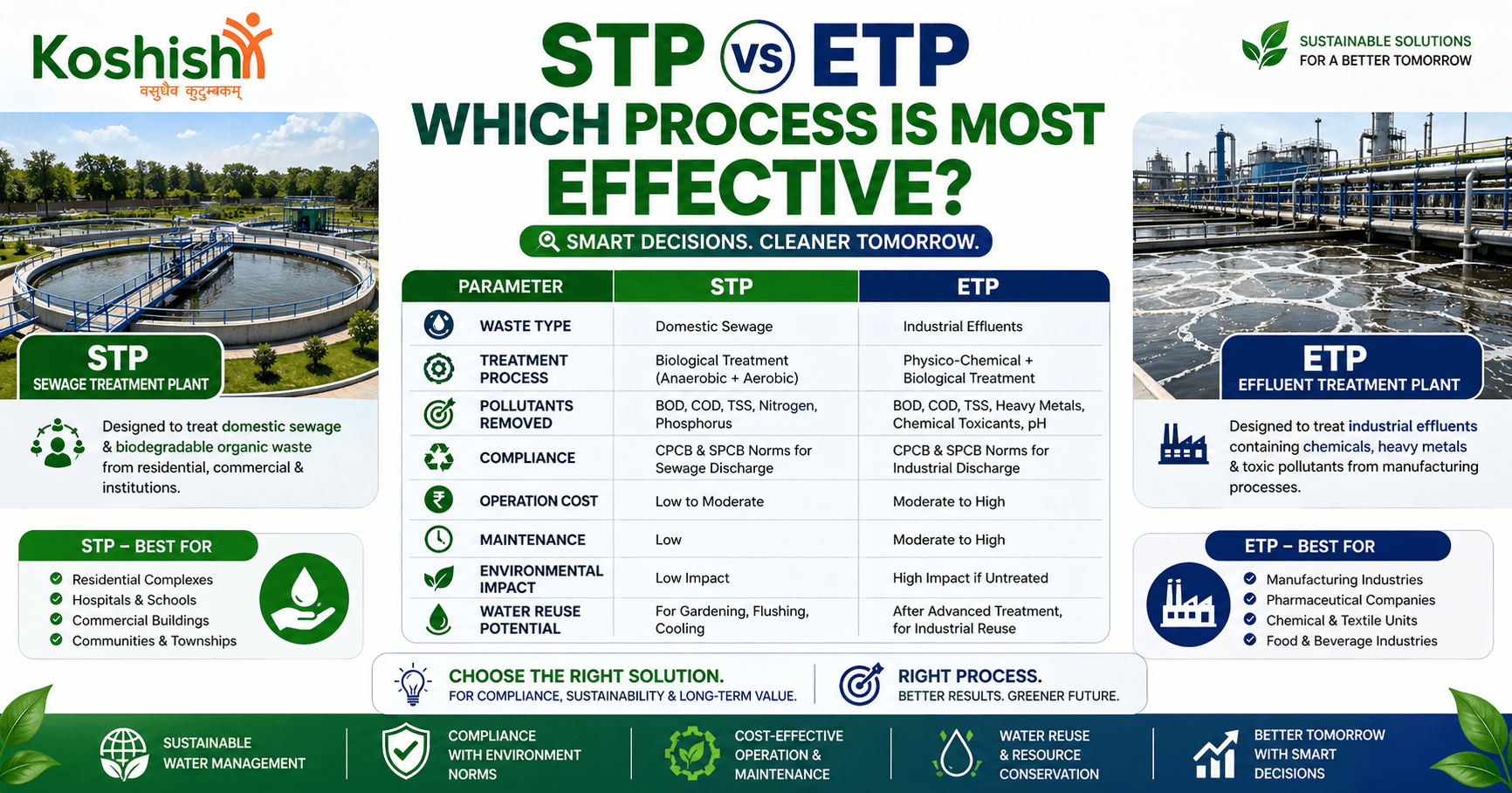
When looking at STP vs. ETP, STPs (Sewage Treatment Plants) are ideal for treating sewage wastewater from homes, offices, and residential areas. An STP sewage treatment plant effectively removes contaminants from domestic wastewater. Household wastewater from sinks, toilets, and washing machines is sent to an STP, where it is treated and made safe for reuse or discharge into rivers and oceans. Wastewater treatment plants are important for treating wastewater, keeping the environment clean and protecting human health. Untreated sewage can dirty water, lower oxygen levels, and harm fish and other aquatic life. A sewage treatment plant cleans wastewater to make it safe before releasing it into the environment.What Is an ETP (Effluent Treatment Plant)?
In the STP vs. ETP comparison, ETPs are ideal for treating complex chemical waste from factories. An ETP (Effluent Treatment Plant) is designed for industrial units and helps manage the wastewater treatment budget effectively. An Effluent Treatment Plant (ETP) removes pollutants, contaminants, and hazardous materials from industrial wastewater before it is discharged. Industrial wastewater differs by industry, some contain oil, grease, or harmful chemicals like cyanide, while food and beverage wastewater often has organic matter that can spoil and pollute water. ETPs clean wastewater using physical, chemical, biological, and membrane processes. They are widely used in industries like chemicals, pharmaceuticals, refineries, dairy, and textiles. A well-designed and properly operated ETP helps manage operational costs and maintenance expenses while ensuring safe discharge.Smart Ways to Reduce Wastewater Treatment Costs
Smart strategies help sewage treatment plants save money, control their wastewater treatment budget, and reduce operational costs and maintenance expenses. Choosing the right equipment and planning operations carefully can lower the wastewater treatment price in the long run.Save Energy with Efficient Equipment
Aeration systems use 25–60% of a plant’s total power. Modern energy-efficient blowers can cut power use by up to 30% compared to older models. Oil-free screw blowers are 30% more efficient than traditional roots blowers. Installing variable frequency drives (VFDs) instead of fixed-speed equipment can save another 10% on energy, helping reduce operational costs.Reduce Construction Costs with Modular Plants
IoT monitoring systems keep track of oxygen levels, water flow, and how well equipment is working. These systems cut electricity bills by up to 20% and detect potential failures early, reducing emergency repair costs and supporting a lower wastewater treatment budget.Pick the Right Technology for Long-Term Savings
Modular sewage treatment plants reduce initial capital costs by requiring less on-site construction. Factory-built systems are faster to install, lowering labor costs and reducing maintenance expenses. Civil work costs can be up to 30% lower than traditional plants.Choose Vendors Wisely and Use AMCs
Technology choices affect the wastewater treatment price and lifetime costs. MBBR systems handle changing loads well and have moderate capital costs, but need investment in media. SBR systems cost less initially, provide excellent treatment (BOD and SS <10 mg/l), and use less energy, 152.5 kWh/day/MLD compared to MBBR’s 222.5 kWh/day/MLD, it helps to reduce operational costs.Vendor Selection and AMC Considerations
Annual Maintenance Contracts (AMCs) prevent downtime and unexpected breakdowns. A good AMC includes regular inspections, emergency support, and parts availability. When selecting vendors, consider operational costs, response times, and technical expertise, not just the initial wastewater treatment price.Benefits of the WasteWater System
The advantages of the WasteWater system are as follows below: Cost-Effective : With proper maintenance, these systems can last up to 15 years, providing an affordable solution for clean water. Grants and financial assistance are often available to help with costs. Minimal Smell : Modern systems produce very little smell, unlike older systems, making them more pleasant and easier to use. Low Maintenance : Modern wastewater systems need minimal maintenance. Septic tanks may need de-sludging every 1–2 years, with inspections every 2–3 years. Simple checks can be done in between. Faster Solid Breakdown : Aerobic wastewater systems break down solids faster than older systems, reducing blockages, lessening the need for de-sludging, and preventing groundwater contamination.Wrapping Up
Choosing the right wastewater treatment system depends on the type of wastewater, treatment requirements, and long-term costs. STPs (Sewage Treatment Plants) are ideal for domestic wastewater from homes, offices, and residential areas, offering energy-efficient treatment, lower operational costs, and simpler maintenance. On the other hand, ETPs (Effluent Treatment Plants) are designed for industrial wastewater with chemicals and pollutants, using advanced physical, chemical, and biological processes to ensure safe discharge while managing the wastewater treatment budget. By selecting the right technology, using energy-efficient equipment, modular designs, and proper vendor support with AMCs, facilities can reduce the wastewater treatment price, operational costs, and maintenance expenses over time. Modern wastewater systems also provide long-term benefits like minimal smell, faster solid breakdown, and lower water bills, making them a cost-effective and sustainable solution. Ultimately, understanding the STP vs. ETP cost and long-term savings helps industries and facilities make an informed decision, balancing performance, sustainability, and affordability.Frequently Asked Questions
What is the main difference between STP and ETP?
An STP (Sewage Treatment Plant) treats domestic wastewater from homes, offices, and residential areas using biological methods. An ETP (Effluent Treatment Plant) treats industrial wastewater that contains chemicals and pollutants from factories.
Which is more cost-effective, STP or ETP?
STPs are generally more cost-effective as they handle domestic wastewater with lower operational costs. ETPs are costlier because they require advanced chemical and filtration processes to treat industrial effluent.
What factors affect wastewater treatment price?
The total wastewater treatment price depends on plant size, design, technology used, wastewater type, energy consumption, and maintenance expenses.
How can I manage my wastewater treatment budget efficiently?
You can reduce your wastewater treatment budget by using energy-efficient blowers, modular plant designs, automated monitoring systems, and regular maintenance to prevent breakdowns.