
What is a Dairy Biogas Plant?
A dairy biogas plant is a metal device used for waste-to-energy from organic cow dung, processing cattle manure through anaerobic digestion. The digestion process produces biogas used for cooking, heating, electricity generation, or boiler fuel. Digestate/slurry is the leftover from biogas production, used as a nutrient-rich organic fertiliser. With increasing focus on sustainable agriculture, many dairy farms are evaluating the cost of installing a dairy biogas plant against long-term energy savings and waste management benefits.Dairy Biogas Plant Cost Based on the Herd Size
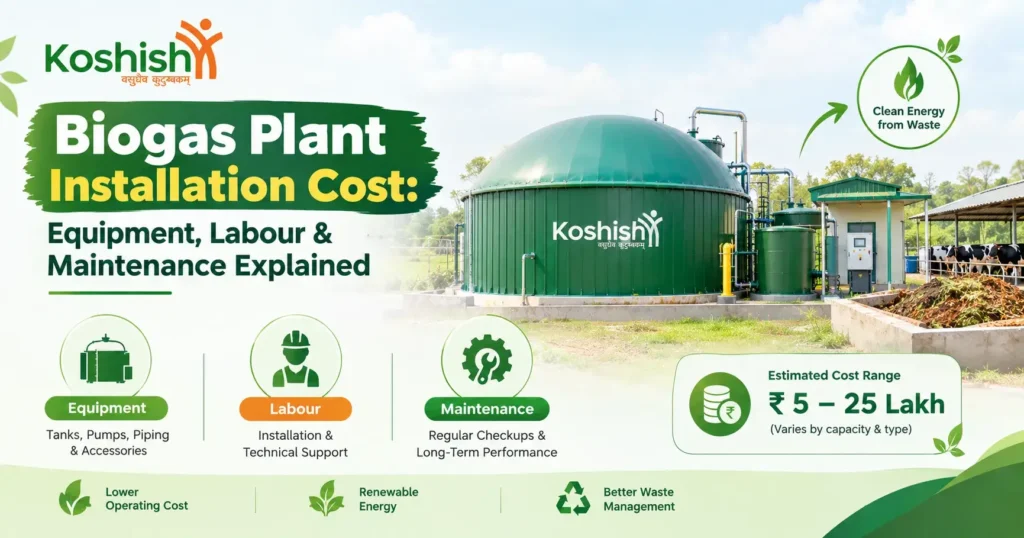
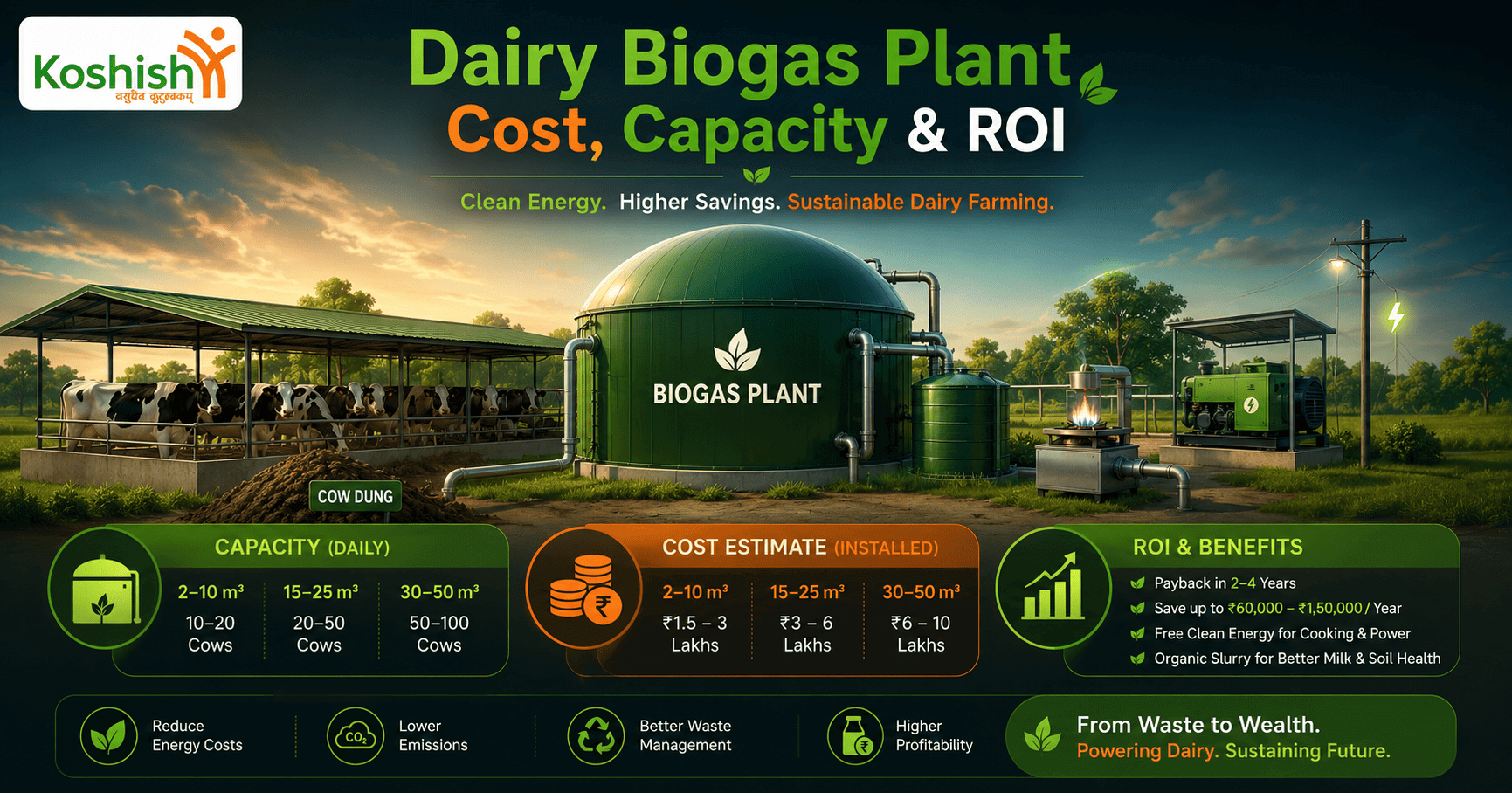
The dairy biogas plant mainly depends on the number of cattle and the amount of dung generated daily. Small Dairy Farms (20–50 Cattle). Estimated Plant Capacity: 25–60 m³/day; approximate Cost: ₹5 lakh – ₹12 lakh The biogas plant provides a few advantages:- Cooking gas
- Small electricity generation
- Farm heating
- Power generation (electricity)
- Cooking Gas
- Bio-manure
- Grid electricity generation
- Bio-CNG production
- Large-scale thermal applications
Factors Affecting Dairy Biogas Plant Cost
There are several factors that affect the Dairy Biogas Plant Cost, which are as follows: Plant Technology : Advanced systems cost more initially but often improve dairy biogas ROI by boosting gas output. There are different digester technologies that impact cost and efficiency:- Fixed dome digesters
- Floating drum digesters
- Balloon digesters
- Continuous stirred tank reactors (CSTR)
- Anaerobic digester tank
- Slurry collection systems
- Gas storage units
- Pipelines
- Biogas generators
- Feedstock handling equipment
Dairy Biogas Capacity Calculation
Proper sizing is critical for plant performance. Sample Capacity Estimation: Suppose a dairy farm has 100 cattle with an average dung production of 12 kg/day. Total dung generated daily: 100 × 12 = 1,200 kg/day. Estimated biogas production: 1,200 ÷ 25 = approximately 48 m³/day. This dairy biogas capacity can support the following:- Cooking fuel
- Water heating
- Small power generation
Dairy Biogas ROI and Payback Period
The biggest reason farmers invest in biogas systems is the strong dairy biogas ROI. Major Cost Savings: A dairy biogas plant can reduce the following:- LPG expenses
- Electricity bills
- Diesel generator usage
- Chemical fertilizer costs
- Waste disposal costs
- Earn additional income by selling organic manure.
Typical Payback Period
The average payback period depends on scale and energy usage. Government incentives and efficient operations can further improve the dairy biogas ROI. Farm Size & the Estimated Payback- Small Farms: 3–5 years
- Medium Farms: 2–4 years
- Large Commercial Farms: 4–6 years
Benefits of Dairy Biogas ROI
There are various advantages of the dairy biogas ROI, which are mentioned below:- Reduced greenhouse gas emissions of the farm
- Improved manure management and less cow dung wastage are achieved
- Better farm hygiene is maintained.
- Sustainable dairy operations
- Reduced odor and pollution
- Energy independence for the farmers
Wrapping Up
Investing in a dairy biogas system is becoming a smart long-term decision for modern dairy farms. While the dairy biogas plant cost varies depending on herd size and infrastructure, the long-term energy savings and environmental benefits make it highly attractive. Understanding the correct dairy biogas capacity, evaluating the dairy biogas installation cost, and calculating the expected dairy biogas ROI are essential steps before investment. With government-backed dairy biogas subsidy programs and rising energy costs, biogas plants are rapidly transforming dairy farming into a more sustainable and profitable business model.Frequently Asked Questions (FAQ)
What factors influence the cost of a dairy biogas plant?
The cost of a dairy biogas plant can vary based on several factors, including the size of the farm, the type of technology used, local regulations, and the specific infrastructure required for installation. Additionally, the availability of government incentives can also impact the overall cost.
How is the capacity of a dairy biogas plant determined?
The capacity of a dairy biogas plant is typically determined by the number of dairy cows on the farm and the amount of manure produced. Other factors, such as the type of feed and the management practices in place, can also influence the biogas production capacity.
What is the expected return on investment (ROI) for a dairy biogas system?
The ROI for a dairy biogas system can vary widely depending on the scale of the operation and local energy prices. Generally, small farms may see a payback period of 3-5 years, while medium and large farms may experience payback periods of 2-6 years, respectively.
Are there any government incentives available for dairy biogas projects?
Yes, many governments offer incentives, grants, or subsidies to encourage the adoption of renewable energy technologies, including dairy biogas systems. These programs can significantly reduce the initial investment costs and improve the overall ROI.
What are the environmental benefits of dairy biogas systems?
Dairy biogas systems contribute to reduced greenhouse gas emissions, improved manure management, and enhanced farm hygiene. They also promote sustainable farming practices and help farmers achieve energy independence.