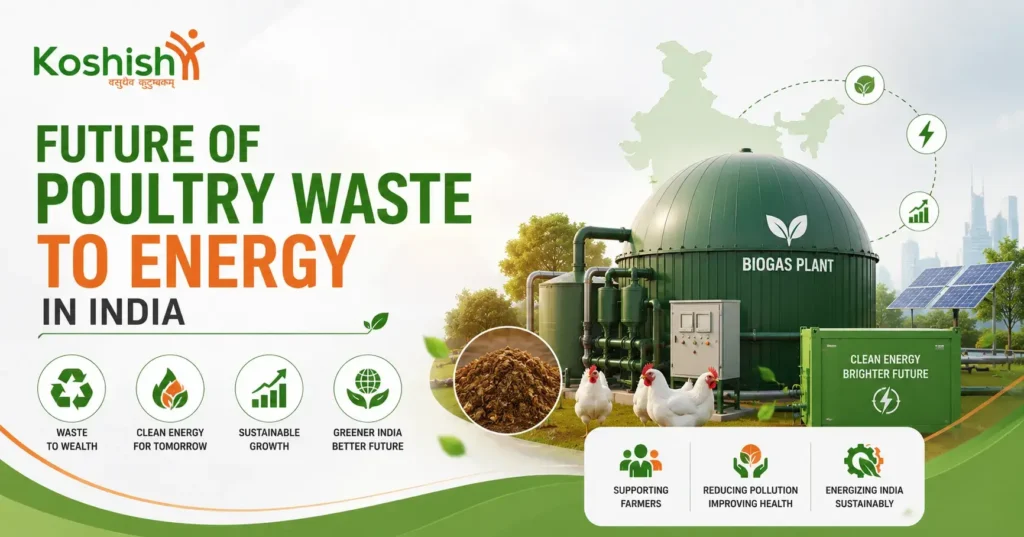

The poultry biogas plant operation is totally dependent on the anaerobic digestion process. This sustainable process converts organic waste to renewable energy and biofertiliser. This solution is best for poultry farms that have been facing litter management problems for a long time.
Due to improper waste disposal issues, the poultry litter accumulates in huge quantities on the farm. So, if there is a farm with 10,000 birds and a single bird is producing 100 g to 120 g of litter per day, the quantity of litter will be 1.2 tons of litter each day. This increases carbon emissions and harms the environment because the untreated poultry litter produces methane gas, and feeding biogas plant poultry becomes a sustainable solution here.
It provides multiple solutions to the organic waste management issue. We’ll be discussing in this digester operation guide how the biogas plant process of anaerobic digestion actually works and helps in reducing this problem.
What Is Anaerobic Digestion in Poultry Biogas Plant Operation?
In a poultry biogas plant operation, the biological process of anaerobic digestion breaks down the organic waste (poultry litter) into small particles inside the airtight tank (digester). To complete the process, the organic waste remains for 45 days in the digester, during which it emits methane gas. It produces two byproducts: biogas and organic manure.

The other types of organic waste for feeding a biogas plant for poultry are
- Cow Dung
- Piggery Waste
- Food waste
- Agricultural Waste
- Organic Industrial Waste
How the poultry biogas plant operation works
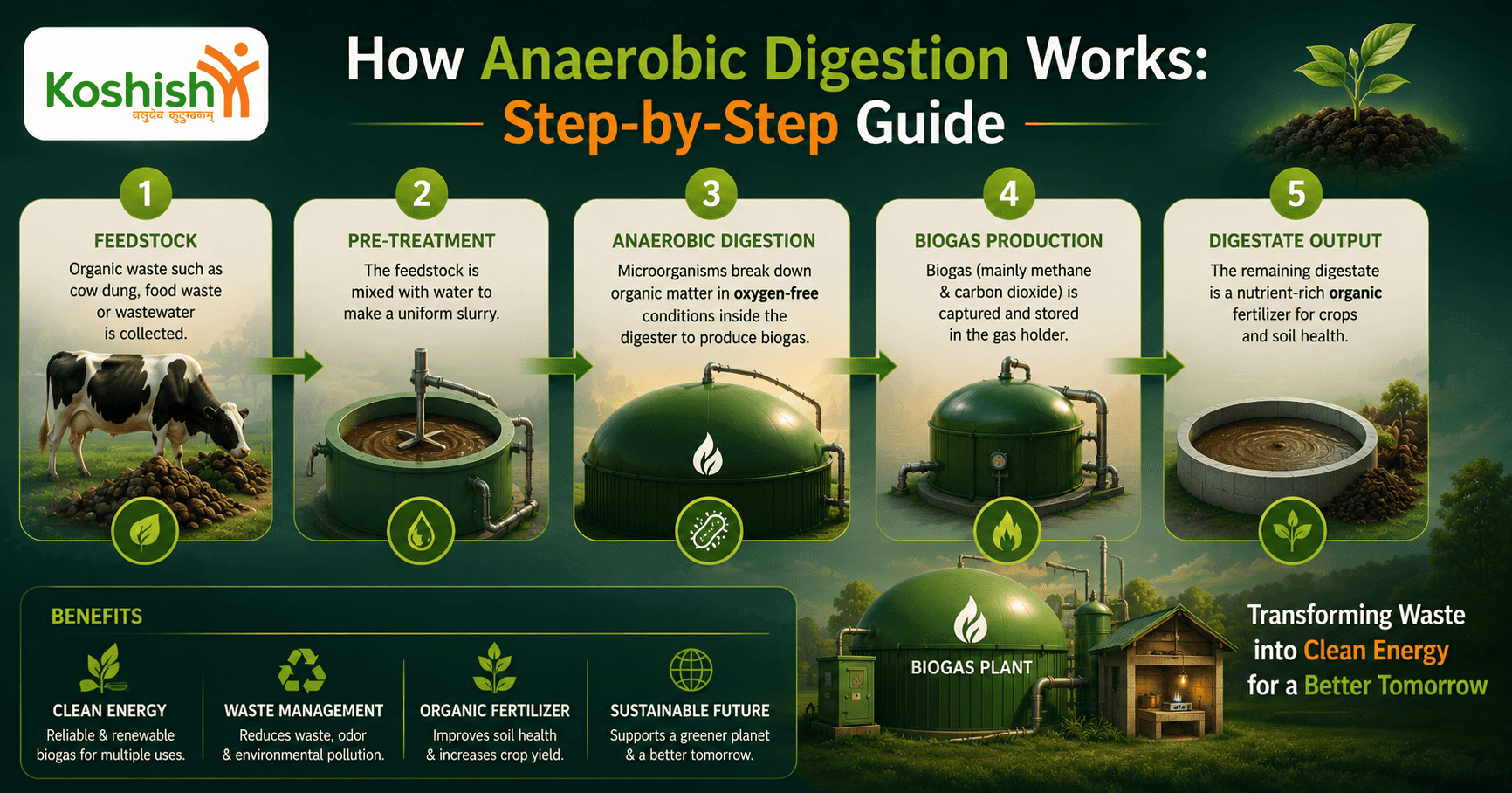
Now we’ll be discussing the whole poultry biogas plant operation in detail below, along with anaerobic digestion production steps. The biogas production for poultry farms is the same as that of others.
The first step is the collection of the organic waste and dumping it into the inlet tank; next, it is transferred to the digester, and water is added to it in a 1:1 ratio. It is mixed well; no lumps are left, and solid material is removed. Moreover, the mixture remains in the digester for 45 days for methane gas (biogas) production.
Later, the purification process takes place by transferring it to the outlet tank. During this step, the carbon dioxide and hydrogen separate from the methane gas, leaving 90% of it. The gas cylinders are filled with biogas and transferred to the genset for producing electricity for the poultry farm. The remaining slurry (solid or liquid) is used as biofertiliser for the crops.
After stating the whole procedure of the poultry biogas plant operation, now let’s dig into the anaerobic digestion procedure, which consists of 4 stages in the absence of oxygen:
Stage 1: Hydrolysis: Complex organic matter is broken into simpler compounds
Stage 2: Acidogenesis: Formation of volatile fatty acids
Stage 3: Acetogenesis: Conversion into acetic acid, hydrogen, and CO₂. It creates favorable conditions for the production of methane gas.
Stage 4: Methanogenesis: Methane-producing bacteria generate renewable energy (biogas).
Biogas Composition and Final Outputs
The whole biogas composition works on the percentages of gases remaining in the procedure, extracting the maximum methane gas from the rest.
| Gases | Percentage |
| Methane Gas (CH₄) | 90% |
| Carbon Dioxide (CO₂) | 7% |
| Hydrogen Sulfide (H₂S) & moisture | 3% |
The output of Anaerobic Digestion in the poultry biogas plant operation
- Biogas for gas output management for cooking gas, generating electricity, and Bio-CNG production
- In the digester operation guide, the digestate is the organic fertiliser for the crops
- The reduction in waste volume and odour
Common Mistakes that Reduce Biogas Production
The common mistakes that affect production during poultry biogas plant operation are
- Avoid overloading the digester with the organic poultry waste
- Poor mixing of the feedstock in the digester
- pH imbalance in the poultry biogas plant operation
- Lack of biogas plant maintenance in the poultry farm
- Therefore, temperature management is important.
Wrapping Up
In the anaerobic digestion process in the poultry biogas plant operation, the production of biogas is high. This provides a push to sustainable practices and helps manage waste management problems. As a result, when feeding biogas plants poultry waste correctly, it becomes a reliable way for waste-to-energy conversion.
By consistently checking the feeding of the biogas plant with poultry waste & monitoring the whole procedure, along with proper slurry management & plant maintenance for the poultry farm. Everything is important for the anaerobic digestion process to take place and be effective for gas output management.