
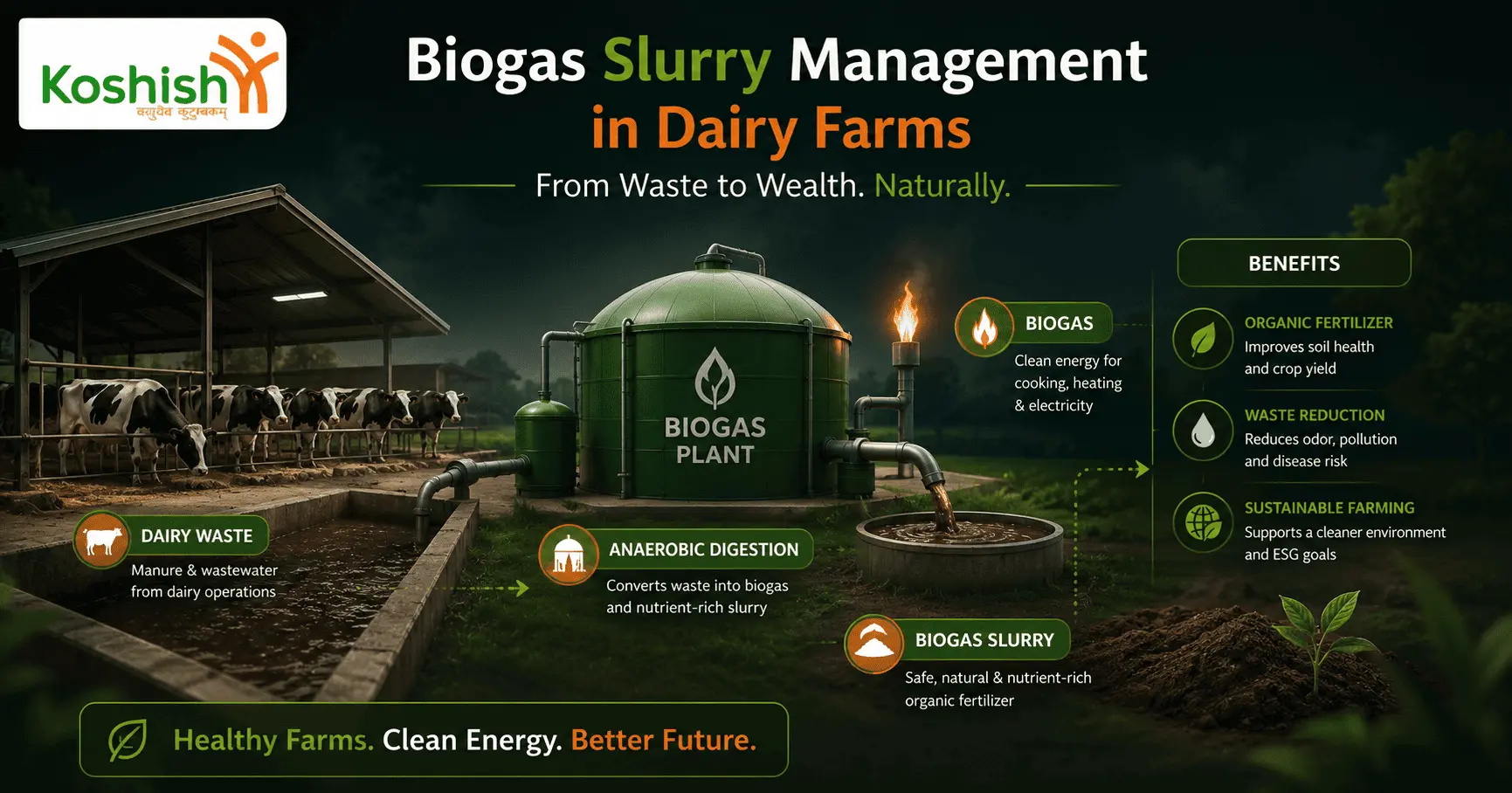
Dairy farms produce a lot of waste every day. This waste mainly includes cow dung and dirty water. Through efficiently biogas slurry uses, you can reduce pollution and make the environment safe. If it is not treated properly, which can rise pollution and a bad smell.
But this waste can also be very useful. When processed in a biogas plant, it produces clean gas for energy and a valuable organic slurry. This slurry can be used as a natural fertilizer. Productive biogas slurry management helps farmers to improve soil health and reduce the use of chemical fertilizers.
Many farms today are solving this problem by installing a commercial biogas plant for large-scale operations, while smaller farms and households can benefit from a domestic biogas plant.
What is Biogas Slurry?
Biogas slurry is a semi-liquid material left after making biogas from cow dung. In a biogas plant, tiny organisms break down the dung without oxygen. This process produces clean biogas and organic slurry. This slurry is also known as organic manure from biogas.Slurry Nutrient Value
One of the main reasons farmers use biogas slurry fertilizer due to its high nutrient quality. Slurry is better than raw dung because the nutrients in it are already decomposed and can be easily absorbed by plants.The main nutrients in slurry are Nitrogen (N), phosphorus (P), and potassium (K). It also contains small nutrients like zinc, iron, copper, and manganese. Because of this, slurry works as a powerful dairy fertiliser.Biogas Slurry Uses in Dairy Farms
There are numerous useful biogas slurry uses in dairy farming:- BioFertiliser: It helps crops grow faster and increases production. It also reduces the need for chemical fertilisers.
- Soil Improvement: It improves the quality of soil.
- Compost Making: Farmers can mix slurry with crop waste to make compost. This improves compost quality and enriches it with nutrients.
- Liquid Fertiliser: Slurry can be used in liquid form with irrigation water. This helps evenly distribute nutrients across the field.
How to Use Biogas Slurry?
There are many ways of using biogas slurry that farmers can use.- Direct Use in Fields: Slurry can be directly spread on fields before or during crop growth.
- Use with Drip Irrigation: Liquid slurry can be mixed with water and used in drip systems. This sends nutrients directly to plant roots.
- Dry Form: Slurry can be dried and made into powder. This makes it easy to store and transport.
- Mix with Other Waste: Slurry can be mixed with farm waste to make high-quality compost. This increases its value as organic manure from biogas.
Wrapping Up
The byproduct of biogas digestate is used as biofertiliser since it is rich in nutrients, which improves the productivity of the soil. Using biogas slurry fertiliser regularly helps the soil stay fertile for a long time. It adds important nutrients like nitrogen, phosphorus, and potassium, which are needed for plant growth. It also improves the soil, helping it hold more water and air. This makes crops healthier and stronger. There are many biogas slurry uses in dairy farming, from acting as a dairy fertiliser to improving compost quality. It can be used in liquid or dry form, making it easy for farmers to apply in different ways. Most importantly, the remains of biogas is used as organic manure. It reduces pollution, controls waste, and lowers the need for harmful chemicals.
What are the main biogas slurry uses?
The leftover digestate is used as biofertiliser in the farms to increase the crop production and enhance the soil nutrients.
Why should farmers use biogas slurry fertiliser?
Farmers should use it because it improves crop growth, increases the need for chemical fertilisers, saving money in the long run.
How is organic manure from biogas different from chemical fertilisers?
It enhances the soil health, adds organic matter, and is environmentally safe, whereas chemical fertilisers can damage the soil.
Why is the slurry nutrient value important for farmers?
This is important because these nutrients help plants grow faster, be healthier, and produce better yields.
Can it fully replace chemical fertilisers?
Very easily since the biogas slurry is healthy for the soil and human health..