
What is poultry farm environmental management?
Poultry farm environmental management is an approach to managing waste, carbon emissions, odour, and overall farm operations to minimise their environmental impact. It involves integrating hygiene, waste treatment, and energy-efficient practices to ensure sustainability. Effective environmental management in poultry farms not only protects the environment but also improves farm productivity, reduces costs, and ensures regulatory compliance.Importance of Poultry Pollution Control in Farms
Poultry farms produce wastes, manure, wastewater, and gases like ammonia and methane. Now, many poultry farms are adopting poultry pollution control technologies in support of sustainability goals and regulatory compliance. Implementing poultry pollution control is as follows:- The Biogas plant prevents the contamination of nearby water bodies
- It also reduces harmful gas emissions
- The biogas plant improves air quality for workers and surrounding communities
- It helps ensure compliance with environmental laws
Odour Reduction Strategies in Poultry Farms
A foul smell is one of the most common complaints in poultry farming. Poor waste management is a major problem. Implementing the below odor-control poultry farm solutions that not only improve working conditions but also strengthen community relationships. The effective odour control strategies for poultry farms include the following:- There should be frequent cleaning and dry litter management in the farms
- Proper ventilation systems to reduce gas accumulation
- Use of biofilters and natural chemicals
- Composting or converting waste into biogas
Emission Control and Carbon Footprint Reduction
Greenhouse gases emitting from poultry farms are due to climate change. Methane gas from manure and ammonia emissions are major concerns. The below measures significantly help reduce the poultry carbon footprint and support farms’ work toward sustainable poultry farming. The steps for poultry carbon footprint reduction are as follows:- With biogas plant installations, methane gas can be generated.
- Improving the volume of feed efficiently to reduce nitrogen waste.
- Using equipment that is energy efficient.
- Proper manure storage and treatment can help reduce the carbon footprint.
Improved Farm Hygiene and Waste Management
Maintaining hygiene is important for the ecosystem. Poor sanitation can lead to disease outbreaks and pollution. The best way to improve farm hygiene and waste management. The farmers should clean regularly and disinfect the poultry sheds. Segregate the solid and liquid waste. They should also control the unnecessary water usage to prevent wastage of water. Strong hygiene systems are a key pillar of poultry farm environmental management and reduce the need for excessive chemical use.Environmental Laws and Regulations for Poultry Farms in India
Environmental compliance has become important in poultry farming. There are several regulations governing poultry farm environmental management in India. That are mentioned below: CPCB Environmental Guidelines: The Central Pollution Control Board (CPCB) has made guidelines covering these guidelines from the foundation of poultry pollution control and ensuring farms adopt environmentally safe practises on waste management & disposal, carbon emission and smell control, pest and fly management, and farm siting and infrastructure. Consent to Establish (CTE) and Consent to Operate (CTO): Under this reform, poultry farms with more than 25,000 birds are required to get these consents from the state pollution control boards, ensuring compliance with emissions and waste management requirements. Siting and Location Regulations: To minimise the environmental impact, farms must maintain a distance from residential areas and water bodies. Proper site selection helps reduce odour and pollution risks. These rules directly support odour control on poultry farms and community safety. National Green Tribunal (NGT) Enforcement: The National Green Tribunal has strengthened compliance by mandating environmental regulation for poultry farms. allowing closure of noncompliant units and ensuring strict implementation of pollution control measures. This has made poultry pollution control a legal necessity rather than an optionEnvironmental Benefits of Biogas for Poultry Farms
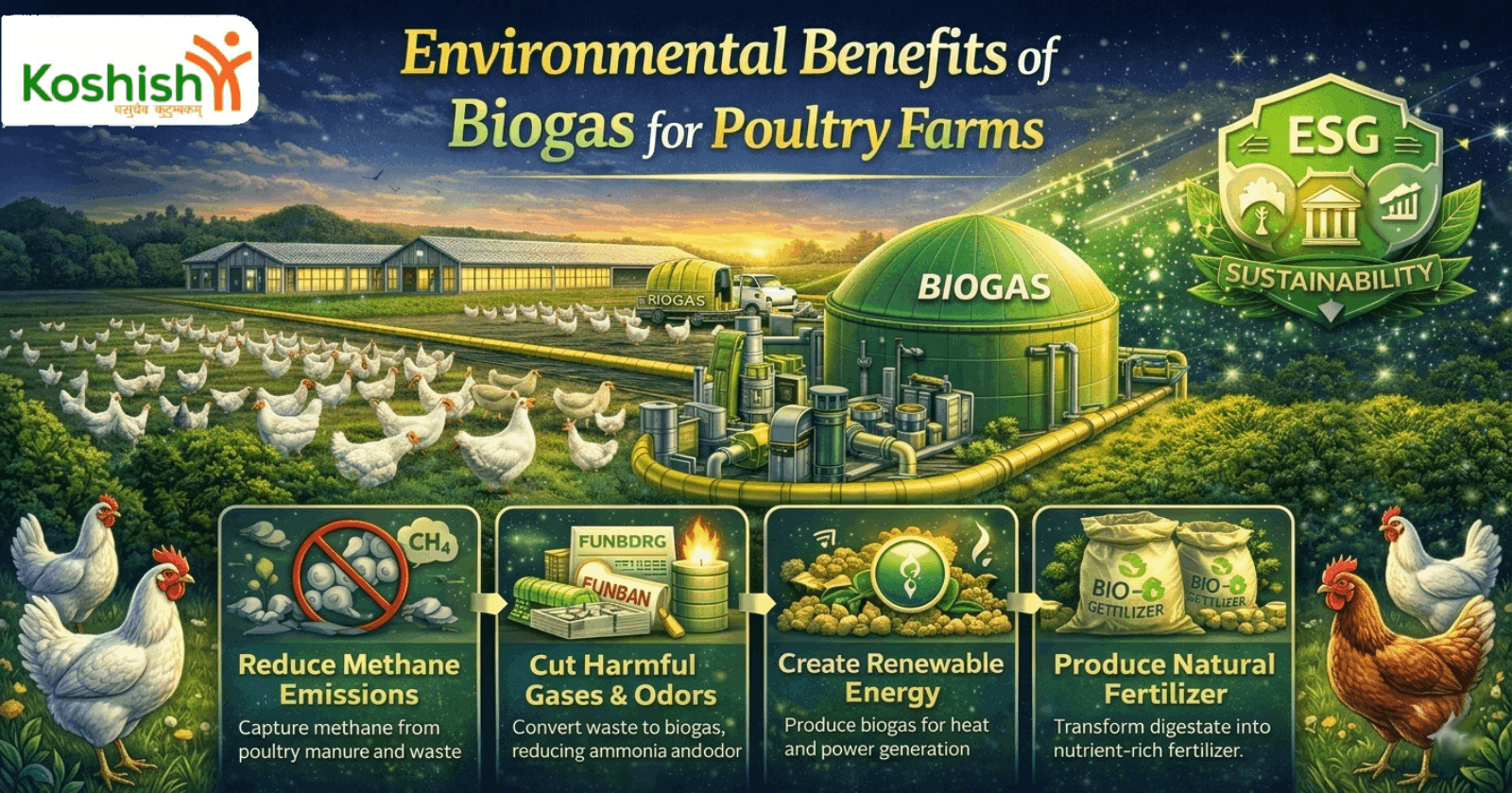
Biogas technology has benefited and evolved poultry farm environmental management. It converts poultry waste into renewable energy while reducing environmental impact. By adopting biogas systems, farms can start sustainable poultry farming practices. The benefits of biogas to the public are as follows:- Biogas converts dung into clean biogas that can be used for energy purposes such as cooking and electricity generation.
- Reduces methane emissions, which helps reduce poultry’s carbon footprint.
- It also reduces odor-related problems, helping control odors on poultry farms.
- Produces organic manure as a by-product, which can be sold.
- The Biogas plant lowers energy costs and improves sustainability
ESG Compliance and Sustainable Poultry Farming
Environmental, Social, and Governance (ESG) standards are gaining importance across industries, including agriculture. Poultry farms that implement environmental management are better supported by ESG goals. The many benefits of sustainable poultry farming.- It enhances environmental performance through poultry pollution control
- This builds stakeholder trust and attract potential investment.
- Increases access to funding and investment
- It also secures the long-term business sustainability
Wrapping Up
The future of poultry farming is in sustainability and compliance. Using poultry farm environmental management practices helps in reducing environmental impact, meeting regulatory requirements, and improving operational efficiency. By implementing poultry pollution control systems and odour control strategies for poultry farms to investing in biogas to reduce poultry’s carbon footprint, every step contributes to a cleaner, more efficient farming ecosystem. By embracing these practices, poultry farms can achieve long-term success while contributing to a greener planet through sustainable poultry farming.Frequently Asked Questions
What is poultry farm environmental management?
It refers to managing waste, emissions, and farm operations to reduce environmental impact and improve sustainability. The major problem of litter management is eliminated when these measures are adopted by the poultry farmers.
Why is poultry pollution control important?
The poultry pollution control measures help prevent air, water, and soil pollution while ensuring compliance with environmental laws. It benefits the birds’ health and encourages a clean environment.
How can odour be controlled in poultry farms?
This is also a major issue in poultry farm environmental management; it can be easily done through proper ventilation, waste management, biofilters, and biogas systems.
What are the benefits of biogas in poultry farms?
There are various benefits of biogas, which converts waste into energy, reduces emissions, and produces organic fertilizer. The methane gas is used as cooking gas and electricity. If further processed then it will turn into Compressed biogas and used as fuel.
Are poultry farms regulated in India?
Yes, farms must follow CPCB guidelines and obtain necessary approvals like CTE and CTO for environmental compliance.