
What is an STP (Sewage Treatment Plant)?
When comparing ST P vs. ETP, STPs are the better option for treating sewage wastewater from homes and offices and other residential places STP (Sewage Treatment Plant) is designed for wastewater management. STP sewage treatment plant contaminants from wastewater. The water we flush or drain from sinks, toilets, and washing machines doesn’t just vanish. It flows through long pipes to a STP sewage treatment plant. There, it is cleaned and made safe to reuse or release into rivers and oceans. These plants are important because they help keep our environment clean and protect our health by properly filtering wastewater. Without proper treatment, sewage can pollute the environment and harm ecosystems. It contains bacteria and chemicals that use up the oxygen in water, leaving less for fish and other aquatic life. The main purpose of a sewage treatment plant (STP) is to clean wastewater to a safe quality before releasing it back into the environment.What is an ETP (Effluent Treatment Plant)?
In the STP vs. ETP comparison, ETPs are a perfect option for treating complex chemical waste from factories. The ETP (Effluent Treatment Plant) is designed for industrial units. An Effluent Treatment Plant is the process of removing pollutants, contaminants, and hazardous materials before discharging the industrial wastewater. Industrial wastewater contains different types of waste depending on the industry. Some may have oil, grease, or even harmful chemicals like cyanide. Wastewater from food and beverage factories often contains organic matter that can spoil and pollute water. An ETP uses a combination of physical, chemical, biological, and membrane processes to clean the wastewater. It is commonly used in industries like chemicals, pharmaceuticals, refineries, dairy, and textiles.STP vs. ETP: Key Differences in Wastewater Treatment
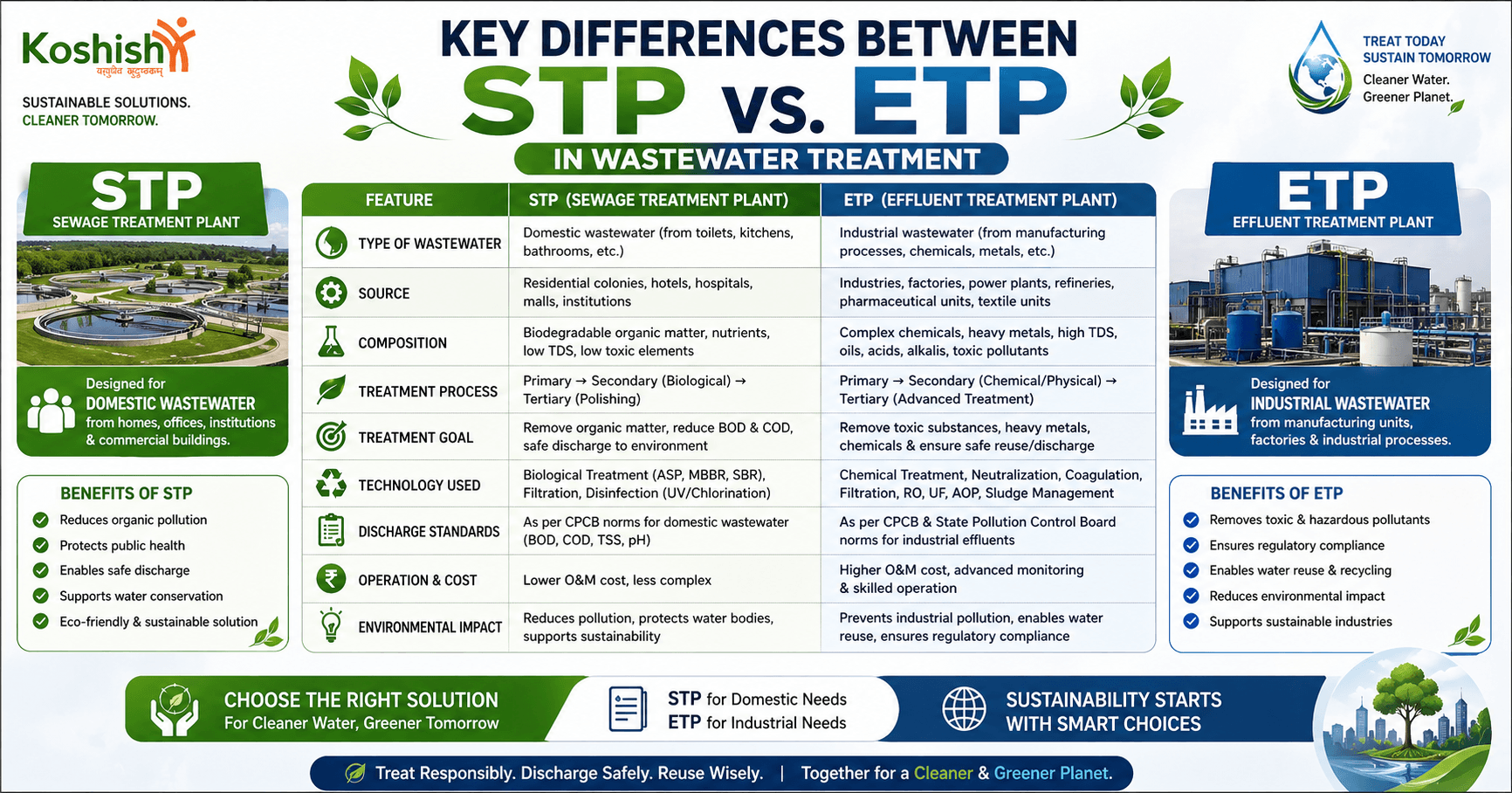
Sewage Treatment Plant and the Effluent Treatment Plant both main objective is to clean wastewater that is released from factories, homes, and offices. Look at the table below to understand STP vs. ETP.
Differences Between STP vs. ETP |
||
|---|---|---|
| Basis: STP vs. ETP | Sewage Treatment Plant | Effluent Treatment Plant |
| Source of Wastewater | A sewage treatment plant filters domestic sewage waste from households, commercial spaces, and offices. | An effluent treatment plant filters industry waste generated from manufacturing. |
| Nature of Pollutants | Organic waste, human waste, soaps, detergents, etc. | It focuses on heavy metals, toxic chemicals, oils, grease, etc. |
| Complexity | A sewage treatment plant uses simpler, standard methods mainly to remove organic and biological waste. | An effluent treatment plant is more complex due to the chemical and toxic nature of waste. |
| Suitable for | Residential, commercial buildings, or municipal wastewater systems. | Textiles, pharmaceuticals, chemicals, or food processing. |
| Reuse | Treated water can be used for gardening, flushing, etc. | Filtered water may be used for safe discharge or reused for cleaning, etc. |
| Cost | Less expensive in comparison to an effluent treatment plant. | It is expensive due to advanced technology. |
Applications of STP and ETP in Different Industries
Sewage Treatment Plant
Sewage Treatment Plants (STPs) are used to filter sewage water, wastewater from homes, offices, hotels, schools, and other residential or commercial buildings. This water comes from toilets, showers, kitchens, and sinks. STP sewage treatment plant helps clean this water before it is released into the environment or reused for gardening, flushing, or other non-drinking purposes.Effluent Treatment Plant
Effluent Treatment Plants (ETPs) are perfect for industries like textiles, pharmaceuticals, chemicals, food processing, dairy, refineries, and other industries that produce waste from manufacturing or business operations. These industries produce industrial wastewater, which contains harmful chemicals, oils, and toxins. ETPs clean this water using advanced processes so it can be reused in the factory or safely released into the environment.Wrapping Up: Which One is Best for Your Needs?
STP vs. ETP both play an important role in wastewater management, but each is designed for different types of wastewater management. If you are dealing with domestic or commercial sewage from homes, offices, or buildings, a Sewage Treatment Plant (STP) is the right solution. It is simpler, more cost-effective, and perfect for treating organic waste like human waste, soaps, detergents, etc. If your business operations produce industrial wastewater, such as chemicals, oils, or toxic materials, then an Effluent Treatment Plant (ETP) is a better option. It is more advanced and designed to handle complex industrial pollutants. Choosing between an STP and an ETP depends on the source and type of wastewater. By selecting the right treatment system, you not only meet environmental standards but also help conserve water and protect the planet.Frequently Asked Questions
What is the main difference between STP and ETP?
STP Sewage Treatment Plant is used to treat domestic wastewater, like sewage from toilets and sinks. While an ETP (Effluent Treatment Plant) is used to treat industrial wastewater, which may contain harmful chemicals and toxins.
What does a sewage treatment plant do?
A sewage treatment plant (STP) filters dirty water from homes, offices, and buildings by removing organic waste, making it safe for reusable.
What is the purpose of an effluent treatment plant?
An effluent treatment plant (ETP) is used in industries to clean wastewater before it is reused or safely discharged into the environment.
What are the main steps in the sewage treatment plant process?
The sewage treatment plant process includes screening, sedimentation, aeration, and disinfection. Each step works to remove solid and organic waste from sewage.
What is a Common Effluent Treatment Plant (CETP)?
A Common Effluent Treatment Plant (CETP) is a shared facility used by multiple small industries to treat their wastewater together.
Instead of every industry building its own treatment plant, a CETP saves money by sharing resources, making it a good option for small and medium businesses.