

Poultry waste collection is the first step to running a successful biogas plant. Every day, poultry farms produce a large amount of manure. If farmers do not collect and store it properly, it creates bad smells, attracts flies, and causes pollution. As a result, the manure becomes less useful, and the biogas plant produces less gas.
The good news is that these problems are easy to prevent. Proper poultry waste collection, good poultry litter storage, and safe manure handling of poultry help keep the manure fresh and ready for biogas production. They also keep the farm cleaner and healthier.

If you want your poultry biogas plant to perform better, follow these simple best practices. They will help you produce more biogas, reduce waste, save money, and protect the environment.
Why Proper Poultry Waste Collection Matters?
Every poultry farm produces waste every day. If farmers leave the waste on the ground for too long, it starts to lose nutrients. As a result, it produces less biogas. It can also create a bad smell, attract flies, and make the farm dirty.
Proper poultry waste collection helps prevent these problems. It keeps the manure fresh, which helps the biogas plant produce more gas. It also keeps the farm clean, reduces bad odors, and improves the quality of organic fertilizer. In addition, it protects the soil and nearby water from pollution. Most importantly, regular poultry waste collection helps the commercial biogas plant run smoothly and efficiently every day.
Types of Poultry Waste
Before you start poultry waste collection, you should know the different types of poultry waste. Each type needs the right handling and storage. This helps the biogas plant produce more gas and work more efficiently.
Poultry Manure: Poultry manure is the main waste used in a biogas plant. It is rich in nutrients and breaks down quickly. Because of this, it produces a large amount of biogas.
Poultry Litter: Poultry litter is a mix of manure and bedding materials like rice husk, straw, or sawdust. Proper poultry litter storage keeps the litter dry and clean. It also prevents nutrient loss and helps produce more biogas.
Feed Waste: Feed waste is the leftover food that chickens do not eat. Farmers can add small amounts of this waste to the biogas plant to increase biogas production.
Feathers: Feathers break down very slowly. Therefore, most poultry farms keep them separate instead of adding them to the biogas digester. This helps the digester work more efficiently.
Best Practices for Poultry Waste Collection
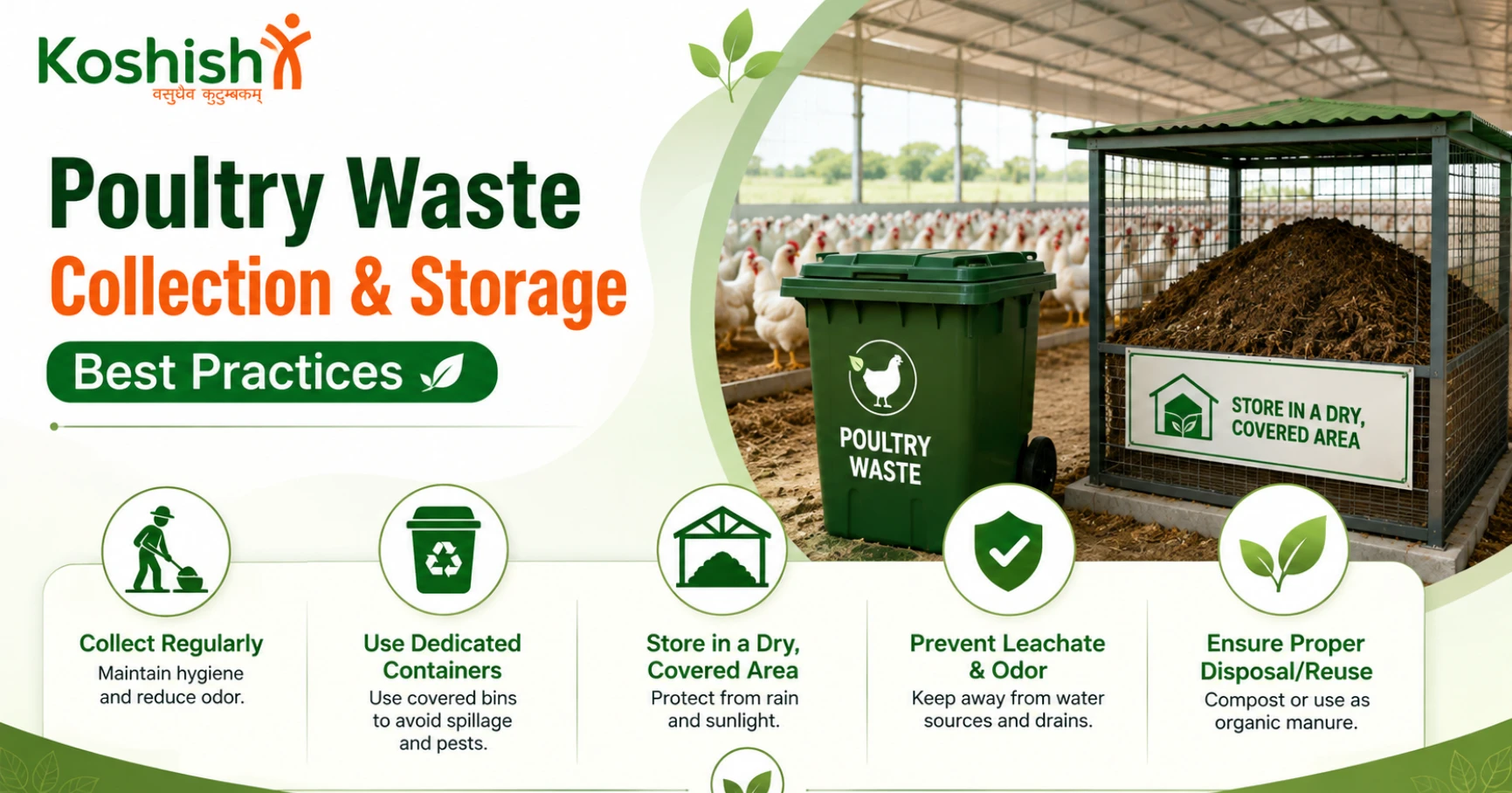
Collect Waste Every Day: Collect poultry waste every day to keep it fresh. Fresh manure produces more methane, which helps the biogas plant make more gas. It also reduces bad smells, keeps flies away, and lowers the growth of harmful bacteria. As a result, regular poultry waste collection helps the biogas plant work better and produce more energy.
Remove Non-Organic Materials: Only organic waste should go into the biogas plant. Before storing the manure, remove plastic, metal, glass, stones, ropes, and other unwanted materials. These items do not break down inside the digester and can damage the system. Therefore, clean poultry waste collection improves biogas production and keeps the digester running smoothly.
Keep Rainwater Away: Keep poultry manure dry before sending it to the biogas plant. If rainwater mixes with the manure, it becomes too wet and heavy. As a result, it is harder to move and produces less biogas. Therefore, always store the collected waste in a covered area. This keeps the manure in good condition and ready for biogas production.
Use the Right Equipment: Using the right tools makes poultry waste collection easier, faster, and safer. Equipment like wheelbarrows, scrapers, conveyor belts, and tractor trailers helps move manure quickly without much effort. As a result, farmers save time, reduce labor, and keep the farm running more efficiently.
Poultry Litter Storage Best Practices
Proper poultry litter storage is just as important as poultry waste collection. If poultry litter is left in the open, rain and direct sunlight can damage it. As a result, it loses nutrients and produces less biogas.
Always store poultry litter in a covered place. This protects it from rain, wind, and strong sunlight. Also, use a concrete floor under the storage area. A concrete floor stops nutrients from leaking into the soil and makes cleaning much easier.
Do not keep poultry litter in storage for too long. Fresh litter produces more biogas than old litter. In addition, make sure the storage area has good airflow. Good ventilation reduces moisture, controls bad smells, and keeps the litter in good condition. By following these simple poultry litter storage practices, you can keep the feedstock fresh and improve biogas production.
Manure Handling of Poultry
Proper manure handling of poultry keeps workers safe and helps the biogas plant produce more energy.
Workers should wear gloves, boots, masks, and protective clothing while handling poultry manure. They should also handle the manure carefully to prevent nutrient loss. Fresh manure produces more biogas than dry manure. Therefore, move it to the biogas plant as quickly as possible.
Also, clean the collection area and equipment regularly. Good manure handling of poultry reduces the spread of germs, keeps the farm clean, and helps the biogas plant run more efficiently.
Waste Logistics Poultry Farms
Good waste logistics poultry farms planning helps farmers save both time and money. It also makes moving poultry waste easier and faster.
Farmers should choose the shortest route from the poultry sheds to the storage area. They should also collect manure at the same time every day. This keeps the work simple and organized.
In addition, place the storage area close to the poultry sheds to reduce transport time and fuel costs. Use covered vehicles to move the waste safely. This prevents waste loss and reduces bad smells during transport. As a result, proper waste logistics poultry farms planning keeps the farm cleaner and improves overall efficiency.
Feedstock Storage Biogas Best Practices
Good waste logistics poultry farms planning helps farmers save both time and money. It also makes moving poultry waste easier and faster.
Farmers should choose the shortest route from the poultry sheds to the storage area. They should also collect manure at the same time every day. This keeps the work simple and organized.
In addition, place the storage area close to the poultry sheds to reduce transport time and fuel costs. Use covered vehicles to move the waste safely. This prevents waste loss and reduces bad smells during transport. As a result, proper waste logistics poultry farms planning keeps the farm cleaner and improves overall efficiency.
Wrapping Up
Good poultry waste collection is the first step toward a successful poultry biogas plant. However, collecting the waste alone is not enough. Proper poultry litter storage, safe manure handling of poultry, efficient waste logistics poultry farms, and good feedstock storage biogas practices all help produce more biogas.
By following these simple steps, farmers can reduce waste, save money, and generate more clean energy. At Koshish India, we help poultry farms build efficient poultry waste management and biogas systems that turn poultry waste into a valuable source of renewable energy.