

How Does a Biogas Plant Save Money?
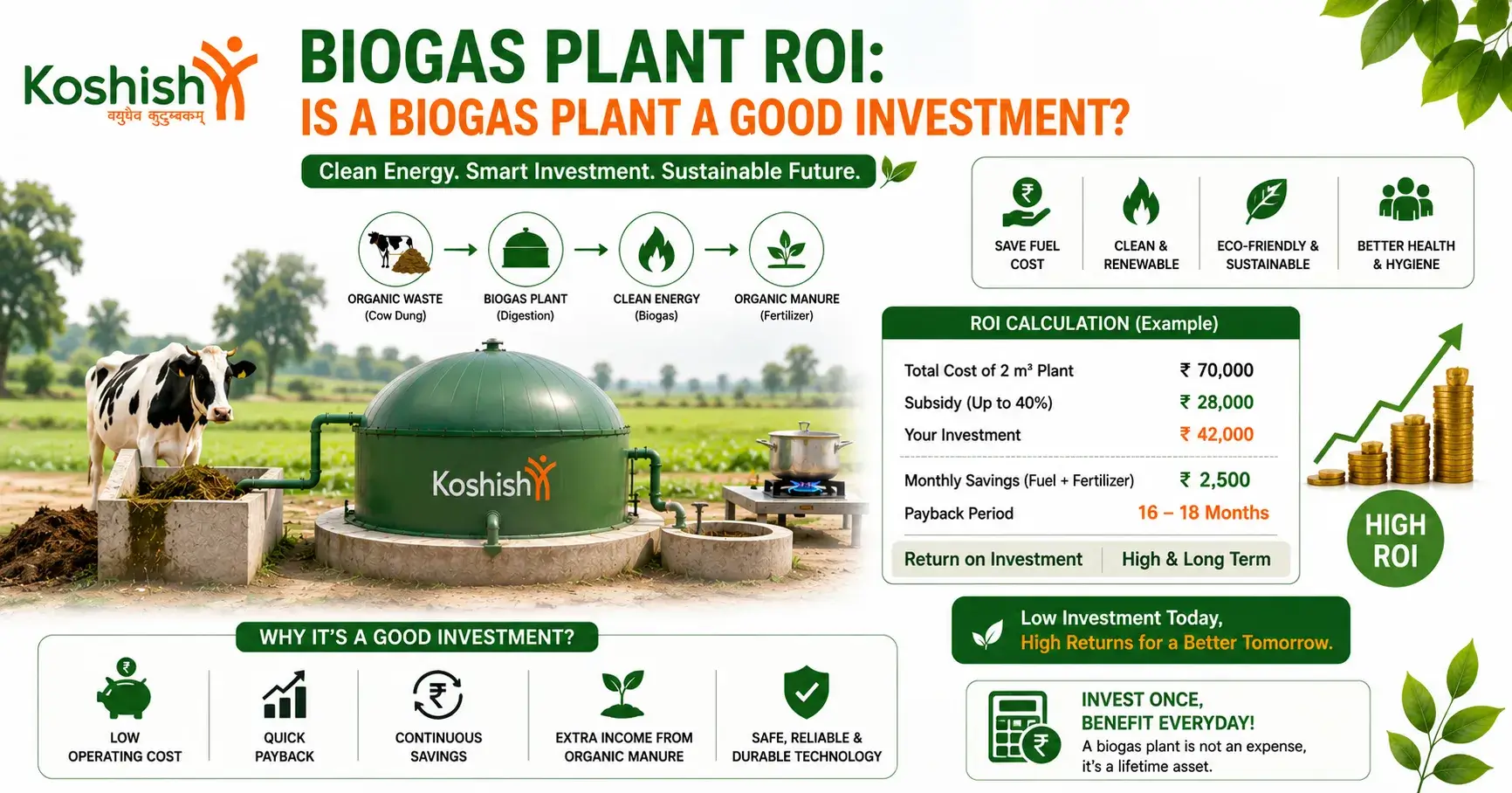
A biogas plant can reduce many daily costs. For example, a poultry farm has installed a Commercial Biogas Plant through which they generate electricity. Similarly, a dairy farm uses cow dung to produce biogas for heating and power. As a result, businesses can reduce their use of grid power, LPG, diesel, or other fuels. These savings are known as biogas savings. Over time, they can become a major part of the project’s financial return.What Is the Biogas Payback Period?
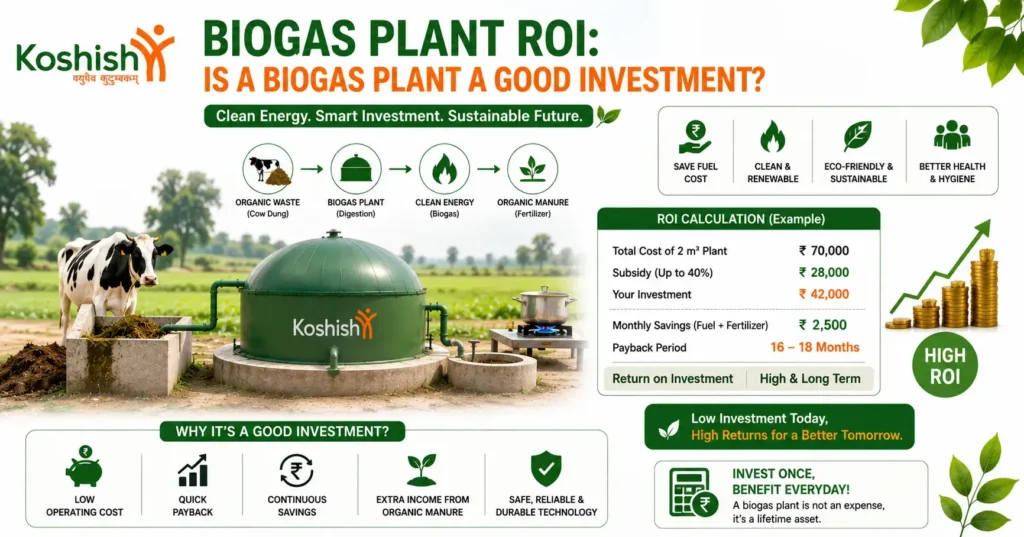
The biogas payback period is the recovery period in which the investment money is paid back. For example, suppose a plant costs ₹20 lakh. If it saves or earns ₹5 lakh each year, the simple payback period would be about four years. However, the actual period can be shorter or longer. It depends on:- Plant installation Cost
- Daily waste available
- Production of Biogas
- Energy use
- Electricity or Fuel price
- Maintenance Cost
- Value of Bio-Manure
- Subsidy and financial Support
How Can You Improve Biogas Plant ROI?
There are several factors that affect Biogas Plant ROI. The factors are as follows:-
- Availability of Waste: Regular supply of waste is important. More organic waste provides more steady production of gas.
- Biogas Plant Size: The size of the plant should match the availability of the waste. An oversized plant may increase costs without giving enough returns.
- Energy Use: Using Biogas or Electricity at the project site can increase savings. For example, a factory may use biogas to replace part of its fuel needs.
- Bio-Manure Value: The anaerobic digestion process also creates bio-slurry. After proper treatment, it can be used as an organic fertiliser. So, the plant may create value from both energy and manure.
- Maintenance: Regular maintenance helps keep the plant working well. In turn, good plant performance supports better biogas profitability.
How Can You Get Better Returns From a Biogas Plant?
Businesses can take a few simple steps to improve biogas profitability. First, use a reliable and steady waste source. Next, select the right plant size. Also, use the gas as close to the production point as possible. Furthermore, regular maintenance can reduce downtime. The bio-slurry should also be managed well so its value is not lost. Finally, check available government schemes and subsidies before starting the project. These can reduce the initial investment.Is a Biogas Plant a Good Investment?
Absolutely, a biogas plant can be a good investment when the project is planned correctly. A biogas plant has great importance for farms, dairies, poultry farms, food establishments, hotels, institutions, and industries that generate huge quantities of organic waste. The greatest advantage of biogas plant is the ability to tackle two issues at the same time. This technology can not only help in the management of waste but can also generate useful energy. Moreover, this technology will help in saving money on fuel and generating bio-manure.Simple Example of Biogas Plant ROI
Consider a business that spends a large amount on electricity and fuel every year. After installing a biogas plant, it uses organic waste to produce energy. Its energy bill falls. At the same time, it gets bio-manure from the plant. For example: Annual savings + manure value + other income = total annual benefit Then: Plant cost ÷ annual benefit = estimated payback period This simple calculation gives an early idea of the biogas plant return on investment. However, a detailed feasibility study should be done before making the final decision.Wrapping Up
A biogas plant is more than a waste treatment system. It can turn organic waste into useful energy and create long-term savings. With a steady waste supply, the right plant size, good technology, and proper operation, a business can achieve a strong biogas plant return on investment. Moreover, lower fuel costs, bio-manure, and better waste management can improve the plant’s overall profitability. These benefits can make biogas a smart choice for businesses that produce organic waste every day. So, if your business has a regular supply of organic waste, a biogas plant may be a good investment. It can help you manage waste, reduce costs, and produce clean energy at the same time.Frequently Asked Questions (FAQ)
What is the average biogas payback period?
The payback period for the biogas system is the time taken to recoup the capital invested in the system. This period differs from one project to another. The period depends on such factors as the size of the plant, cost of the project, amount of waste produced daily, production of biogas, savings on fuel, savings on electricity, and maintenance costs.
How do I calculate biogas plant ROI?
To estimate biogas plant ROI, first calculate the total cost of the project. This may include equipment, civil work, installation, pipelines, generators, and other costs. Next, estimate the yearly financial benefits. These can include fuel savings, electricity savings, waste management savings, and bio-manure value. A simple calculation is Payback Period = Total Project Cost ÷ Annual Financial Benefit.
How can I improve biogas profitability?
Improving the profitability of biogas can be done using various methods. To begin with, you should ensure that there is a consistent flow of organic waste. Second, select the appropriate size of the plant based on the organic waste available. You should then utilize the biogas produced near the point of generation to avoid unnecessary loss of energy and cost. Proper biogas maintenance is equally essential for efficient operation of the plant.
Why should a feasibility study be done before installing a biogas plant?
The feasibility study enables the company to calculate the cost, waste generation, size of the plant, power generated, savings and even the estimated income. It could assist in calculating the biogas payback period and ROI of the biogas plant. Most importantly, it will enable the identification of any potential problem before construction begins.