
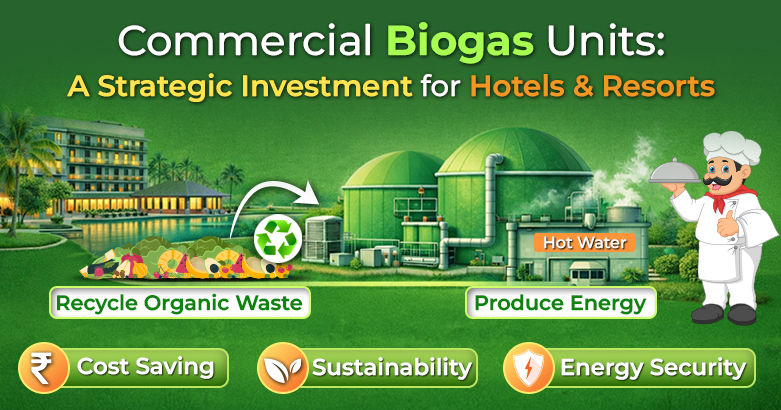
When we discuss how poor food waste management for hotels and resorts is in India, then a potent sustainable solution to this is “Commercial Biogas for hospitality”. These Commercial biogas plants are mainly built for those industries that produce a large amount of food waste or organic waste, such as Hotels and resorts. The capacity of the plant is decided based on the amount of food waste collected from the Hotels & Resorts.
We’ll discuss this in the blog below about how investing in a Commercial biogas plant is a strategic investment for hotels and resorts.
Waste Generation in the Hospitality Industry
The primary source of waste generation in the Hospitality Industry comes from food waste management. The Hotels, restaurants, and resorts generate large quantities of organic waste every day, mainly from kitchens, buffets, staff canteens, and guest dining areas.
This waste generation in hospitality usually includes:
- Vegetable & fruit peels
- Leftover cooked food
- Dairy waste
- Bakery and meat waste
For large hotels, waste generation in hospitality can easily reach 200–800 kg per day. This creates high disposal costs and environmental concerns. Here is where hospitality food waste management through commercial biogas becomes important.
How Biogas Plants Process Kitchen Waste
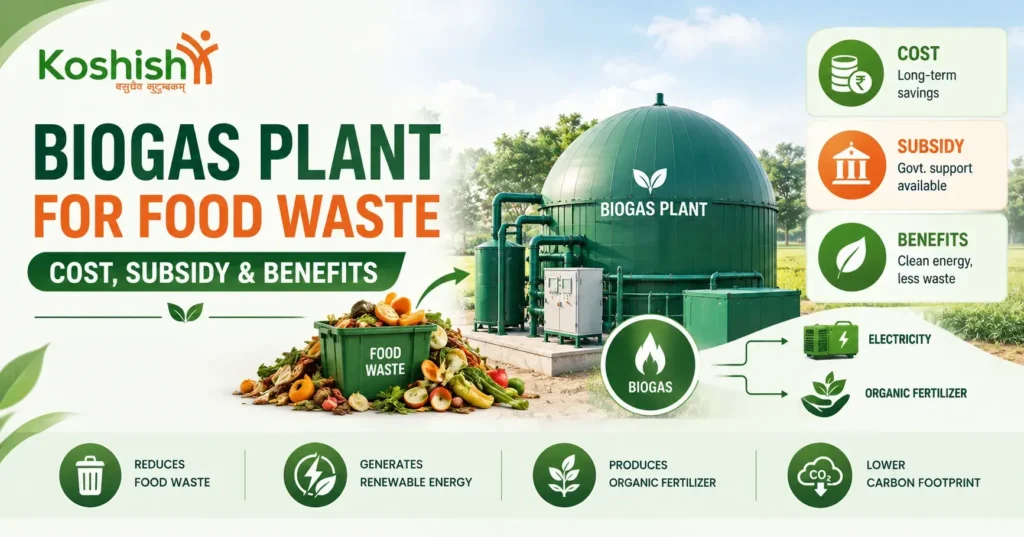
Through a commercial biogas plant, organic waste is converted into biogas and bio-slurry using anaerobic digestion. The process is simple yet highly efficient for hospitality food waste management:
Collection & Segregation: Kitchen waste is separated at the source.
Shredding & Slurry Formation: Machines convert solid food waste into uniform slurry.
Anaerobic Digestion: The slurry is moved into the digester, where microbes eat and break it down.
Biogas Production: Methane, which is rich in biogas, is produced, making it perfect for cooking in large hotel kitchens.
Bio-fertiliser: Nutrient-rich slurry is produced and often used for landscaping.
This clean technology not only enhances renewable energy for hospitality but also supports
sustainable hotels in achieving zero-waste goals.
Energy savings for large kitchens
Biogas is a highly efficient fuel and significantly reduces LPG or diesel consumption in hotels.
When commercial biogas units are installed:
- 200 kg of waste can generate -10–12 kg of LPG equivalent biogas
- Monthly savings often reach ₹1–3 lakh for hotels.
- Peak kitchen operations remain uninterrupted.
For kitchens operating 24×7, renewable energy for hospitality ensures stability, reduced fuel dependency, and predictable energy expenses. These energy savings make commercial biogas the preferred solution for sustainable hotels.
Green Branding Benefits
Everyone now prefers eco-friendly, conscious, and sustainable hotels. Installing commercial biogas units significantly enhances a hotel’s brand value.
- Demonstrate leadership in hospitality food waste management.
- Positions the property as a pioneer in renewable energy in Hospitality.
- Meets ESG criteria to support sustainability.
- Strengthens Corporate Social Responsibility (CSR) narratives
- Improved guest experience with visible green initiatives.
Hotels that adopt commercial biogas technology report higher guest satisfaction and increased brand trust, especially among environmentally aware travellers.
Installation & Space Requirements
Setting up commercial biogas units in hotels is easier than ever, thanks to compact prefabricated models.
Typical Requirements:
- Space: 200–700 sq. ft, depending on the waste volume
- Location: Near the kitchen to reduce waste transport
- Utilities: Basic water supply & electrical points for shredders
- Safety: Units follow gas safety norms similar to LPG systems
These systems integrate seamlessly with existing hospitality infrastructure, further promoting hospitality food waste management and sustainable hotels.
Wrapping up
As the hospitality sector transforms, adopting commercial biogas units is becoming a top priority for sustainable hotels. This technology reduces waste generation in hospitality, optimises food waste management, and generates reliable renewable energy.
Hotels and resorts that invest in biogas today secure long-term savings, improved green branding, and a more substantial environmental footprint.
Frequently Asked Questions
How does a commercial biogas unit help in hospitality food waste management?
A commercial biogas system converts daily kitchen waste into biogas, reducing disposal costs and landfill burden. For hotels, it ensures effective hospitality food waste management by processing food scraps onsite and turning them into valuable clean energy.
How much waste generation in hospitality can a biogas plant handle?
Modern commercial biogas units can handle anywhere from 50 kg to several tons of daily waste. This aligns with typical waste generation in hospitality for medium- and large-sized hotels, making biogas an ideal solution for continuous, efficient processing.
How does biogas support renewable energy for hospitality operations?
Biogas directly replaces LPG or diesel in large kitchens. Since it is produced daily from organic waste, it provides renewable energy for hospitality, supporting 24×7 kitchen operations and helping properties become more energy-efficient.
Can commercial biogas installations help hotels become sustainable hotels?
Yes. By reducing carbon emissions, cutting waste disposal, and using renewable fuel, biogas systems play a significant role in turning properties into sustainable hotels. Biogas adoption also supports green certifications and ESG compliance.
How much space is needed to install a commercial biogas system in a hotel?
Most commercial biogas units require 200–700 sq. ft, depending on waste volume. These systems are compact and designed specifically for hospitality food waste management, making installation easy even in space-constrained hotel backyards or basements.