
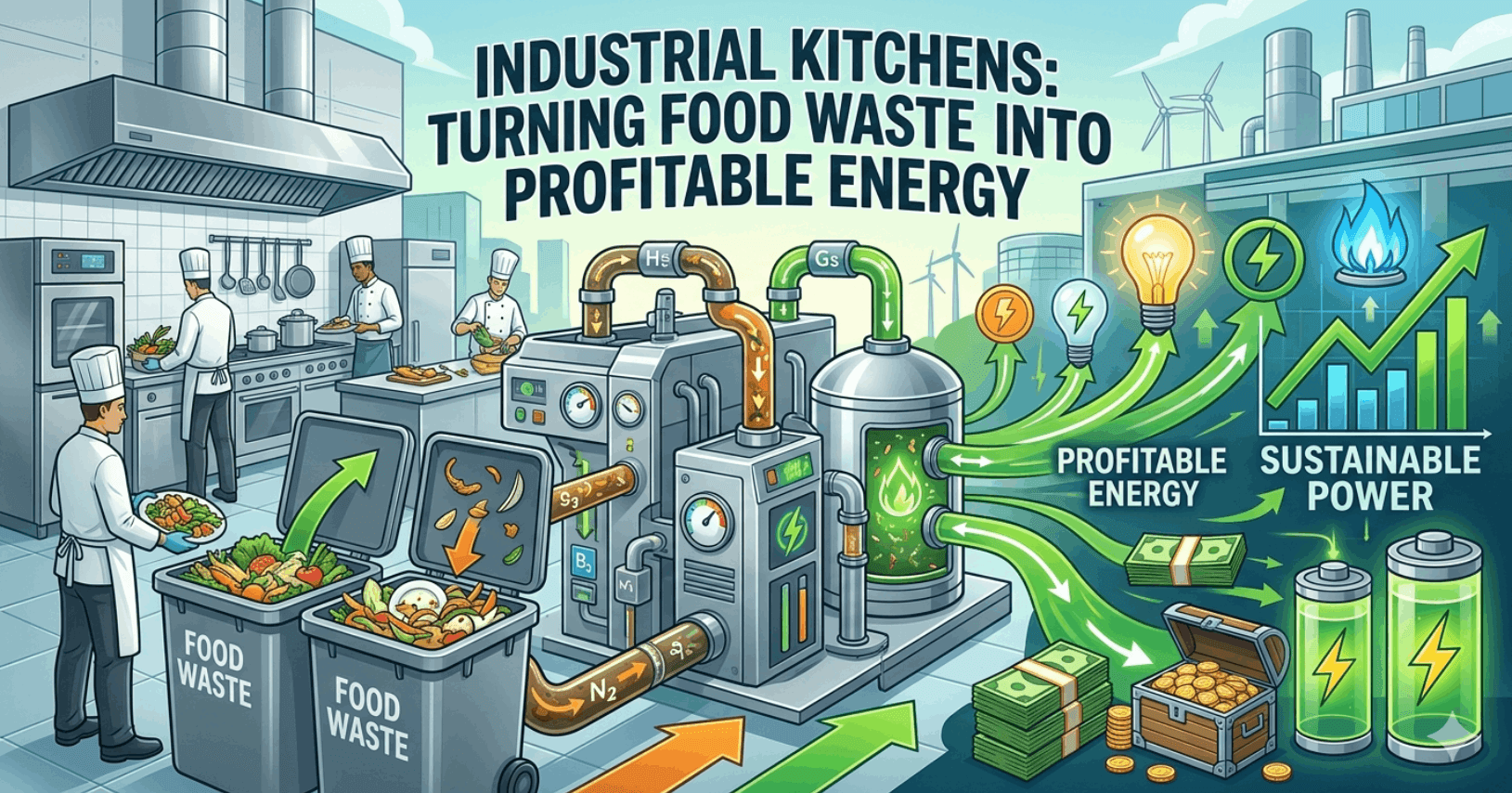
Commercial and industrial kitchens generate large volumes of food waste due to inefficient waste management practices. This issue poses a major challenge for hotels, restaurants, large canteens, and central food processing units. However, these growing challenges have led to the adoption of food waste–to–energy solutions, such as kitchen waste biogas systems, which convert organic waste into renewable fuel for kitchen operations.
Instead of sending food waste to city landfills, organizations use it to generate energy through kitchen waste biogas systems. These systems convert food waste into clean, renewable fuel for kitchen operations. In this eco-friendly biogas conversion process, food scraps and organic residues break down inside an anaerobic digester, producing biogas as a usable energy source. This sustainable energy source can replace LPG and other fossil fuels easily.
The biogas plant not only helps in effective waste management for the Commercial Kitchens, but also gives other substantial cost savings in fuel purchase & eliminates waste disposal expenses. Through this procedure of the Food Waste to Energy model, the industrial kitchens can easily reduce their carbon footprint, lower operational costs, and contribute to a circular economy, truly turning waste into profitable energy.
What is Renewable Energy?
The natural energy procured directly from nature, such as Sunlight, Wind, Water, and the Earth’s heat. These resources are free of Cost and can be reused wherever needed.
Unlike Fossil fuels, renewable energy is clean, sustainable, and supports a clean environment, such as solar energy, windmill energy, hydro,& biogas energy.
Benefits of Renewable Energy: There are various advantages of Renewable Energy, which are as follows:
Reducing Carbon Emission & Pollution: Clean energy is produced through renewable energy, which is generated from sources like Solar, Wind, & Water power that create absolutely no pollution. These resources do not release harmful gases or toxins, which helps fight climate change and keeps our air and water clean.
Clean and Eco-Friendly: No harmful gas pollutants or greenhouse gases are released from the renewable energy. The carbon footprint is reduced, plus it keeps the environment cleaner & healthier.
Reduces Electricity Bills: The Solar Power & Wind systems work miraculously in reducing the Electricity bills, which makes the electricity almost free. Over time, the renewable energy systems can reduce the monthly electricity bills, making it a wise long-term investment.
Improves the Quality Of Air and Water: The traditional way of fueling vehicles & other transportation means, such as coal or oil, releases harmful toxins into the air & water. Renewable energy produces little to no pollution, which leads to cleaner air, safer water, and a healthier environment for everyone.
Independent Energy : By producing power locally from renewable sources, countries can reduce their dependence on imported fossil fuels. This enhances energy security and protects against price fluctuations in the global energy market.
Supports Sustainable Development: Renewable energy encourages long-term, environmentally friendly growth. It helps meet today’s energy needs without compromising natural resources.
Why Is Food Waste Conversion Important?
Converting Food waste into energy helps the Environment in ways that reduce the waste that goes to landfills & also reduces harmful Greenhouse Gas Emissions. As food waste decomposes in dumpyards, it emits methane gas—a potent greenhouse gas that accelerates global warming.
The biogas system collects methane gas and utilizes it as a clean fuel for kitchen operations and vehicle applications. It makes an individual self-sufficient and sustainable by helping them produce their own clean energy, which reduces their dependency on Fossil Fuels & lowers their Carbon Footprint.
What is the Biogas Conversion Process?
The biogas conversion process is the method of turning organic waste, such as food scraps, animal manure, or agricultural residues, into clean, renewable energy. This process takes place inside a biogas digester through a natural biological process called anaerobic digestion.
Collecting Organic Waste: The process involves collecting organic waste materials—including kitchen waste, cow dung, and crop residues—and feeding them into the biogas digester.
Anaerobic Digestion: Inside the digester, microorganisms break down the organic matter in the absence of oxygen. This process happens in multiple stages: hydrolysis, acidogenesis, acetogenesis, and methanogenesis.
Biogas Production: As the waste decomposes, it produces a mixture of gases, mainly methane (CH₄) and carbon dioxide (CO₂). This gas mixture, referred to as biogas, functions as a renewable fuel for cooking, heating, and electricity generation.
Slurry Output (Bio-slurry): After digestion, what remains is a nutrient-rich residue known as bio-slurry. This can be dried and used as an excellent organic fertiliser for crops.
What are the Cost Savings in Fuel Purchase?
Biogas helps to reduce the cost of fuel. By converting organic waste into biogas, households, farms, and industries can produce their own clean fuel instead of buying LPG, diesel, or natural gas.
For example, a family or dairy farm using biogas for cooking, heating, or electricity can save a good amount of money every month on fuel. Over time, these savings can cover the cost of setting up the biogas plant, making it an affordable and eco-friendly energy option.
Wrapping Up
Converting food waste into energy is both eco-friendly and cost-effective. With kitchen waste biogas systems, hotels, restaurants, and industrial kitchens can easily turn daily organic waste into clean, renewable fuel. This reduces fuel costs, removes waste disposal problems, and cuts harmful emissions.
By using the “food waste to energy” model, commercial kitchens can save money, manage waste better, and reduce their carbon footprint. It’s an innovative and sustainable way to turn everyday waste into valuable energy while protecting the environment.
Frequently Asked Questions
What is the food waste-to-energy process?
The food waste to energy process converts leftover food and kitchen waste into biogas through anaerobic digestion. This biogas is used to supply energy for heating, cooking, and generating electricity.
How does kitchen waste biogas work?
In a kitchen waste biogas system, food scraps and organic leftovers are collected in a digester. In the absence of oxygen, microorganisms decompose the waste and generate biogas suitable for cooking or heating. The remaining slurry serves as an organic fertilizer.
Why is waste management important in commercial kitchens?
Proper planning of organic Food Waste management in a Commercial kitchen helps in reducing costs, preventing foul odours, and minimizing environmental pollution.
By converting kitchen waste into biogas or compost, restaurants and hotels can manage waste sustainably and save energy costs.
What are the benefits of using renewable fuel in kitchens?
Using renewable fuel in kitchens, such as biogas, reduces dependence on LPG or fossil fuels, lowers greenhouse gas emissions, and provides a clean, cost-effective energy source. It also supports a sustainable and eco-friendly cooking environment.
Can commercial kitchens adopt food waste-to-energy systems?
Yes, commercial kitchens like hotels, restaurants, and canteens can easily adopt food waste to energy systems to convert daily waste into valuable biogas. This helps in reducing waste disposal problems and cutting down on energy bills.