

Biogas from slaughterhouse waste using biogas technology helps to manage the large amount of waste that is generated by the meat processing industry. If it is not managed properly, this waste can cause bad smells, water pollution, and greenhouse gas emissions.
Biogas technology helps to convert this waste into renewable energy. By the anaerobic digestion process, slaughterhouse and animal waste can be converted into biogas, which can be used for electricity, heating, or even vehicle fuel.
Biogas From Slaughterhouse Waste
Environmental problems from fossil fuels are increasing. Anaerobic digestion converts waste into biogas, supporting a clean environment.
Slaughterhouse waste is rich in protein and fat, which make it good for this process. Sometimes, it can slow digestion. Mixing it with carbohydrate-rich agro-waste balances nutrients and enhance methane production.
What Is Slaughterhouse Waste?
Animal slaughter and meat processing produce large amounts of waste, such as blood, fat, bones, feathers, hides, and wastewater containing organic matter, nitrogen, and phosphorus.
If this waste is not managed properly, it can cause pollution, bad smells, and health problems. That’s why treating meat processing waste is important for sustainable meat production.
How Many Types of Slaughterhouse Waste?
Slaughterhouse waste comes in different forms, each requiring proper management to reduce pollution and make the most of potential resources.
Solid Waste: This includes bones, hooves, hides, feathers, and stomach leftovers. It can be used in processes like rendering or biogas production, helping reduce waste and make useful products.
Liquid Waste: This includes blood, fat, and wastewater from cleaning and washing. If not treated properly, it can pollute water and soil. Proper treatment can turn it into renewable energy.
Gaseous Emissions: Plants such as rendering, hide processing, and gelatin units often smell bad. When their organic waste breaks down, it releases gases like ammonia, hydrogen sulfide, and VOCs, which cause odors and air pollution.
Slaughterhouse Anaerobic Digestion Process
Anaerobic digestion is the best way to treat meat processing waste and produce biogas from slaughterhouse waste.
Microorganisms break down blood, fat, and animal remains without oxygen, which generate renewable energy in the form of biogas.
Anaerobic Digestion Process Steps:
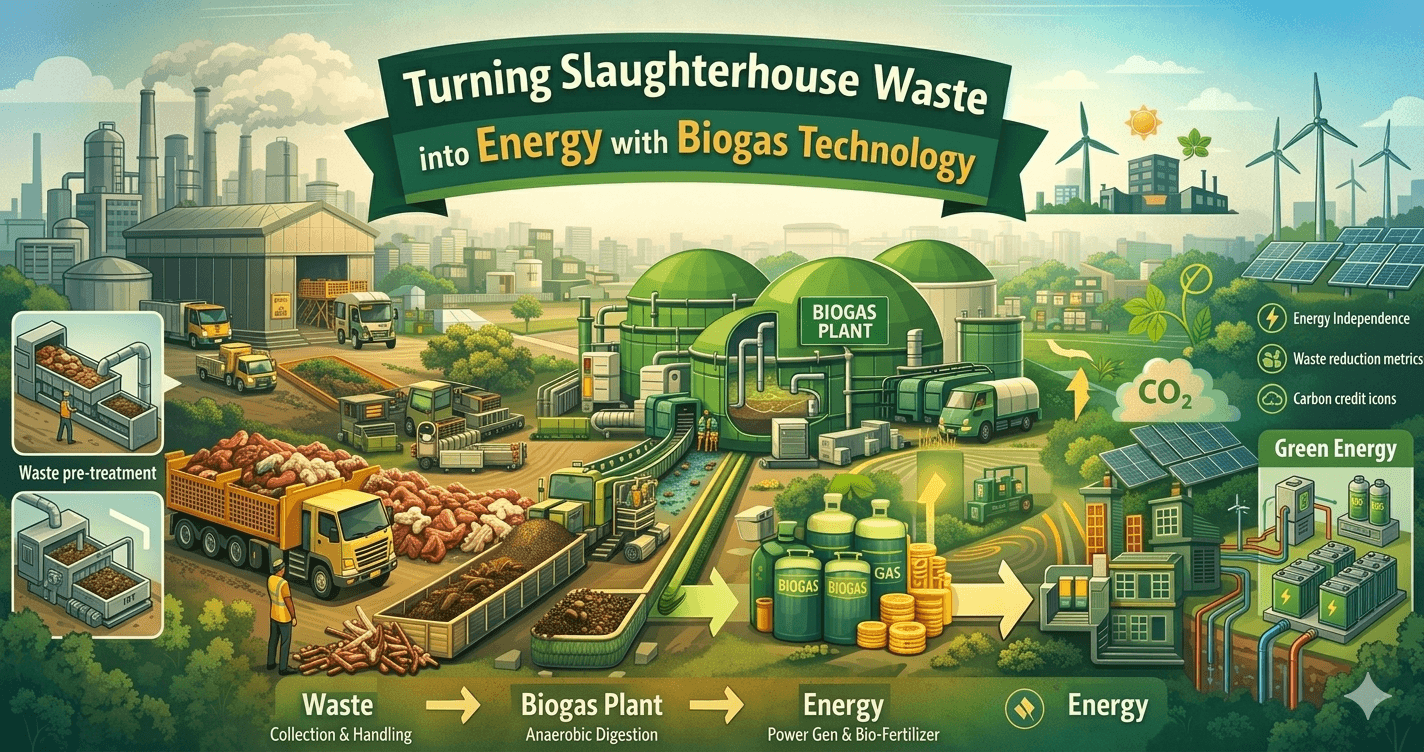
Waste Collection: In the first step, slaughterhouse waste like blood, fat, and wastewater is collected and sent to the digester.
Pre-Treatment: In the pre-treatment stage, large solids are removed, and the waste is prepared to make digestion easier.
Anaerobic Digestion: Inside the sealed digester, microorganisms break down the organic matter, producing biogas from slaughterhouse waste, mainly methane and carbon dioxide.
Biogas Collection: The biogas produced is captured and can be used for electricity, heating, or as clean fuel for vehicles.
Sludge Utilization: After digestion, the remaining sludge is rich in nutrients and can be used as fertilizer to improve soil.
Benefits of Slaughterhouse Waste Management
Proper slaughterhouse waste management is important to reducing pollution, protecting the environment, and producing renewable energy.
With efficient treatment and biogas from slaughterhouse waste, harmful waste can be turned into useful resources.
Treating Wastewater Effectively : Slaughterhouses produce large volumes of wastewater filled with blood, fats, and organic matter.
Through proper meat processing waste treatment, this water is cleaned before being released, preventing contamination of natural water sources.
Reusing By-Products : The rendering process convert animal by-products into useful materials like meat and bone meal, tallow, and gelatin.
These are used in industries like animal feed, soap, and biodiesel, helping reduce waste and promote recycling.
Producing Biogas for Energy : Biogas from slaughterhouse waste is an effective way to manage organic waste.
Anaerobic digestion turns it into gas for electricity, heating, or fuel, helping cut greenhouse gases and support sustainable meat processing waste treatment.
Making Organic Fertilizer : Slaughterhouse waste can be made into fertilizer, supporting farming and reducing waste.
Controlling Smells : Slaughterhouses often produce strong bad smells. Using biofilters, scrubbers, and other odor control systems helps to keep the air clean and safe for workers and nearby residents.
Koshish India: Best Solution for Slaughterhouse Waste Management
At Koshish India, we build and set up animal waste biogas plants for the renewable energy meat industry. Our systems provide high gas output, low maintenance, and full environmental compliance.
We help slaughterhouses to convert waste into clean energy, reduce carbon footprints, and meet sustainability goals with reliable & cost-effective technology.
Wrapping Up
Proper treatment of meat processing waste protects the environment and supports sustainability. By setting up an animal waste biogas plant, industries can efficiently convert slaughter waste into useful energy.
Producing biogas from slaughterhouse waste reduces pollution and bad odors while supporting the renewable energy meat industry. It convert waste into a useful resource, making meat production cleaner and more energy-efficient.
Frequently Asked Questions
What is biogas from slaughterhouse waste?
Biogas from slaughterhouse waste is a renewable fuel made by breaking down fat, blood, and animal remains through anaerobic digestion. It produces methane gas that can be used for electricity and heating.
What is meat processing waste treatment?
Meat processing waste treatment cleans and recycles slaughterhouse waste like blood, fat, and wastewater to prevent environmental harm.
How does Koshish India design animal waste biogas plants?
Koshish India customizes each plant based on waste type, scale, and energy needs, ensuring high efficiency, low maintenance, and maximum renewable energy.
How is the renewable energy meat industry growing in India?
As people care more about the environment, many meat processing units use renewable energy like biogas and solar power to cut emissions and save money.