
PPP biogas wastewater projects are important in India because the country produces a lot of waste and needs more energy. Sustainably managing this waste has become a big problem.
Public-Private Partnerships (PPP) are helping to overcome this challenge through Government and Private-Sector support. They work together to build large biogas plants that handle waste easily.
This blog explains PPP waste management and biogas wastewater projects. It also covers government-industry collaboration and examples from India.
What is PPP in Waste Management?
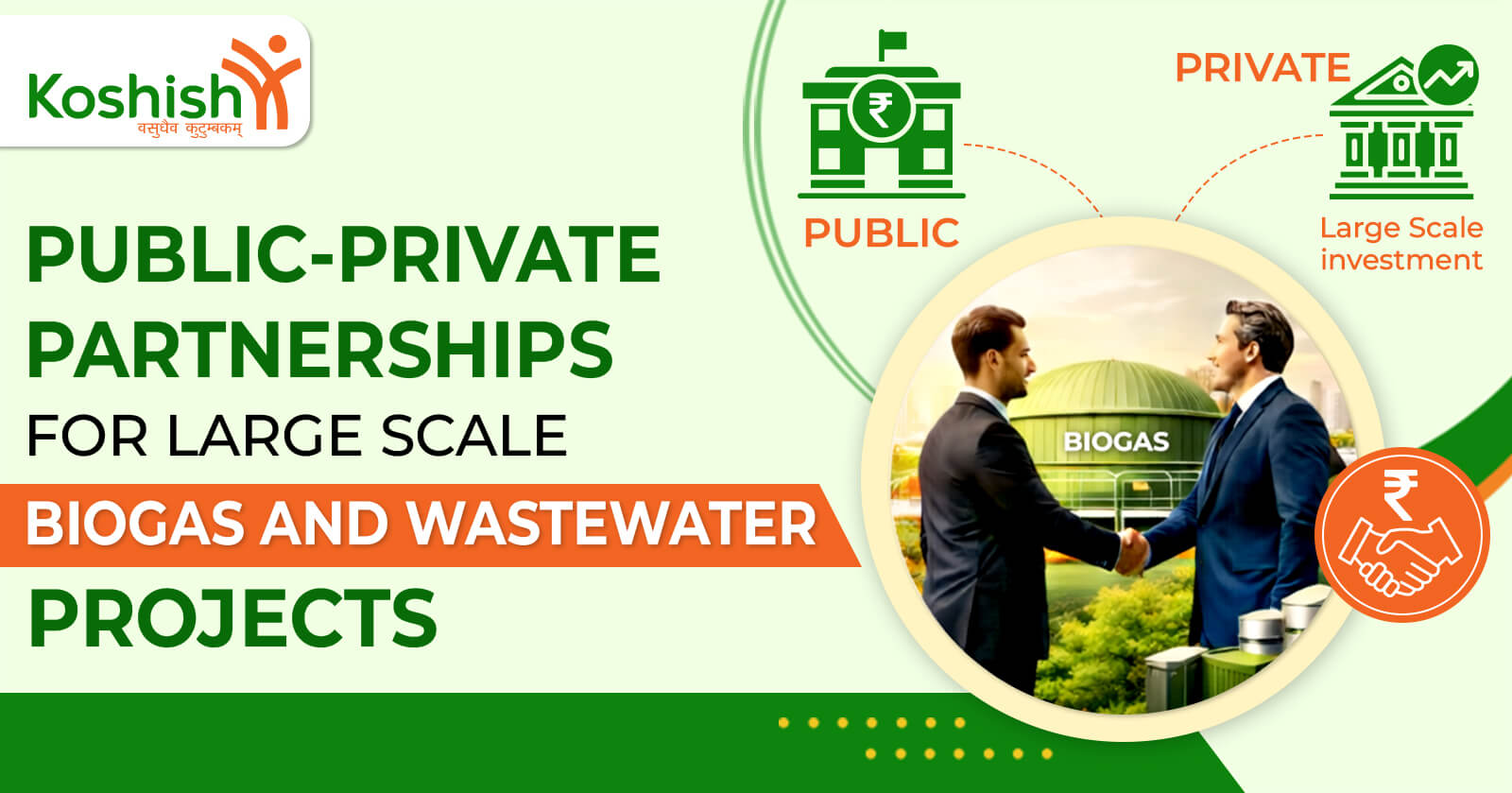
Public-Private Partnerships help the government and private companies work together to handle waste and create clean energy. This teamwork makes waste collection and treatment more efficient and supports better use of resources.
In a PPP model, the government provides land and approvals. Private companies handle building and running the project. They may also invest in PPP biogas wastewater projects and recover costs through service payments or energy sales.
This system improves waste management, lowers government costs, and supports sustainable infrastructure for the future.
Benefits for Businesses and Government in PPP
There are more benefits for businesses and the Government in PPP biogas wastewater projects.
At Koshish India, we help run shared PPP projects, offering solutions that cut costs, manage waste, and produce renewable energy.
Let’s understand the major benefits of shared infrastructure projects in Public-Private Partnerships.
Leveraging Private Investment: In renewable energy PPP models, governments do not need to manage all funds solely. Private companies share the cost, easing public spending and helping build large projects quickly.
Better Risk Management: PPP agreements move risks like delays, higher costs, and performance problems to private partners. It saves government funds and helps projects to run more smoothly.
Improved Efficiency and Innovation: With PPPs, private companies add expertise and new technology. This makes biogas and wastewater projects run better and more smoothly.
Predictable Budget Planning: With fixed or performance-based payments in PPPs, the government can predict expenses clearly. This supports better planning and easier budget control over the project period.
Economic and Environmental Growth: PPP biogas and wastewater projects attract investment, create jobs, and improve waste management. As a result, this helps the economy grow while supporting sustainability and the use of renewable energy.
Why PPP in Waste Management?
Working together, the government and industry make waste management cleaner and more organized. In this model, the operator collects waste from homes or businesses. Then, they process it at a shared biogas plant.
The operator charges a small service fee, which depends on the amount of waste collected. It follows the “polluter pays” principle. Waste generators help pay for proper waste handling.
In a renewable energy PPP, the operator earns back costs and makes value from waste, like energy.
Examples of Successful PPPs in India
India uses renewable energy PPPs and other PPP models in many sectors. This helps improve public services and infrastructure.
These projects show how government and industry can work together. This teamwork creates better systems and faster progress. Some well-known shared infrastructure projects and PPP examples in India include:
- The Metro Rail Policy lets private companies help design metro systems. They also help build them in cities.
- Under the ADITYA Scheme, states receive incentives. This happens when they include private companies in the power sector.
- The railway sector was mostly run by the government. The Tejas Express was the first train operated through a Public-Private Partnership.
- Affordable Rental Housing Complexes (ARHC) are built through PPPs. They provide safe and affordable homes for migrant workers in cities.
- PPPs are now used in healthcare too. During COVID-19, private companies made vaccines, and the government distributed them at fair prices.
Wrapping Up
PPP biogas wastewater projects are essential for managing growing waste and energy needs efficiently. These projects use government-industry collaboration. They use government support and private expertise.
Together, they build and run large projects like biogas plants and wastewater treatment systems.
The renewable energy PPP model reduces government risks and improves efficiency. It also allows private companies to innovate and recover their investment.
Successful PPPs in housing, transport, power, and healthcare show the benefits of collaboration. They help both businesses and the government.
Frequently Asked Questions
What are PPP biogas wastewater projects?
Public-Private Partnership projects are when the government and private companies work together. They build and run biogas and wastewater plants to turn waste into sustainable energy.
What does government-industry collaboration mean?
overnment-industry collaboration is when the government and private sector work together. They combine support and expertise to achieve better sustainable results.
What is a renewable energy PPP?
Renewable energy PPP is a partnership between the government and private companies. They work together to build solar, wind, or biogas projects.
Why shared infrastructure projects are important?
The shared infrastructure projects are more important for managing waste efficiently. These projects optimize resources, reduce costs and provide public services more effectively