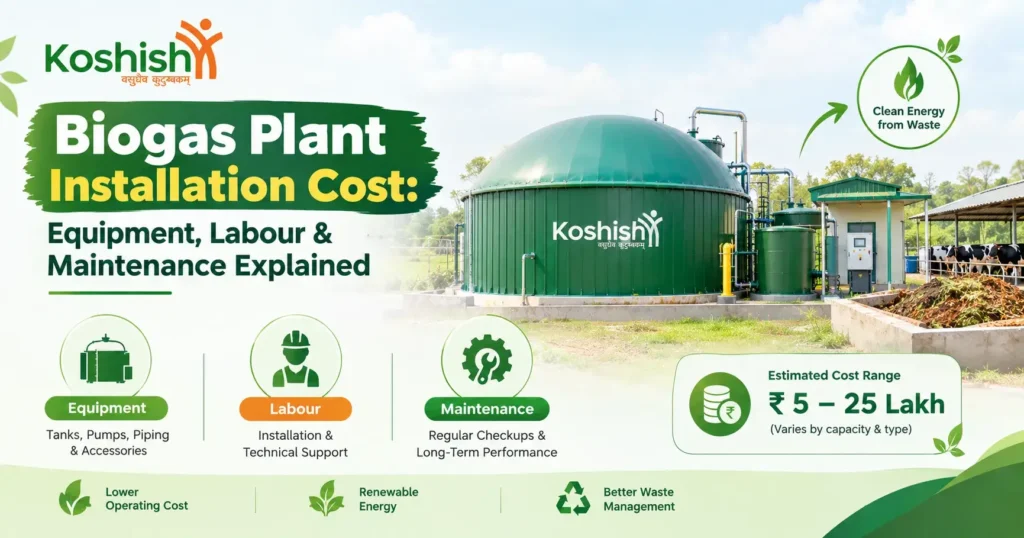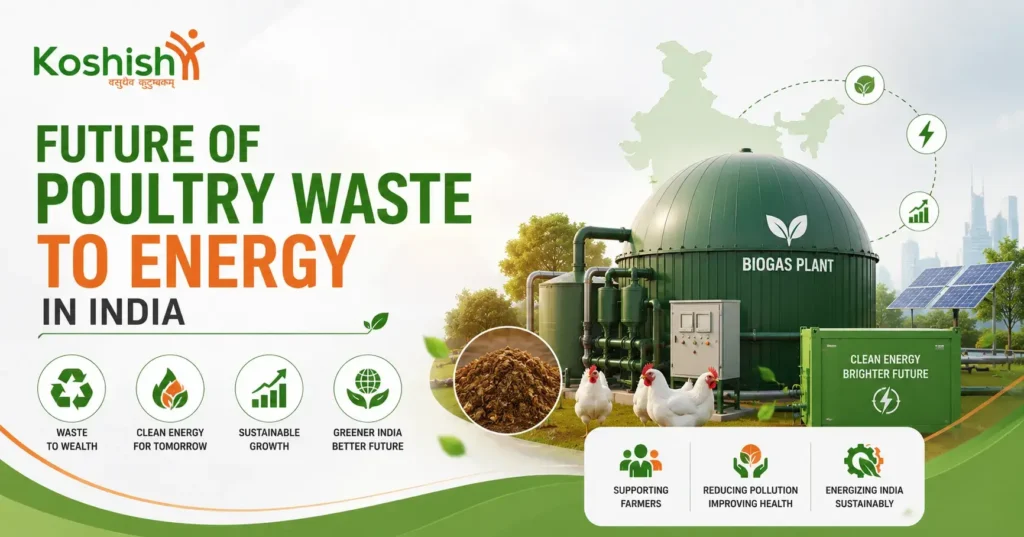


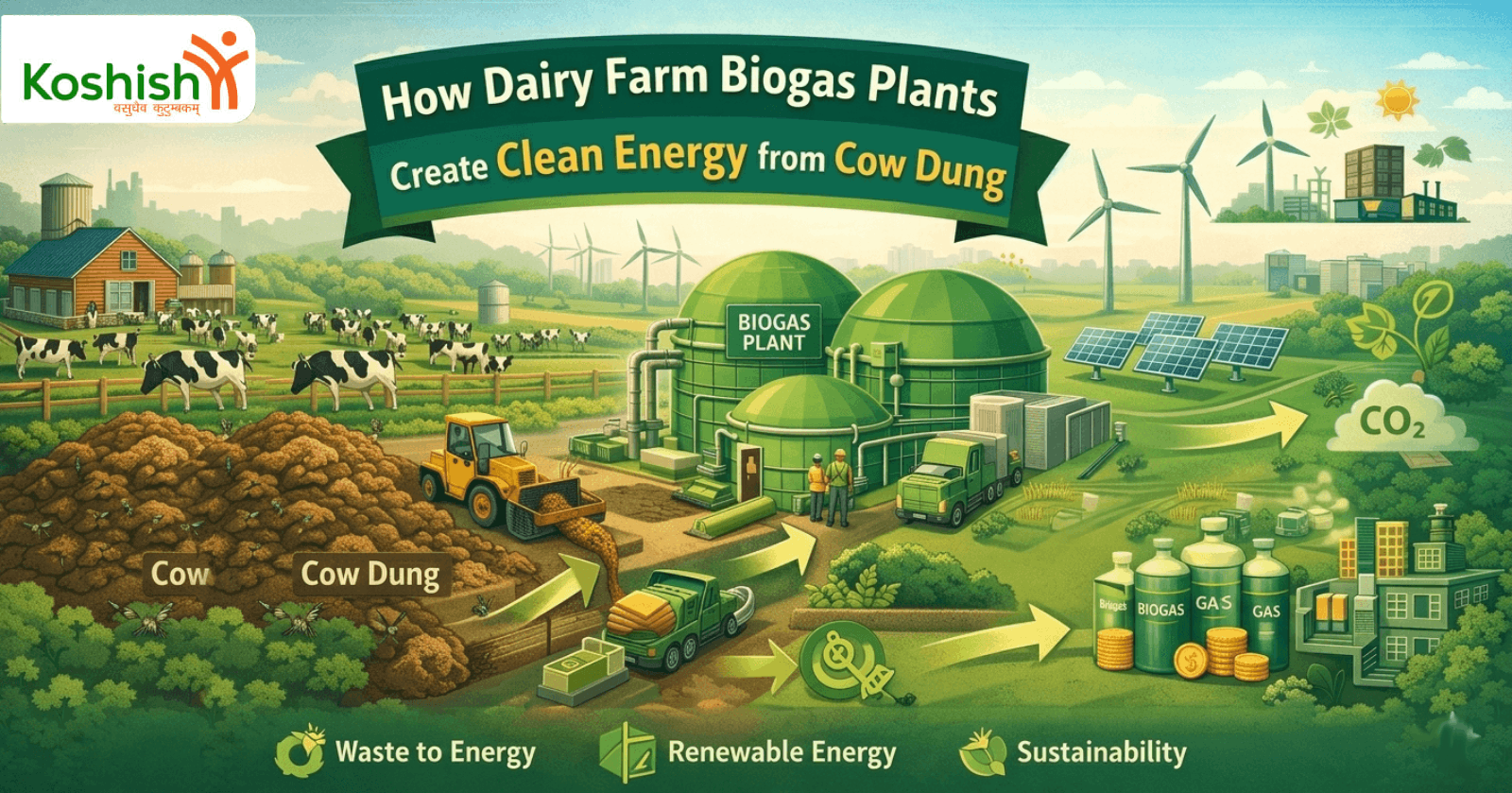
Dairy farm biogas plant solutions help to manage dairy farms cow dung by converting it into clean, renewable energy. With growing dairy farming, managing animal waste is a big concern. It causes pollution, bad odours, and higher energy costs.
A well-designed dairy farm biogas plant uses cow dung to produce biogas. It provides energy for cooking, electricity, and heating while reducing waste and keeping the farm clean.
In this blog, we explain how dairy farm biogas plants work. We also show how they make clean energy from cow dung and why they are a good investment for sustainable and cost-saving dairy farms.
What Is a Biogas Plant?
A dairy farm biogas plant is a renewable energy system. It converts cow dung, kitchen waste, manure, and agricultural waste into clean energy. This clean energy can be used for cooking. It can also be upgraded to bio-CNG for vehicles and industrial use.
Biogas is made through a natural process called anaerobic digestion. In this process, organic waste breaks down without oxygen. This process not only helps to reduce energy costs but also reduces greenhouse gas emissions.
What Is a Cow Dung Biogas Plant?
A cow dung biogas plant specifically uses cow manure as its primary raw material. The cow dung is fed into a digester and stored for around 40–45 days. During this time, biological decomposition produces methane and carbon dioxide gases.
During this time, waste breaks down and produces methane and carbon dioxide. In addition to energy production, a cow dung biogas plant helps reduce bad smells and harmful gases. The leftover slurry, called digestate, is full of nutrients. It works well as organic fertilizer for crops.
By installing a dairy farm biogas plant, farmers can make renewable energy from waste. They can also produce high-quality fertilizer efficiently. It is a smart and sustainable solution for modern dairy operations.
Dairy Farmers Benefiting From Biogas Systems
A dairy farm biogas plant has many benefits. It provides clean energy, manages large amounts of waste, and controls bad smells. Let’s understand the benefits of Biogas for dairy farms.
Clean and Renewable Energy for Dairy Farms: A dairy farm biogas plant makes clean energy from organic materials. These include cow dung, crop waste, and leftover food. It also helps dairy farms to reduce pollution by proper waste disposal.
Turning Cow Dung Waste into Useful Energy: A cow dung biogas plant turns animal waste into usable biogas for dairy farms. This process cuts methane emissions. It also controls bad smells and reduces greenhouse gases. The generated biogas can be used for cooking, electricity generation, and even as organic fertilizer.
Supporting a Circular and Sustainable Farm Economy: Biogas for dairy farms supports a circular economy. It turns organic waste into useful products. Animal waste, crop residue, and organic slurry are converted into energy and nutrient-rich digestate.
This digestate improves soil fertility. It reduces the need for chemical fertilizers and supports sustainable dairy farming.
Perfect Energy Solution for Rural and Semi-Urban Areas: A dairy farm biogas plant is especially perfect for rural and developing regions where electricity supply is limited or costly.
These dairy farm biogas plants can be installed on small or large farms. They provide reliable energy for lighting, heating, and cooking while lowering energy costs.
How Is Cow Manure Biogas Collected?
Cow dung is first collected and mixed with water to form a smooth slurry. This slurry is then fed into a sealed digester, where no oxygen is available.
Inside the digester, natural microbes break down the cow dung and produce biogas, mainly methane. This biogas is collected from the digester and can be purified by removing impurities and carbon dioxide if required.
This process helps biogas for dairy farms by turning daily waste into usable energy. By regularly feeding fresh slurry, dairy farms can ensure continuous gas production and achieve sustainable dairy energy for cooking, heating, or electricity generation.
Why Koshish India Is the Right Partner for Dairy Farm Biogas Plant?
Koshish India provides reliable and customized dairy farm biogas plant solutions that are specially designed for dairy farm needs. We build efficient cow dung biogas plant systems that convert waste into clean and usable energy.
Our end-to-end support helps farms generate biogas for dairy farms, reduce energy costs, and maintain better hygiene. With a strong focus on sustainable dairy energy, Koshish India helps dairy farms to turn dairy waste into clean energy.
Wrapping Up
A dairy farm biogas plant is a sustainable solution for managing cow dung while producing clean energy. By installing a cow dung biogas plant, dairy farmers can easily convert daily waste into valuable resources, reduce pollution, manage bad odors, and reduce energy costs.
With easy availability of cow dung, biogas for dairy farms easily generates clean energy for cooking, heating, and electricity, especially in rural and semi-urban areas.
Frequently Asked Questions
How does a dairy farm biogas plant benefit farmers?
Diary farm biogas plant helps farmers to manage cow dung waste efficiently which reduces electricity and fuel costs, improves farm hygiene, and produces organic fertilizer.
What is a cow dung biogas plant?
A cow dung biogas plant uses cow manure as the main raw material to produce biogas through natural decomposition in a sealed digester. By feeding cow dung, you can easily produce clean and green energy.
Is biogas safe to use on dairy farms?
Yes, biogas is safe to use on dairy farms when the biogas system is properly designed, installed, and regularly maintained. Modern biogas plants include safety features such as pressure control, gas leak prevention, and proper ventilation.
What is sustainable dairy energy?
Sustainable dairy energy is a clean and renewable energy source, like biogas, that reduce environmental impact and supports long-term dairy farm operations.