


How Corporates and Industries are Adopting Biogas
Across manufacturing, food processing, poultry litter, and agro-industrial sectors, sustainable biogas solutions are increasingly being adopted as part of long-term sustainability strategies. Rising energy costs, waste-disposal challenges, and regulatory pressures are giving industries the advantage to explore alternatives that deliver both economic and environmental value. The shift of Oganic waste into Renewable energy supports ESG renewable energy goals by replacing fossil fuels with locally generated clean energy. The Poultry farms with high thermal energy requirements, such as boilers, steam generation, and captive power, offer biogas a reliable and scalable alternative. By an ESG standpoint, biogas adoption strengthens environmental disclosures while demonstrating tangible action rather than symbolic commitments. Sustainable biogas solutions enable corporates to demonstrate real progress in emissions reduction, waste circularity, and energy independence.The Role of Biogas in Emission Reduction
One of the most pressing advantages of sustainable biogas solutions is their direct impact on greenhouse gas mitigation. Organic waste left untreated emits methane, a greenhouse gas significantly more potent than carbon dioxide. By capturing and utilising this methane, biogas systems prevent uncontrolled emissions and convert them into useful energy. Carbon reduction through biogas occurs in multiple ways:- Avoided methane emissions from waste decomposition
- Replacement of fossil fuels such as coal, LPG, and diesel
- Reduction in transportation emissions linked to waste disposal
Biogas Solutions supports ESG Reporting Standards
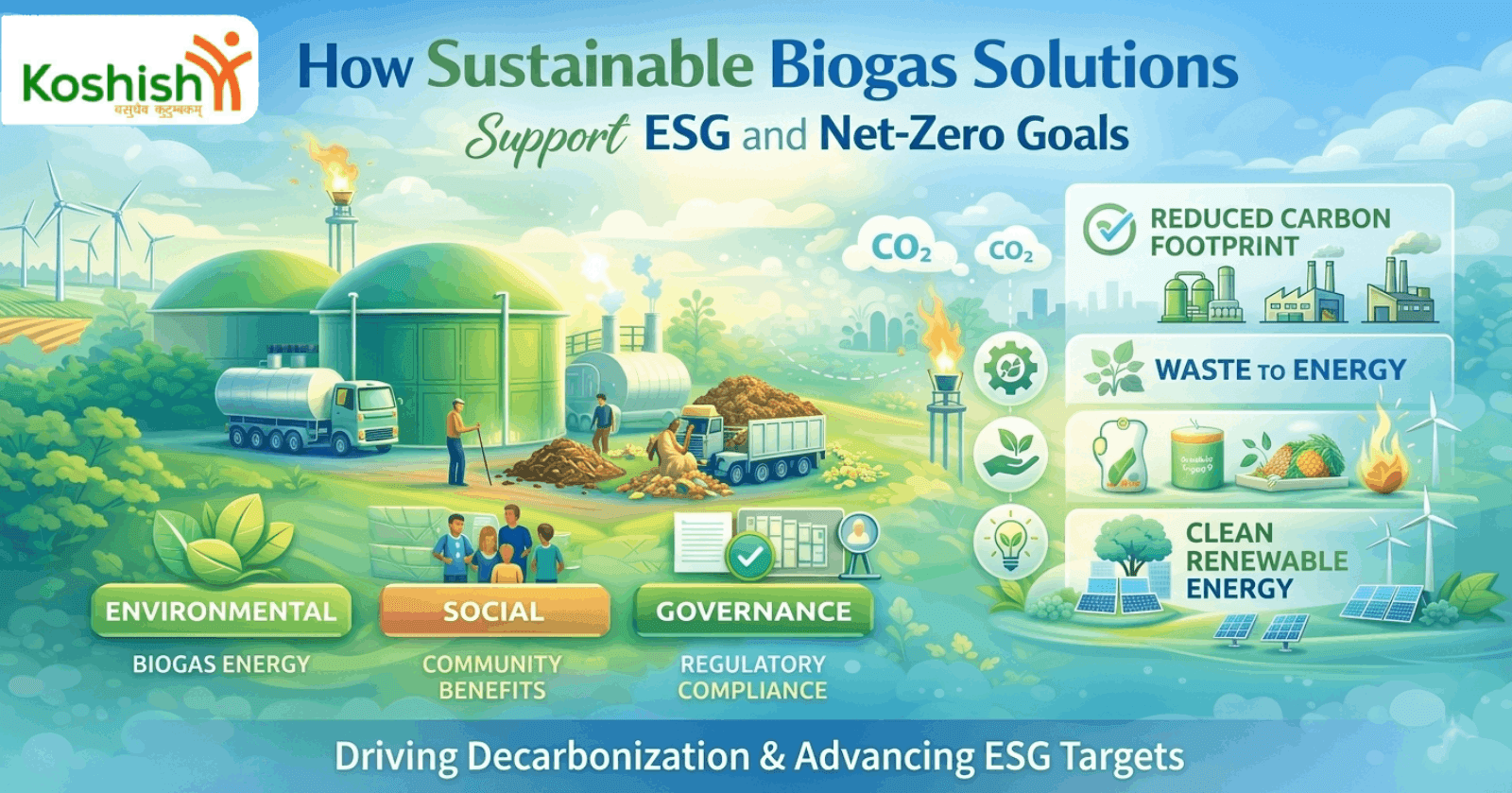
ESG reporting frameworks such as GRI, BRSR, and international sustainability disclosures increasingly demand quantifiable data on energy use, emissions, and waste management. Sustainable biogas solutions support seamlessly with these reporting requirements. From an environmental perspective, biogas supports ESG-driven renewable energy adoption by increasing the share of renewables in total consumption. It also strengthens waste management disclosures by demonstrating circular economy practices. Socially, biogas plants improve sanitation, reduce odour and pollution, and contribute to healthier working environments. Governance-wise, biogas investments signal responsible leadership and long-term risk management. The poultry farms that prioritize ESG and renewable energy solutions, such as biogas, are better positioned to meet investor expectations and regulatory mandates. ESG renewable energy integration also enhances transparency, as biogas systems generate consistent operational data that can be audited and reported with confidence. By incorporating sustainable biogas solutions, businesses can strengthen sustainability disclosures while aligning operations with global ESG benchmarks.Industrial and Agricultural Applications
The versatility of sustainable biogas solutions makes them suitable for both industrial and agricultural sectors. In industrial settings, biogas plants process effluents, sludge, and organic waste generated during production. Industries such as distilleries, food processing units, paper mills, and textile plants are increasingly adopting biogas to manage waste while generating energy. In agriculture, biogas plants have a crucial role in converting crop residues, animal waste, and agro-waste into clean energy. This supports farmers and agro-industries in achieving net-zero energy solutions through the use of locally available resources. Digestate, a by-product of biogas production, is a nutrient-rich organic fertiliser that further enhances soil health and reduces reliance on chemical fertilisers. For both sectors, net-zero energy solutions powered by biogas reduce reliance on grid electricity and fossil fuels. This decentralised energy model enhances resilience, particularly in regions with unreliable access to energy.Long-term Sustainability Benefits of a Biogas Plant
By installing the Biogas Plant across various agricultural sectors, it provides a long-term sustainability benefit to Poultry Farms that have adopted this net-zero energy solution. Beyond the immediate carbon solution, a sustainable biogas solution is provided. The biogas plant uses poultry litter to generate gobar gas for fuel and electricity. Over time, this system stablises the energy costs of the poultry farmers and reduces the exposure to high fuel prices. The Net Zero energy Solutions by Biogas support long term climate commitments without disrupting the core business operations. The Biogas investments enhance the poultry farm’s reputation and investor confidence. Investors favor poultry farms like Licious that provide authentic sustainability reports. ESG adoption of renewable energy, such as biogas, strengthens brand credibility and positions businesses as responsible climate leaders. By enabling circular resource use, sustainable biogas solutions transform waste from a liability into a valuable asset, reinforcing long-term environmental and economic sustainability.Wrapping Up
As the agri-sector navigates the path toward ESG compliance and climate neutrality, sustainable biogas solutions provide a proven, scalable, and impactful approach. By reducing carbon emissions through biogas, supporting ESG renewable energy goals, and net-zero energy solutions, biogas stands out as a cornerstone of sustainable industrial transformation. By investing in biogas today, organisations can meet regulatory expectations, improve operational efficiency, and contribute meaningfully to a low-carbon future.Frequently Asked Questions
How do sustainable Biogas Solutions support ESG goals?
Sustainable biogas solutions address environmental goals by reducing emissions and waste, support social goals through improved sanitation and local energy access, and strengthen governance by enabling transparent and measurable sustainability reporting.
Is Biogas considered ESG Renewable Energy?
Yes, biogas is a recognised form of ESG renewable energy as it is derived from organic waste and reduces reliance on fossil fuels while lowering greenhouse gas emissions.
How does carbon reduction through biogas work?
Carbon reduction through biogas occurs by capturing methane from organic waste, using it for energy, reducing harmful emissions, and replacing conventional fossil fuels.
Can biogas help companies achieve net-zero targets?
Biogas plays a critical role in net zero energy solutions by reducing Scope 1 and Scope 2 emissions and enabling decentralised renewable energy generation.
Which industries benefit most from sustainable biogas solutions?
Industries such as food processing, dairies, distilleries, agro-industries, hospitality, and manufacturing benefit significantly from their high levels of organic waste generation and energy demand.