

Farms and Industries Using a Biogas Plant
In the agri-sector, the Poultry Farms are adopting the Biogas plant widely because of its dual benefits of poultry waste management and energy generation. While taking care of the farm, poultry litter is generated in large volumes, which makes managing it a challenge. Both challenges have one solution–biogas plant. The common Biogas Plant adopters are:- Dairy Farms using cow manure
- Poultry farms managing litter waste
- Food processing industries handling organic residues
- Sugar mills and distilleries treating effluents
- Hotels, hostels, and institutions managing food waste
Waste Reduction and Energy Generation Link
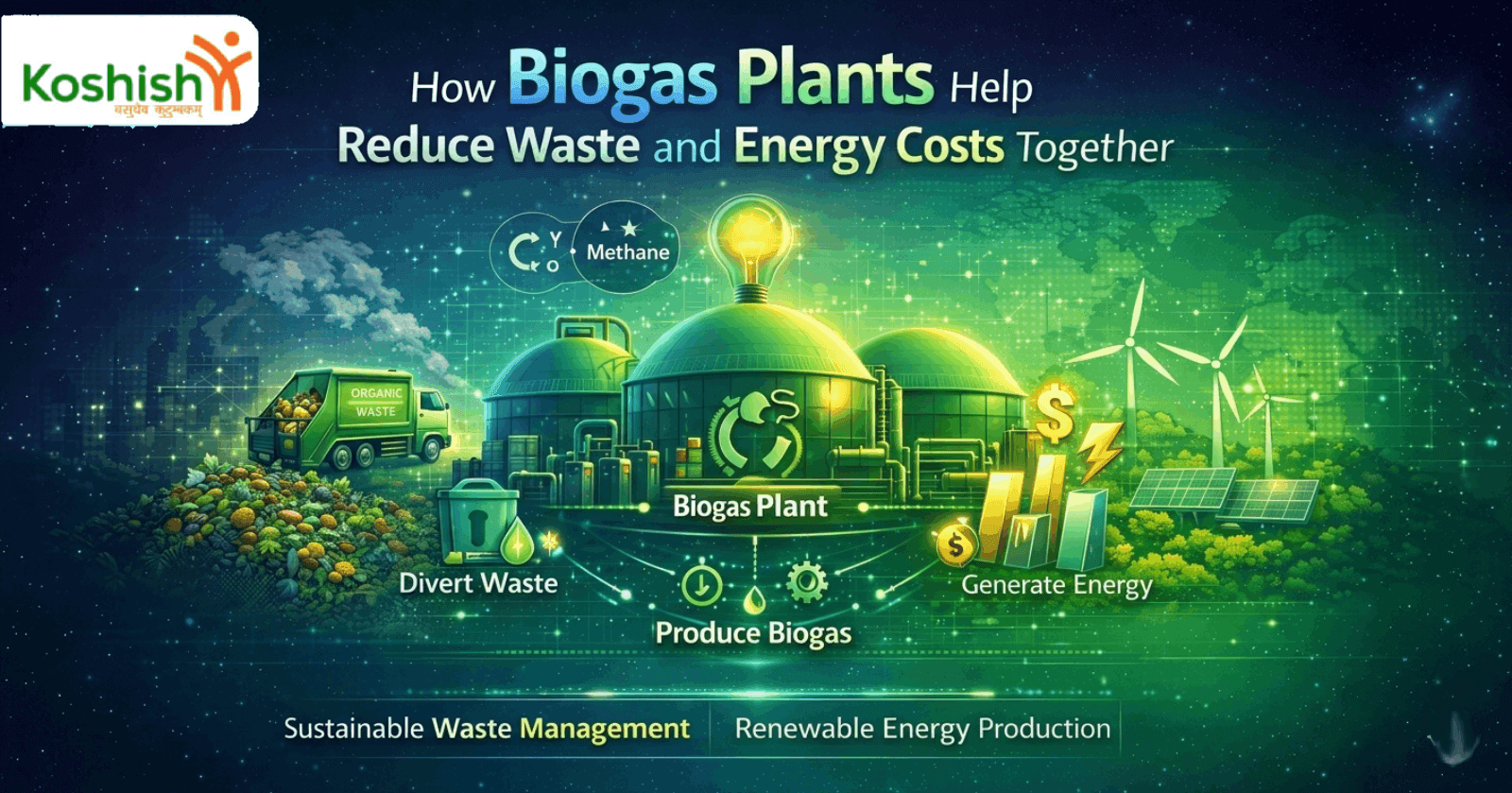
One of the strongest biogas plant benefits is the direct link between waste reduction and energy production. Organic waste, such as food scraps, agricultural residues, and Cow dung, is often a disposal challenge. Biogas plants convert this waste into methane-rich biogas through anaerobic digestion. This process delivers:- Significant waste volume reduction
- On-site energy generation
- Production of nutrient-rich slurry for soil application
How Are Operational Cost Savings Done
Energy costs are one of the largest operational expenses for farms and industries. Biogas plants directly address this issue by producing usable energy on-site. Among the most impactful biogas plant benefits is the reduction in recurring fuel and electricity bills. Key areas of savings include:- Reduced LPG or diesel usage
- Lower electricity purchase from the grid
- Minimal waste disposal charges
- Decreased fertilizer costs due to biogas slurry
Environmental and Regulatory Benefits
Environmental compliance is becoming mandatory for businesses across India and globally. Biogas plants help organizations meet these requirements while contributing positively to sustainability goals. Major environmental biogas plant benefits include:- Reduced greenhouse gas emissions
- Lower methane release from untreated waste
- Improved air and water quality
- Reduced landfill burden
How Biogas Plants Have a Long-Term Economic Impact
Beyond immediate savings, biogas plants offer strong long-term economic advantages. The combination of energy independence, waste reduction, and regulatory compliance makes biogas a future-ready investment. Long-term biogas plant benefits include:- The first benefit is Stable and predictable energy costs
- Reduced operational risks
- Increased asset value for farms and facilities
- Opportunities for carbon credits and incentives
Wrapping Up
Biogas plants successfully bridge the gap between waste management and energy efficiency. By delivering strong biogas plant benefits, long-term energy savings, reliable waste management solutions, and measurable renewable energy benefits, they stand out as a smart investment for farms and industries seeking to reduce waste and energy costs.Frequently Asked Questions
What are the main biogas plant benefits for businesses?
The key biogas plant benefits include waste reduction, energy generation, operational cost savings, environmental compliance, and long-term financial returns.
How do biogas plants help in reducing energy costs?
By replacing conventional fuels, biogas plants deliver continuous biogas energy savings, significantly lowering electricity, LPG, and diesel expenses.
Are biogas plants effective waste management solutions?
Yes, biogas plants are among the most efficient waste management solutions, converting organic waste into energy and useful by-products with minimal environmental impact.
What renewable energy benefits do biogas plants offer?
Biogas plants provide clean energy, reduce carbon emissions, support energy independence, and strengthen overall renewable energy benefits for organizations.
Is a biogas plant suitable for small farms or institutions?
Absolutely. Biogas systems can be customized for small, medium, and large-scale applications, delivering consistent biogas plant benefits regardless of size.