


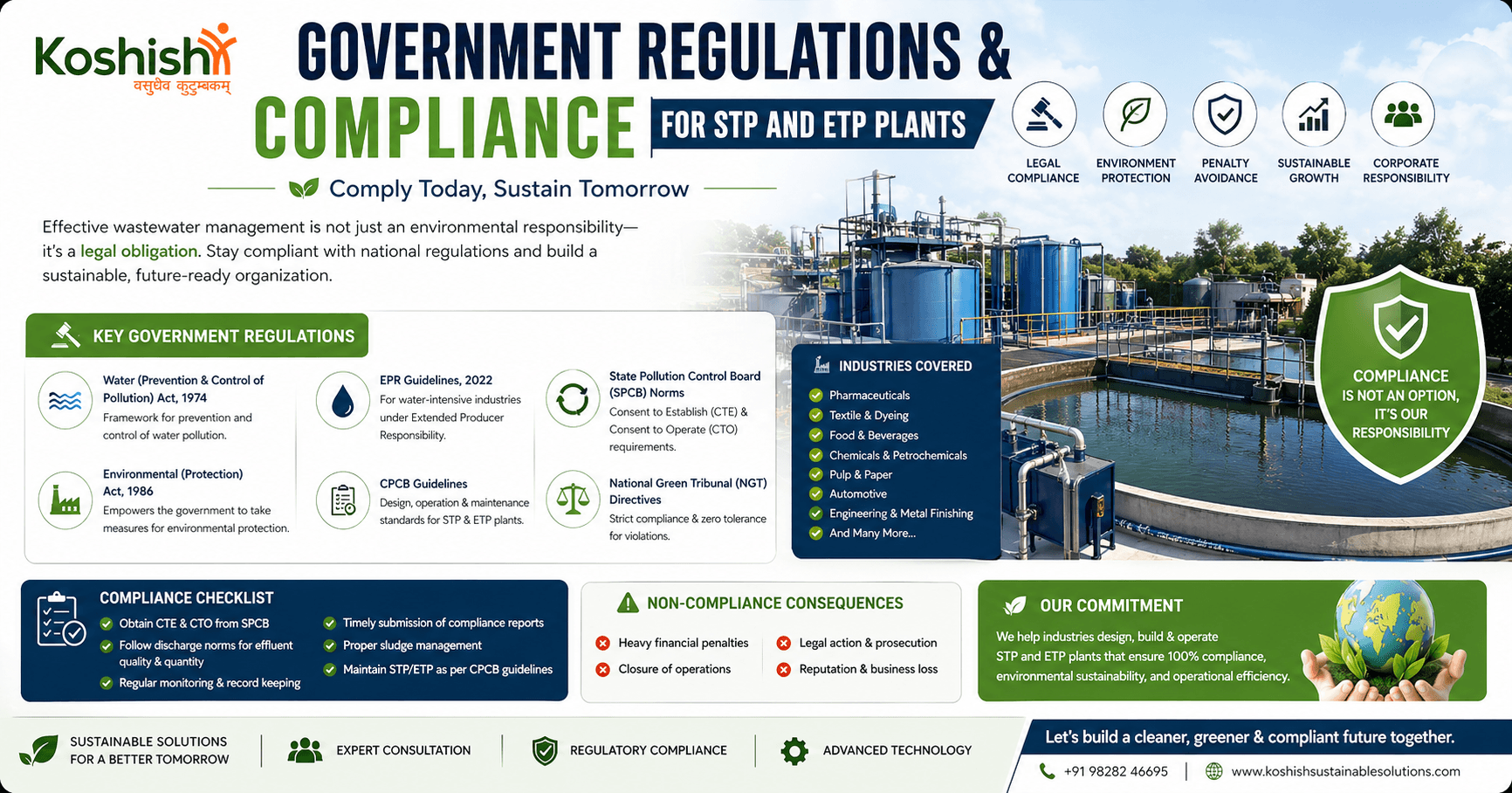
Why Is Compliance Important in Wastewater Treatment?
Compliance with government regulations is important for safe and responsible wastewater management. Proper operation of an STP or ETP removes harmful pollutants, protecting water bodies and public health. Following wastewater treatment laws ensures industrial compliance, helps manage effluents efficiently, and reduces environmental risks.Key Environmental Laws Governing STP & ETP
Several important regulations regulate the operation of STPs and ETPs in order to maintain environmental safety and industrial compliance. Water (Prevention & Control of Pollution) Act, 1974 : Specifies standards for wastewater discharge and manages water contamination. Environment Protection Act, 1986 : Provides a framework for protecting the environment across industries. Hazardous Waste Management Rules : Ensures the safe handling and disposal of industrial waste byproducts. These laws provide the legal framework for STP sewage treatment plant processes and industrial effluent treatment plant operations. Both industrial and municipal facilities must follow these standards if they want stay compliant and protect the environment.Government Guidelines for STP Sewage Treatment Plants
Establishing an STP sewage treatment plant is not only about following rules but also about protecting the environment, public health, and promoting sustainability. Understanding wastewater treatment laws helps industries and communities run STPs efficiently while ensuring environmental safety. Choosing the Right Treatment Technology: The first step in an STP is selecting the right technology. Different wastewater treatment methods suit different needs. For example, the Activated Sludge Process (ASP) is ideal for large communities, while Membrane Bio Reactor (MBR) systems produce high-quality treated water suitable for reuse. Moving Bed Bio Reactor (MBBR) systems are compact and flexible, and hybrid systems combine multiple methods for efficient treatment. Choosing the right technology ensures your plant works effectively and meets regulatory standards. Key Components of an STP: A well-designed STP includes several essential units. Equalization tanks balance fluctuations in sewage flow, while anoxic tanks remove nitrogen compounds. Aeration tanks support bacteria that digest pollutants, and membrane tanks (for MBR systems) filter water to remove impurities. Sludge holding and dewatering systems store and reduce waste safely, and treated water tanks store water ready for reuse or safe discharge. These components together ensure smooth and compliant operation of the STP sewage treatment plant. Best Practices for Operation: Proper operation of an STP ensures efficiency and longevity. Equipment like pumps and blowers should be easy to access and maintain. Submersible designs help reduce downtime during maintenance. Noise should be controlled using acoustic enclosures and dampers. Following these operational practices not only maintains compliance but also ensures environmental safety around the plant. Safe Placement and Access: Location matters for both efficiency and safety. STPs should be installed in areas that do not interfere with daily activities, like open grounds rather than basements. Access routes should be well-lit, ventilated, and easy for maintenance personnel. Safe placement and access reduce health risks and make plant operation easier. Ensuring High-Quality Treated Water: The primary goal of an STP is to produce treated water that meets quality standards. Water must be clear, odorless, and free from harmful pollutants. Following wastewater treatment laws ensures that treated water is safe for reuse in non-drinking applications, protects public health, and maintains environmental safety. Monitoring and Automation: Modern STPs use sensors to monitor parameters like pH, total suspended solids (TSS), BOD, COD, and flow. Automated data systems provide real-time updates, helping operators quickly identify and fix any issues. This monitoring ensures that your STP sewage treatment plant consistently meets regulatory standards and operates efficiently.How to Ensure Your STP or ETP is Compliant?
To stay fully compliant with STP and ETP regulations and wastewater treatment laws, follow these steps:- Check the water at the plant outlet regularly. Test pH, BOD, COD, and suspended solids to make sure the treated water is safe for reuse or discharge.
- Maintain clear documentation of all STP and ETP processes, maintenance, and water quality results. This helps during audits and shows compliance.
- Make sure operators and staff know how to follow procedures, handle equipment safely, and report issues. Well-trained staff help keep the plant compliant.
- Schedule audits and checks to find problems early. This ensures the plant meets regulations and avoids violations.
- Use modern equipment and update your systems when needed. This improves efficiency and helps stay in line with STP and ETP regulations.
- Have clear procedures for equipment failure, power outages, or sudden changes in water quality. Being prepared reduces risks and protects the environment.
Why Choose Koshish Re-Water for STP & ETP Solutions?
At Koshish Re-Water, we specialize in providing efficient and compliant STP and ETP solutions for industries, municipalities, and commercial establishments. Our systems are designed to meet all STP and ETP regulations and wastewater treatment laws, ensuring safe, reliable, and environmentally responsible operations. With advanced technology, regular monitoring, and expert support, we help you manage wastewater efficiently while protecting public health and promoting environmental safety. Choosing Koshish Re-Water means investing in high-quality, sustainable wastewater management that is fully compliant.Wrapping Up
Following STP and ETP regulations is important to keep wastewater treatment safe and efficient. By monitoring water quality, maintaining records, training staff, and updating equipment, STPs and ETPs can meet all legal requirements. This ensures public health is protected, the environment stays safe, and operations remain compliant with wastewater treatment laws.Frequently Asked Questions
What are STP and ETP regulations?
STP and ETP regulations are government rules that ensure Sewage Treatment Plants (STPs) and Industrial Effluent Treatment Plants (ETPs) treat wastewater safely before releasing it into the environment. These regulations help protect public health, maintain environmental safety, and ensure industrial compliance.
Why is compliance important in wastewater treatment?
Compliance with wastewater treatment laws ensures that STPs and ETPs remove harmful pollutants effectively. It protects water bodies, prevents environmental damage, and ensures industrial operations meet legal standards.
What guidelines should be followed for STP operations?
STPs should follow government guidelines for technology selection, safe placement, monitoring, and operation. Choosing the right system, maintaining records, and using proper safety measures ensures compliance with STP and ETP regulations.
How can I ensure my STP or ETP is compliant?
Regular water quality checks, proper documentation, staff training, scheduled audits, technology upgrades, and emergency preparedness are essential steps. Following these practices ensures adherence to wastewater treatment laws and long-term environmental safety.