
What Is STP (Sewage Treatment Plant)?
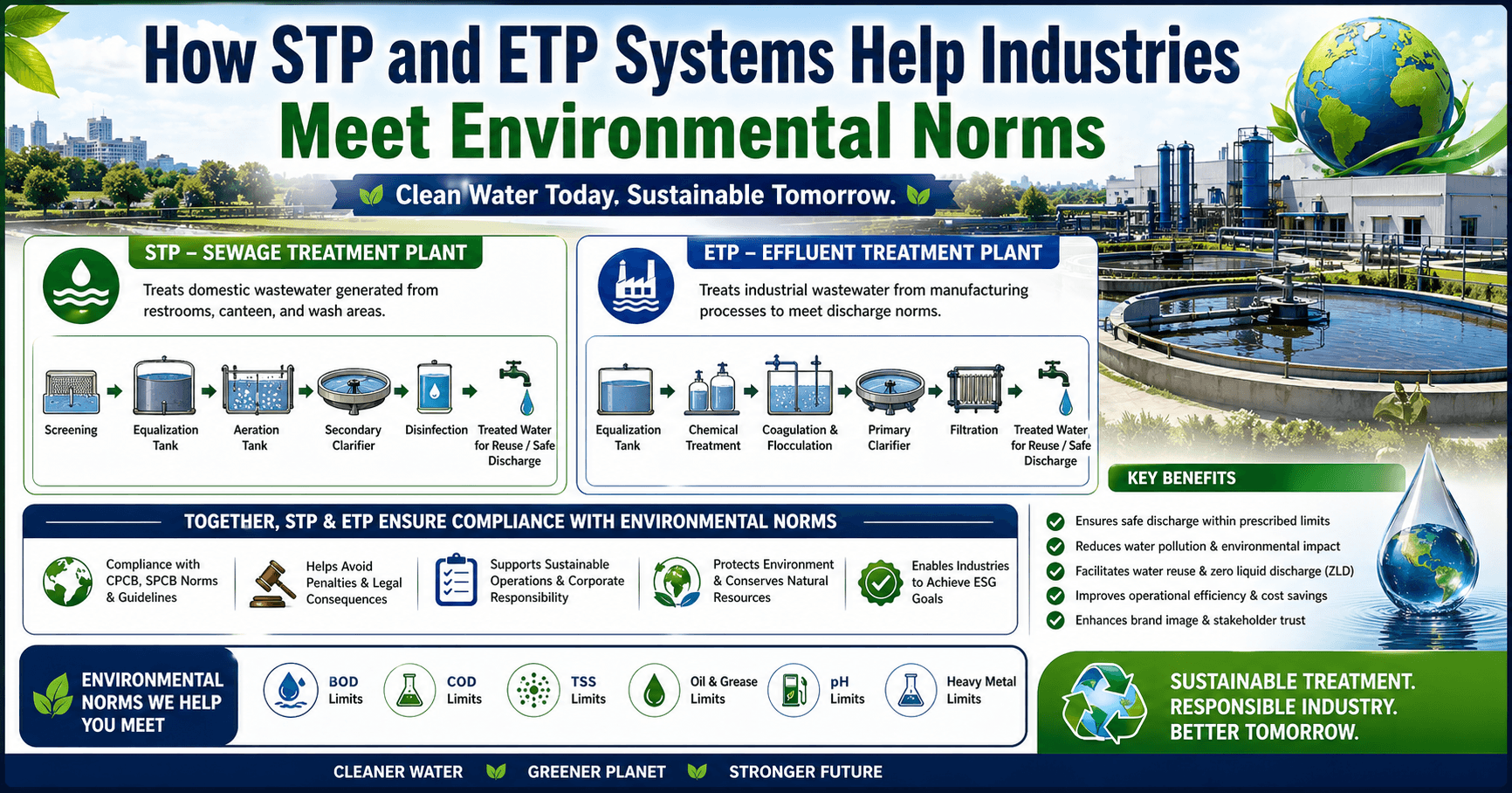
STP (Sewage Treatment Plant) is a good option for managing sewage from residential and commercial buildings. An STP (Sewage Treatment Plant) is designed especially for treating sewage and domestic wastewater. It removes harmful contaminants from the water we flush, sinks, and washing machines. The process makes the water safe for reuse in non-drinking purposes. STPs play an important role in maintaining hygiene and protecting the environment.What Is ETP (Effluent Treatment)?
ETPs are the best option for treating industrial wastewater that contains harmful chemicals. The Effluent Treatment Plant (ETP) is especially designed for factories. Effluent Treatment plant main function is to remove pollutants, toxic substances, and harmful materials before the water is released into the environment. The type of industrial effluent varies depending on the sector, such as some grease, containing oils, or heavy metals. Food and beverage factories produce wastewater with a lot of organic waste that can pollute the water. To clean this wastewater, an ETP uses physical, chemical, and biological methods, along with filters. An Effluent Treatment plant is perfect for industries like chemicals, textiles, pharmaceuticals, refineries, and dairy.Why Industries Need STP and ETP to Meet Environmental Norms?
Day by day, environmental rules are becoming more strict, and industries need to act responsibly to meet them. Wastewater Management properly is an important part of this, and both ETPs (Effluent Treatment Plant) and STPs (Sewage Treatment Plant) are very important. They treat wastewater before it is released into the river or environment, which helps to meet environmental norms. An Effluent Treatment Plant is best for treating wastewater from industries. It removes harmful chemicals, pollutants, and other harmful materials. While STP (Sewage Treatment Plant) is perfect for sewage from homes, offices, and institutions.Benefits of Installing an STP and ETP Plant?
There are benefits of installing of STP and ETP plant that supports a clean and green environment. Let’s take a look at the benefits of STP and the STP plant. Support Clean Environment: These wastewater management treatment systems remove harmful chemicals from the wastewater. This system releases wastewater after treating it into the river or environment. Cost Effective : Installing ETPs and STPs initial cost may be costly, but they save money in the long run. They reduce water use and lower power bills, which lowers your overall expenses. To support this, the Government provides financial support for adopting the wastewater management system. Improved Health : ETPs and STPs also make your surroundings healthier and safer. By cleaning wastewater and removing harmful chemicals, they reduce the risk of harmful diseases. Minimize Water Wastage : Treated water from STPs and ETPs can be reused for gardening, flushing, and other non-drinking purposes. This helps save fresh water and promotes a sustainable environment.What Should You Keep in Mind When Choosing an STP or ETP?
You should keep in mind some factors before choosing an STP or ETP wastewater management system. The right wastewater management system ensures that your wastewater is properly treated, helping you meet environmental norms and save costs. Here are the key factors that you should keep in mind before choosing an STP or ETP.Understand Water Quality Requirement
Start by understanding what quality of water you need after treatment. Identify the type of contaminants that must be removed, whether they are chemicals, oil and grease, or organic waste.Source of Water
Check the source of your water and its current quality. Whether you are using groundwater, municipal supply, or other non-drinking purposes.Water Requirement
Calculate how much water your industry uses every day. This will decide the capacity or size of the STP (Sewage Treatment Plant) or ETP (Effluent Treatment) you need. An accurate estimate avoids overloading the system and ensures smooth operation.Space and Budget
Make sure you have enough space to install the wastewater management system and plan for both initial investment and maintenance costs. A well-planned system will save you money in the long run.Wrapping Up
STP (Sewage Treatment Plant) and ETP (Effluent Treatment Plant) systems are important for effective wastewater management in both residential and industrial sectors. They remove harmful contaminants and help industries meet environmental norms. By installing wastewater management systems, businesses can reduce water wastage, save money through water reuse, and avoid legal penalties. It also supports a clean and green environment. Choosing the right STP or ETP plant ensures smooth operation, long-term cost savings, and builds a positive brand reputation that makes it a smart investment for any business or community.Frequently Asked Questions
Why are STP and ETP systems important for industries?
STP and ETP systems play an important role in wastewater management by treating sewage and industrial effluent before it is released into the river or the environment.
A sewage treatment plant (STP) handles domestic wastewater, while effluent treatment (ETP) focuses on removing chemicals and pollutants from industrial wastewater.
How do sewage treatment plants and effluent treatment systems save money?
Sewage treatment plant and effluent treatment systems save money by reducing water wastage and allowing treated water to be reused for gardening, flushing, or cooling towers.
Can STP and ETP systems improve workplace health and safety?
Yes. By removing harmful chemicals, bacteria, and other pollutants from wastewater, STP and ETP systems protect employees and nearby communities from risky health hazards.
What is the role of a sewage treatment plant?
A sewage treatment plant (STP) cleans domestic wastewater from homes, offices, and institutions.
How do STP and ETP systems support wastewater management?
They manage wastewater effectively, reduce pollution, and make water safe for the environment or for reuse.