
If we talk about a common sustainability problem across India, it would be dairy waste management. Cow dung is available in large quantities across India. Managing them becomes a problem, as dumping them anywhere can cause various diseases and foul odours, and be unhygienic for the animals as well.
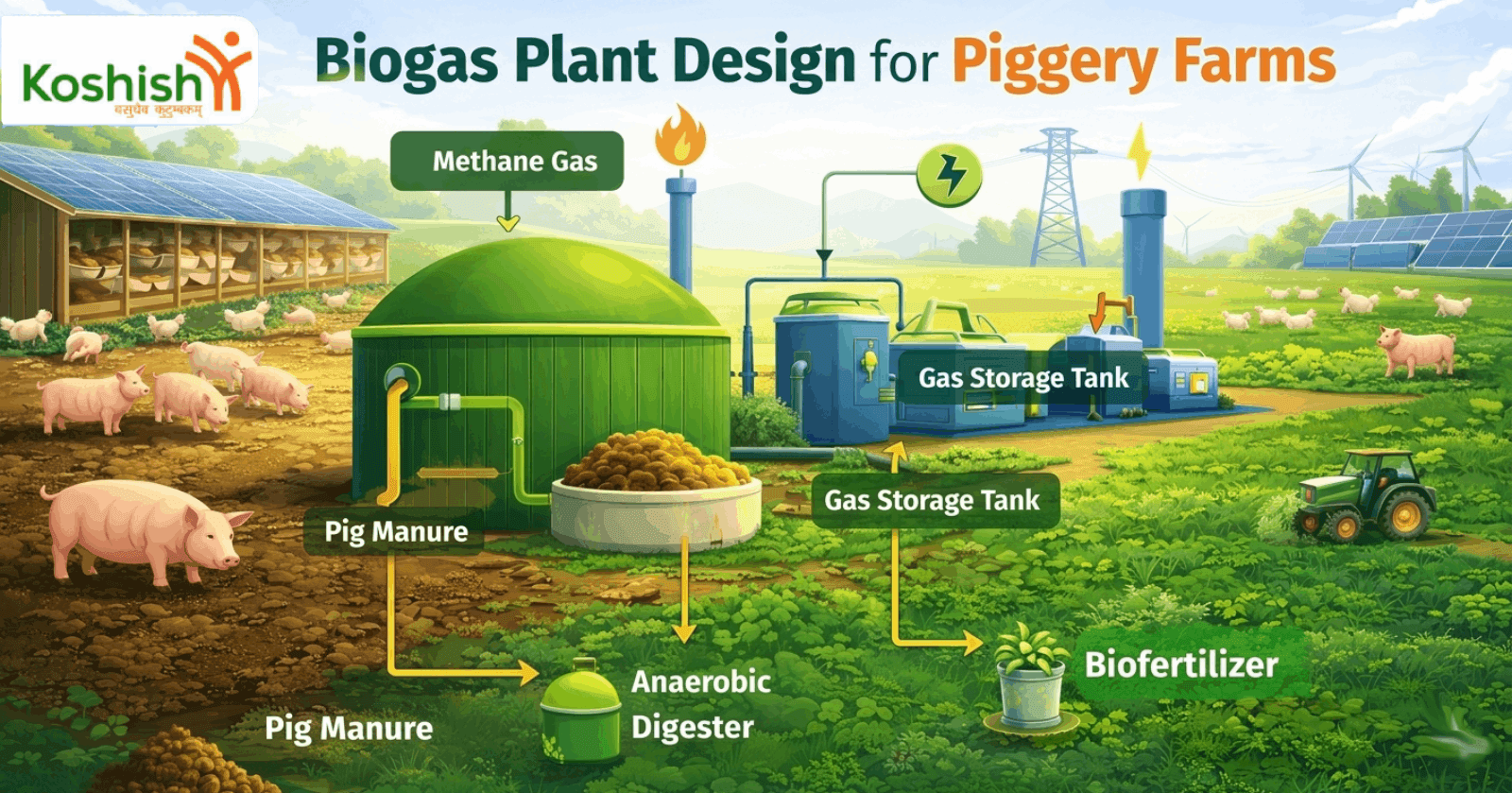
To eliminate this sustainable problem, a biogas plant is the best solution. The dairy farms produce huge quantities of cow dung. For cow dung waste management, the dairy farmer has switched to Biogas Solutions, making the process easier. Through the anaerobic digestion process, the cow dung is converted to methane gas, which is clean enough to produce cooking gas & electricity.
What are the types of dairy waste?
For dairy farm waste treatment, first find out the dairy waste. There are many types of dairy waste that consist of wastewater and solid waste, which are listed below: Solid Waste: Solid waste includes all physical waste materials produced by dairy farms and processing units. The cow dung, bedding materials, feed residues, and sludge from the treatment plants. This can produce high-quantity biogas. Liquid Waste: This includes milk spillage, wash water, floor-cleaning water, whey (a by-product of cheese and paneer production), and urine from cattle sheds. Semi-mixed waste: Slurry is the waste left; it is a mixture of cow dung, urine, and shed. It is used as dairy manure biogas.What is the environmental impact of a biogas plant?
Biogas plants generally have a positive impact on the environment. It provides renewable energy and waste management by turning organic waste into fertiliser and fuels, significantly reducing the methane emissions from landfills. However, there can also be drawbacks, such as air pollution and potential soil/water contamination. Positive Environmental Impact of Biogas Plant There are various positive impacts, which are as follows: Waste Management & Odor Control: Plants convert organic waste (manure, food waste, sewage) into fuel, reducing foul odors and landfill use. Reduction in GHG Emissions: By preventing methane from mixing into the air during waste decomposition, this reduces GHG emissions. Organic Fertiliser Production: After biogas production, the remaining slurry is rich in nutrients and is used as dairy manure biogas, which can be sold in the market. Improved Sanitation: Through dairy waste management, complete hygiene can be maintained, which affects the health of the birds and reduces foul smells, and sustainable dairy farming can be carried out properly. Some Drawbacks due to the Biogas Plant The drawbacks of biogas plants are as follows: Methane Leaks: Poorly managed systems can leak methane, a potent greenhouse gas, negating climate benefits. Air Pollution: Burning biogas can release nitrogen oxides and other contaminants. Land Use & Energy Crops: Huge Biogas plants sometimes use energy crops (e.g., maize) instead of waste, leading to land-use competition, potential deforestation, and soil erosion. Water Pollution: Improper storage or over-application of the digestate fertilizer can lead to water contamination.Biogas Suitability
Biogas is best suited for generating renewable energy from organic waste, particularly in areas with large manure, agricultural residues, or food waste. Key Suitability Factors- Feedstock Availability: The best sites have a consistent, year-round supply of animal waste (dairy/poultry) or agricultural residue.
- Ideal Locations: Proximity to feedstock, near cattle sheds or farming areas for easy transport and feedstock availability. Near the water’s source, markets, restaurants, or any industrial food units for food waste.
- Near Energy Users: Close to residential homes or industrial units for heating or electricity applications.
Energy Recovery of Biogas Plant
Dairy waste management is done through anaerobic digestion. The biogas plant’s energy recovery converts organic waste, such as cow dung, into clean energy. The technologies have Combined Heat & Power (CHP) engines, upgrading the biogas to natural gas standards, and using digestate as fertiliser. This process enhances sustainability by reducing emissions and producing renewable energy, often achieving 100% self-sufficiency for farm operations. Key Energy Recovery Pathways Combined Heat and Power (CHP): Biogas is burned in engines to generate electricity for the grid or on-site use, while residual heat is recovered for heating the digester or nearby buildings. Biogas Upgrading: Raw biogas is purified by removing contaminants to produce Compressed Biogas (CBG) or Renewable Natural Gas (RNG), which can be used in the grid or as vehicle fuel. Direct Heating: Biogas can be used directly in boilers for steam generation or space heating. Key Processes in Biogas Recovery Anaerobic Digestion: Microorganisms break down biodegradable materials (manure, food waste, and sewage sludge) in a controlled environment to produce methane-rich gas. Pretreatment: Materials such as agricultural waste are treated (e.g., thermal or chemical) to improve digestion efficiency, increasing biogas yield by up to 170%. Digestate Management: The nutrient-rich byproduct (digestate) is utilized as a sustainable fertilizer, replacing artificial fertilizersWrapping Up
Dairy waste management provides relief to dairy farmers, as it reduces the burden of dairy farm waste treatment. From dairy farm waste treatment to sustainable dairy farming, each type of dairy waste has a direct impact on soil, water, and air quality if not handled properly. However, with the right treatment methods, such as biogas plants, composting, and wastewater treatment systems, these wastes can be effectively converted into valuable resources like energy, organic fertilizer, and reusable water. This not only reduces pollution but also helps dairy farms lower operational costs and improve overall efficiency.In the long run, adopting proper dairy waste management practices is not just an environmental necessity but also a smart economic decision for sustainable growth. Apart from the Biogas Solutions, there are sewage treatment plants & solar energy and ESG solutions, are also provide by us.Frequently Asked Questions (FAQ)
What are the main types of dairy waste?
The main types of dairy waste include liquid waste (milk spills, wash water, wastewater), solid waste (manure, feed residues), and semi-solid waste (sludge from treatment plants).
Why is dairy waste management important?
Proper dairy waste management prevents water pollution, reduces greenhouse gas emissions, controls odor, and ensures compliance with environmental regulations.
How can dairy waste be reused?
Dairy waste can be reused through biogas production, composting into organic fertilizer, and treated wastewater for irrigation or cleaning.
What is the role of biogas plants in dairy waste management?
Biogas plants convert organic dairy waste into methane-rich gas, which can be used for cooking, electricity generation, or heating, while producing nutrient-rich slurry as a by-product.