
What Is a Compressed Biogas Plant?
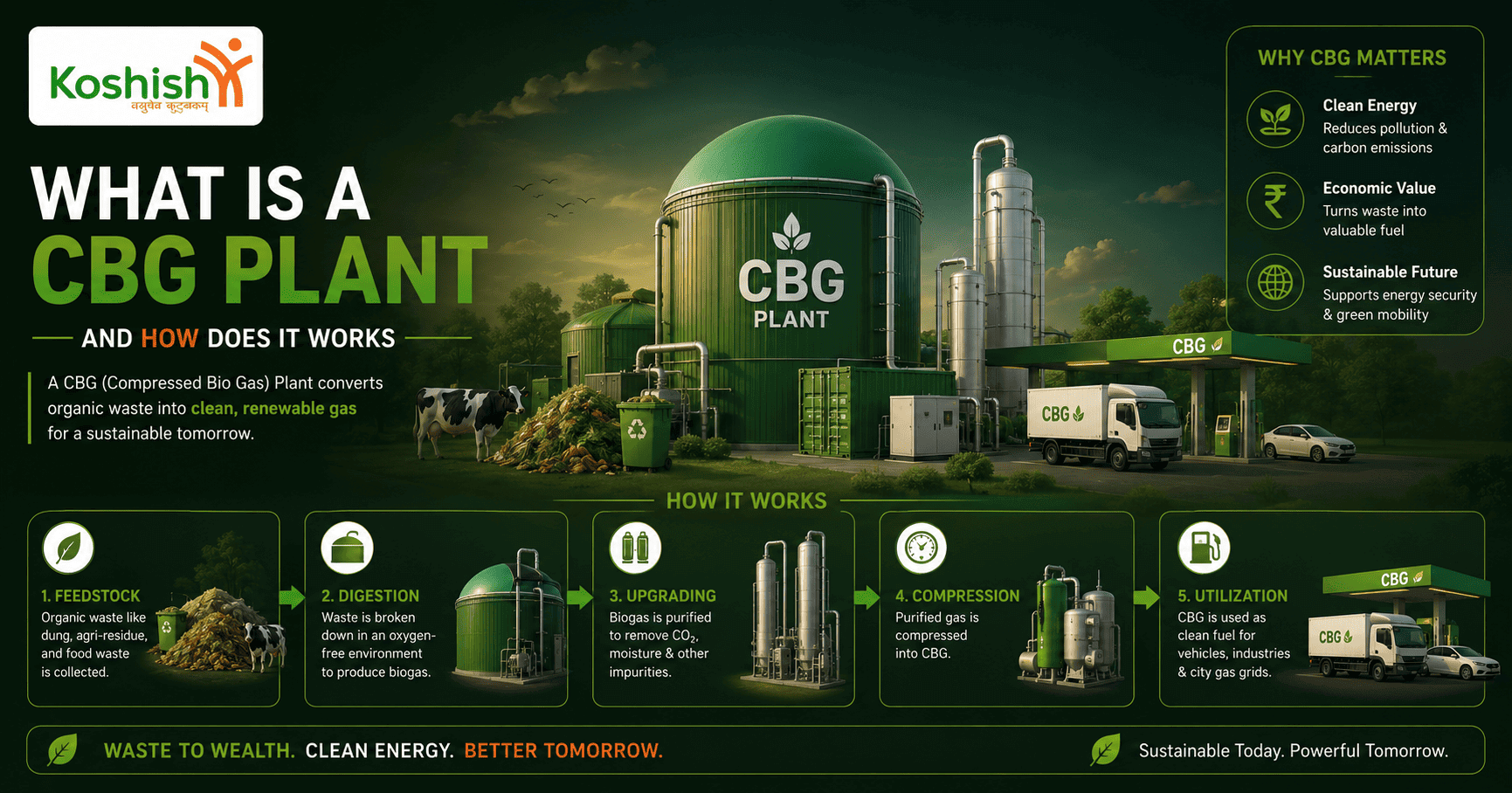
A compressed biogas plant is a large setup that collects organic waste like farm waste, animal dung, food waste, and city sludge. It turns this waste into biogas using a process called anaerobic digestion. It then upgrades and purifies the biogas to increase methane content. It compresses the cleaned gas to produce CBG, a strong renewable alternative to fuels like CNG and LPG. Unlike traditional small biogas systems used in households, CBG Plant operate at an industrial scale with advanced systems for preprocessing, purification, compression, storage, and distribution.Process Overview: How the CBG Production Process Works
The CBG production process integrates biological and mechanical systems to transform organic waste into a high-value energy product. The major stages include: Feedstock Pre-Treatment: Organic feedstock is sorted, shredded, and homogenised to create a uniform input for digestion. Removing stones and inert materials improves efficiency. Anaerobic Digestion and Raw Biogas Generation: The feedstock is fed into sealed anaerobic digesters, where microbes break down the organic matter in an oxygen-free environment. This produces raw biogas, a mix of methane (CH₄), carbon dioxide (CO₂), and minor impurities. Biogas Upgrading & Purification: One of the most critical steps in the CBG production process is biogas upgrading, which eliminates CO₂, hydrogen sulfide (H₂S), moisture, and other contaminants. This makes a fuel with high methane that can be compressed and used. Common technologies include:- Water scrubbers
- Pressure Swing Adsorption (PSA)
- Membrane separation systems
Plant Components: Key Systems Inside a CBG Plant
A typical compressed biogas plant consists of:- Feedstock Handling & Pre-Treatment System, which includes sorting, shredding, and screening of the feedstock.
- Anaerobic digesters generate raw biogas.
- The biogas upgrading system uses this method to clean the gas and make more methane.
- Compression units include high-pressure compressors and storage tanks.
- Control & monitoring of PLC/SCADA systems for efficient, safe operations.
- Digestate Handling, the separation and processing of residual slurry.
CBG Applications: Where Compressed Biogas Is Used
Compressed Biogas (CBG) can be used in many useful ways. Automotive Fuel: CBG can replace CNG or diesel in vehicles, helping to reduce pollution. Industrial Fuel: It can be used as a clean fuel for boilers, furnaces, and industrial heating processes. Power & CHP Systems: CBG can be used in combined heat and power (CHP) units to generate electricity and recover heat. Domestic & Commercial Energy: In some schemes, CBG can be fed into city gas distribution networks or used in commercial kitchens.Market Demand and Policy Landscape
The demand for compressed biogas plant solutions has surged due to supportive government policies and sustainability mandates. Key market drivers include: SATAT Scheme: Under India’s SATAT initiative, more than 2,227 CBG LOIs (Letters of Intent) were issued, and 94 plants sold over 31,000 tonnes of CBG in 2024-25, evidencing an active market. Blending Obligations: Mandatory blending requirements (1% initially and up to 5% by FY29) with natural gas encourage adoption and demand for CBG. Financial Incentives: Government grants for biomass aggregation, plant setup, and pipeline infrastructure are accelerating the development of new CBG projects. Latest Project Developments: Several new plants are under construction or nearing commissioning; for example, a major CBG facility in Nagpur is poised to be India’s largest, using dry fermentation technology and set to begin operations in March 2026. NOTE: In Prayagraj, India’s second operational plant began producing CBG and organic compost from wet waste, highlighting the co-benefit of waste management and renewable energy generation.Wrapping Up
A compressed biogas plant represents a breakthrough in sustainable energy by transforming waste into a reliable, carbon-neutral fuel source. The CBG production process utilizes advanced biogas upgrading technologies to produce a versatile energy solution that supports cleaner transportation, industrial operations, power generation, and more. With increasing governmental support, robust CBG applications, and expanding market demand, CBG Plant is a key player in the global energy transition.Frequently Asked Questions (FAQ)
What feedstocks can a CBG plant use?
A CBG plant can process organic waste like agricultural residues, food waste, animal manure, and municipal solid waste.
How is CBG Plant different from regular biogas?
Regular biogas is the raw gas produced by anaerobic digestion. Through biogas upgrading, it is purified and compressed to produce high-methane Compressed Biogas (CBG), similar in quality to CNG.
What are typical applications of CBG?
CBG Plant can be used as vehicle fuel, industrial fuel, for power generation, and supplied to gas grids.
Are CBG Plant financially viable?
Government policies like SATAT and financial incentives, combined to generate revenue (gas sales, organic fertiliser, and carbon credits), improve project viability.
What is the future outlook for CBG in India?
With targets to establish thousands of CBG Plant and expanded blending mandates, the sector is poised for rapid growth, making CBG Plant a significant pillar of India’s renewable energy mix.