
For several years, a growing problem of food waste disposal and overflowing landfills has been rising. This also increases environmental concerns and carbon emissions from landfill waste. A sustainable solution is needed to reduce food waste landfill; a biogas plant providing a solution of commercial food waste management by converting overall food waste into renewable energy. It has been a waste-to-energy solution for many years with limited awareness.
Biogas technology provides an effective and efficient way to convert organic waste into clean energy and organic fertiliser. These commercial establishments reduce food waste landfill burden and support circular economy practices by generating valuable energy.
What Is the Impact of Food Waste in Landfills?
The impact of food waste from various food processing units makes a ruckus in the landfills; it leads to many problems that we have discussed below:
Large Volumes of Waste: Food waste produces a pacific amount of municipal solid waste, and large quantities are disposed of in landfills every day. This increases the pressure on already overburdened landfill sites and accelerates the need for additional commercial food waste management solutions for it.
Methane Emissions: The dumped food waste in the landfills emits methane gas as it decomposes in the absence of oxygen. This leads to climate changes and harms the environment.
Soil, Groundwater, and Air Pollution Concerns: The landfill organic waste decomposes, which pollutes the water and spoils the air quality, plus it contaminates the soil due to improper commercial food waste management. The overflowing landfills also produce various harmful gases.
Rising Waste Management Costs: Transporting food waste to landfills, managing disposal operations, and maintaining landfill facilities can be expensive. These costs continue to rise as waste volumes increase and environmental regulations become stricter.
Need for Sustainable Alternatives: The environmental and economic impacts of landfill disposal highlight the importance of adopting sustainable solutions. Technologies such as biogas plants help reduce landfill dependency by converting organic waste into renewable energy and valuable by-products.

How Does Biogas Help Divert Waste from Landfills?
A biogas plant is built to help reduce food waste landfill and other organic waste from the environment. Now, the biogas plant’s work is important to know.
Collection and Processing of Organic Waste: The first step is the collection of food waste and the processing of organic waste through the anaerobic digestion process in the absence of oxygen. Biogas plants collect organic waste such as food scraps, kitchen waste, agricultural residues, and other biodegradable materials.
Conversion into Valuable Resources: After the collection of the organic waste, it is dumped into the digester for the anaerobic digestion process to take place. The waste is broken down by the microorganisms, leading to the production of methane gas.
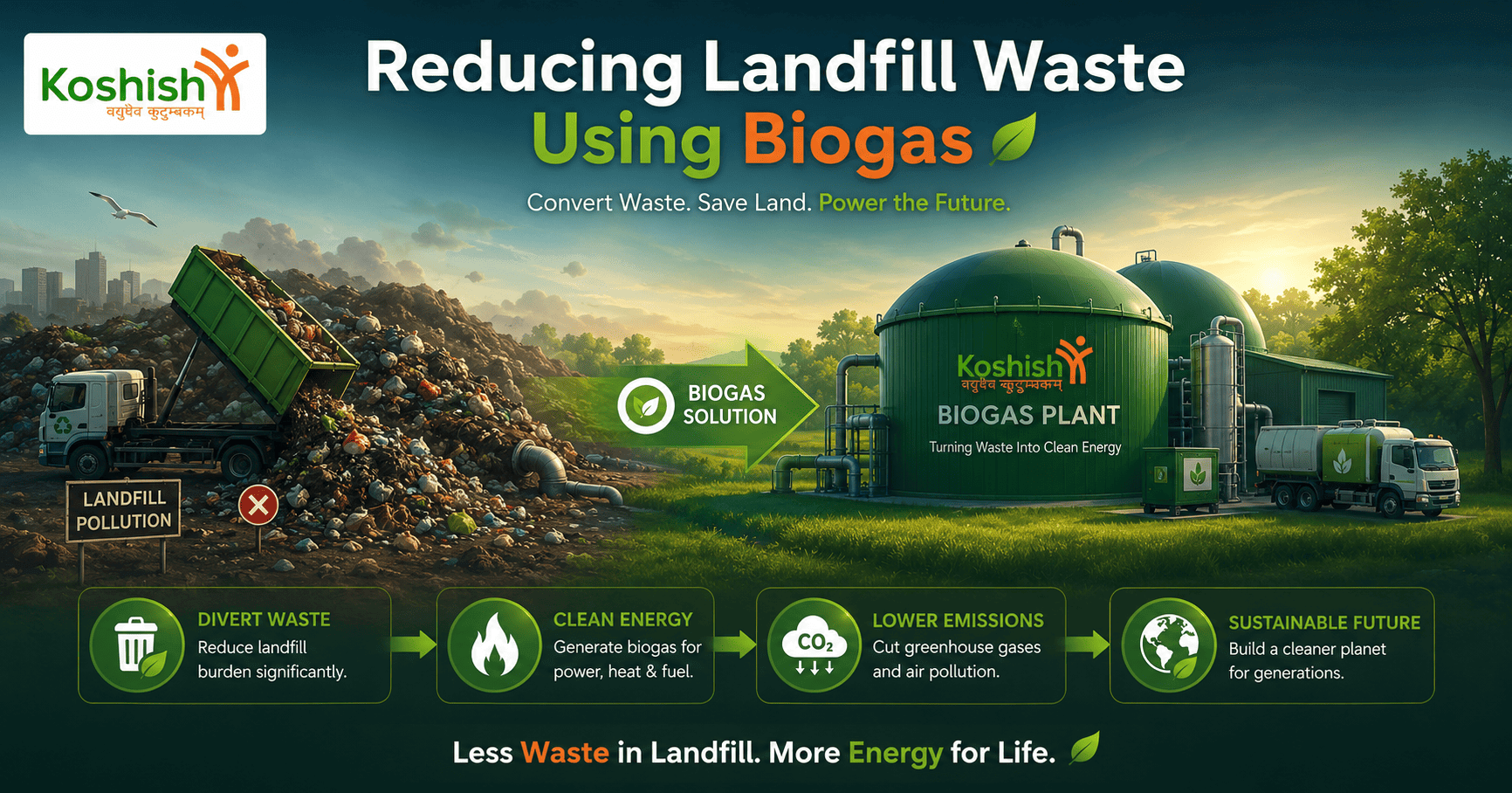
Reduction in Landfill-Bound Waste: By treating organic waste at the source or nearby facilities, biogas plants significantly reduce the amount of waste sent to landfills. This supports landfill diversion efforts and helps extend landfill lifespan.
Ideal for Farms and food industry: Biogas systems are well-suited for farms & food processing units and other commercial facilities that generate large volumes of organic waste on a daily basis.
Maintaining Waste Management: By converting waste into energy and useful by-products, biogas technology promotes efficient commercial food waste management while reducing environmental impact and supporting sustainability initiatives.
Benefits of On-Site Biogas Systems
There are various benefits of biogas plants that are mentioned below:
- The growing organic waste is reduced and turned into usable clean energy
- Lower the transportation and landfill disposal costs.
- Production of renewable energy for heating, cooking, or electricity.
- Improves the commercial waste management system
- Lowers the carbon footprint & enhances the resource recovery period.
- Great opportunity to control the overwaste management.
Supporting Circular Economy and Sustainability Goals
The biogas plant not only reduce food waste landfill but also supports the circular economy & major sustainability goals as well, which are mentioned below:
- It transforms food waste into clean energy
- Produces clean cooking gas & organic slurry fertiliser
- Reduces the rate of Greenhouse gas emissions
- Also aligns the corporate sustainability and ESG goals
- Overall, it encourages a circular economy where the waste is utilised rather than making it a problem.
Wrapping Up
The food processing units have mainly shifted to sustainable solutions, such as a commercial biogas plant, which has eradicated the major problem of waste management. A positive impact is on the environment, the economy, and operations. Farms or industries that are looking for long-term benefits from sustainable solutions are required to opt for a commercial biogas plant.