

The only sustainable solution, “Biogas Plant,” has made a huge impact but is still not adopted worldwide. The major reason for the biogas plant problems to occur is improper maintenance & not using good-quality equipment while constructing the biogas plant, which leads to problems in functioning. The biogas plant often faces a lot of biological and mechanical problems, most probably the low gas yield, pH drops, and foaming. The biogas plant is an effluent solution for converting organic waste into renewable energy, simultaneously generating nutrient-rich manure.
The biogas plant faces many different operational problems, and understanding common biogas plant problems, their causes, and practical solutions is essential for maintaining efficient and continuous operation.
Top Operational Issues Faced by Biogas Plants
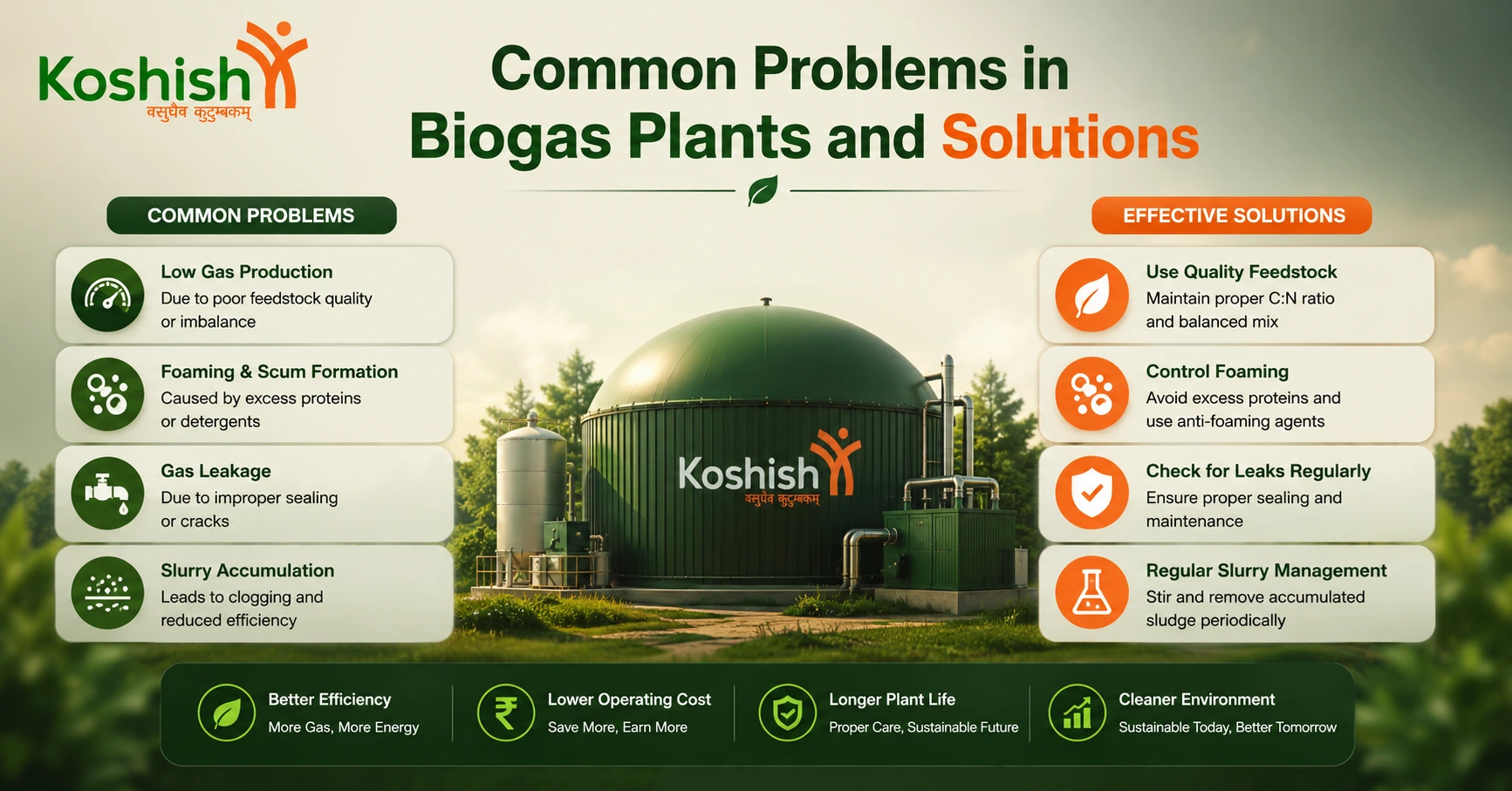
The major operational issues occur due to two reasons: first, while installing it, and second, due to not maintaining the biogas plant. If a farm gets a biogas plant installed, the first step they should take is to choose experienced consultants who can guide them properly. Neglecting this step can actually lead to the malfunctioning of the biogas plant parts and other problems. The major operational issues faced by the Biogas plant operating team are as follows: Low Gas Production: One of the most common issues that comes up is low gas production. This problem can significantly reduce the economic benefits of the system. What Causes the Biogas Plant Problems:- Insufficient or irregular feeding of organic waste
- Low digester temperature
- Improper carbon-to-nitrogen (C:N) ratio
- Overflow of the feedstock or underflow of the digester, which leads to low gas production
- Presence of toxic substances such as chemicals or antibiotics
- Maintain a consistent feeding schedule.
- Ensure the digester operates within the optimal temperature range.
- Balance feedstock composition to achieve a proper C:N ratio.
- Avoid introducing harmful chemicals into the system.
- Monitor daily gas production and feedstock input.
- High fiber content in feedstock
- Large particles entering the digester
- Lack of agitation or mixing
- Pre-process feedstock through shredding or grinding.
- Install mixing systems to prevent floating layers.
- Remove accumulated scum periodically.
- Use feedstocks with balanced solid content.
- Excessive solids in feedstock
- Accumulation of sand, stones, or non-biodegradable materials
- Poor plant maintenance
- Screen feedstock before feeding.
- Regularly inspect the inlet and outlet channels.
- Remove sediments and debris from the system.
- Maintain proper slurry consistency.
- Overfeeding the organic waste in the digester can cause an overflow
- Excessive acidic feedstock
- Poor process monitoring
- Maintain digester pH between 6.8 and 7.5.
- Feed the plant gradually rather than in large batches.
- Monitor pH levels regularly.
- Add buffering agents when necessary.
- Damaged gas pipelines
- Loose connections
- Cracks in gas storage structures
- Conduct routine leak inspections.
- Repair damaged pipes and fittings immediately.
- Use high-quality gas storage materials.
- Implement preventive maintenance programs.
Preventive Strategies for Reliable Operation of Biogas Plant Problems
Preventive maintenance is the key to avoiding major operational problems. Plant operators should:- Follow a consistent feeding schedule.
- Monitor temperature, pH, and gas output daily.
- Train staff in troubleshooting biogas plant issues.
- Perform regular inspections of pipes, valves, and storage systems.
- Keep detailed operational records.
Wrapping Up
The biogas plant offers various economic and environmental benefits, but operational challenges can affect performance if not addressed properly. Common biogas plant problems, such as low gas production, digester issues, and scum formation, can usually be resolved through proper monitoring, maintenance, and process optimization. By implementing preventive strategies and effective troubleshooting of biogas plant practices, operators can maximize efficiency, ensure stable gas output, and extend the lifespan of their biogas systems.Frequently Asked Questions (FAQ)
Why is my biogas plant producing less gas?
The production of gas is low only because of low maintenance of the biogas plant, irregular feeding, low temperature, pH imbalance, or poor-quality feedstock.
What causes scum formation in a biogas digester?
Scum formation typically results from high-fiber materials, large feedstock particles, and inadequate mixing.
How can I prevent digester blockage?
Screen feedstock before feeding, maintain proper slurry consistency, and regularly inspect inlet and outlet pipes.
How often should a biogas plant be inspected?
Key operational parameters should be checked daily, while comprehensive maintenance inspections should be conducted regularly according to plant size and usage.