



India demands a cleaner and more sustainable substitute for LPG & CNG gas. Natural resources are depleting at a fast rate. Now is the time to shift from fossil fuels to a sustainable solution. There are debates about Bio-CNG vs LPG: which one is more efficient? The main reason for switching is also due to the depletion of fossil fuels.
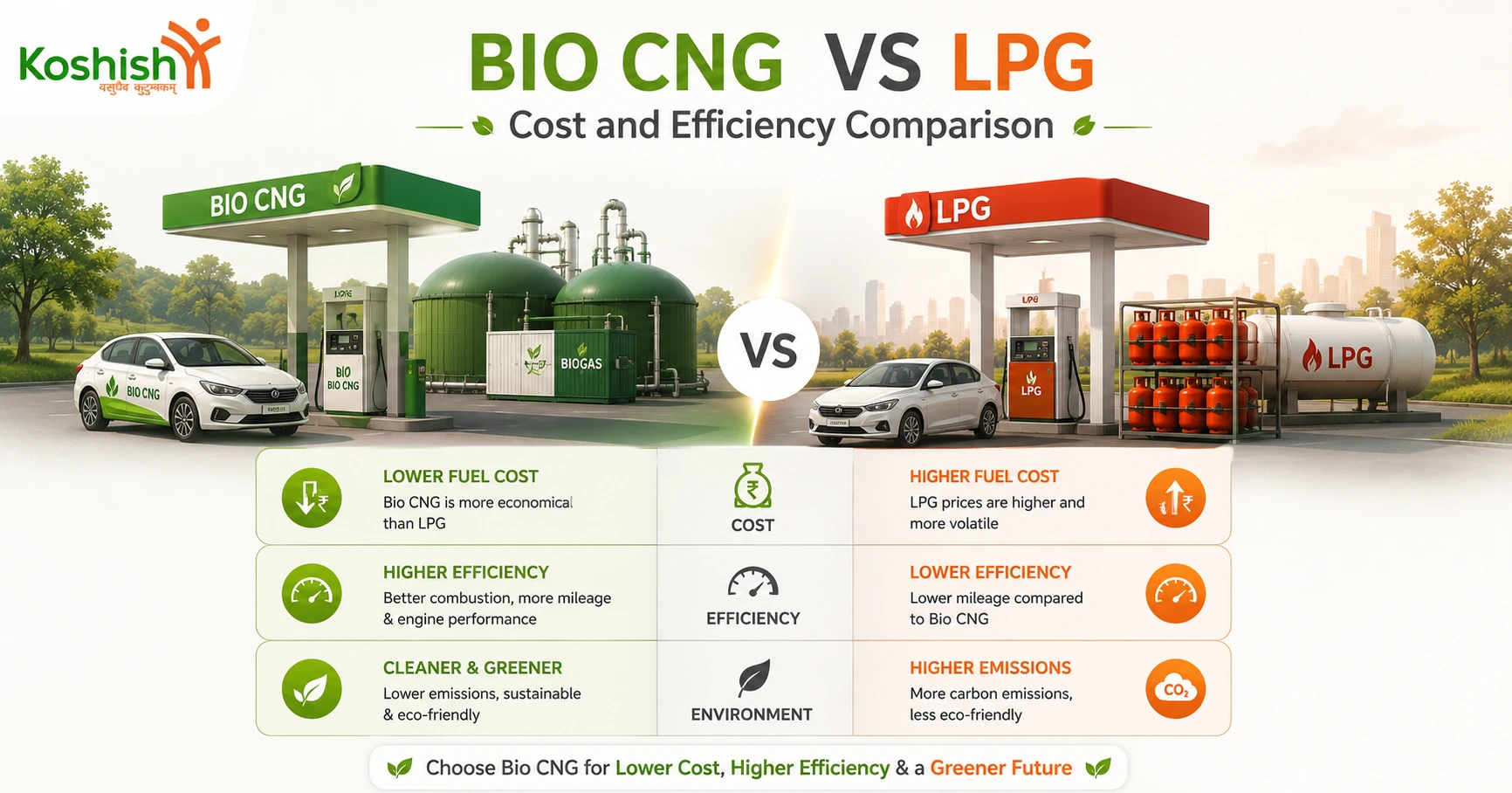
The cost of LPG has increased, which has become hefty for the public’s pocket. On the other hand, Bio-CNG is made through organic waste, which is converted into renewable energy. The cost of Bio-CNG is lower than that of renewable gas; compare CBG vs LPG costs.
What is Bio CNG vs LPG?
There is a clear distinction between Renewable gas comparison: Bio-CNG is a renewable energy made by converting organic waste to biogas through the anaerobic digestion process. It is an upgraded and premium form of methane gas that is classified as a biofuel. On the other hand, LPG gas is derived from fossil fuels during petroleum refining and natural gas processing. It is widely used as cooking gas across India, and it is a non-renewable source.Cost Comparison: Bio-CNG vs LPG
First, we will discuss the factors that affect the CBG vs LPG cost. The factors are mentioned below:- The cost incurred in the production and distribution of the fuels.
- The government provides a good subsidy for Biofuel
- The availability of fuel in all regions.
Efficiency and Energy Output Comparison between Bio-CNG vs LPG
The fuel is considered effective when the efficiency and energy output are at a standard. Below is a short renewable gas comparison between Bio-CNG vs LPG efficiency and energy output rate: Liquefied Petroleum Gas (LPG): The calorific value of LPG gas is approximately 46-50 MJ/kg, which is a high value. Making this gas highly usable for cooking and heating purposes. The consistent energy output and proper distribution system all over India make it a more reliable source of energy. Compressed Biogas (CBG or Bio-CNG): CBG is an upgraded form of biogas, which is used as the best substitute for crude oil. The calorific value of bio-CNG is around 42% to 52%. Making it a high-energy performance competitor to LPG gas. With 95% methane content, it passes as a substitute for conventional fuels. Simultaneously, it provides environmental benefits by lowering GHG emissions and producing clean energy.Environmental Impact: Bio-CNG vs LPG: Which Fuel is Greener?
Now, when we do an environmental renewable gas comparison, bio-CNG is considered a greener option. The production of Bio-CNG is done by converting biodegradable waste to clean energy, which is used for many purposes. It affects the GHG emissions by up to 80%-90% compared to conventional fuels. In contrast, LPG gas is a clean fuel in comparison to other conventional fuels such as coal or wood and petrol. Emitting 15% – 20% less CO₂ than they do. However, the fossil fuel energy source, LPG gas, still emits 3 kg of carbon dioxide per unit of fuel. Contributing to GHG emissions.Usage Scenarios: Where Does Each Fuel Fit Best?
After knowing what actual environmental benefit Bio-CNG vs LPG have, now we’ll go through where both of them actually fit best. Below we have mentioned those scenarios for each: Bio-CNG (Bio-Compressed Natural Gas): Bio-CNG is best for transportation, as it is the best substitute for other conventional gases, such as LPG, petrol, diesel, and CNG. As it is a green fuel made of organic waste through anaerobic digestion, it benefits the environment by reducing carbon emissions. LPG Gas (Liquefied Petroleum Gas): LPG gas is used in various sectors such as commercial kitchens, residential sectors, food processing units, hotels & restaurants. Therefore, LPG gas can also be used for transportation, but the cost rises high, whereas the depletion of natural resources also becomes a problem. If we start using LPG in huge quantities.What are Future Market Trends in India Regarding Bio-CNG vs LPG
The idea of building a sustainable future needs decisions like adopting bio-CNG instead of LPG or any other conventional gas. The government of India has taken a huge step by providing a subsidy for the installation of a CBG plant under the SATAT Scheme. To increase the production of bio-CNG in the market. The chances of Bio-CNG becoming a major alternative for transportation are high, as it is potential for it. The interest and demand for sustainable solutions are rising. So it may be an end to the debate between renewable gas comparison, Bio-CNG vs LPG.Wrapping Up
On the contrary, the renewable gas comparison between Bio-CNG vs LPG shows both are reliable sources. However, Bio-CNG stands out due to its own sustainable factors. It is a renewable source of energy with lower carbon emissions and a potential 20% – 40% fuel cost savings. While LPG gas is both available and efficient, it is fossil fuel-based. The right choice for a sustainable future is to choose what not only benefits the pockets but is also overall beneficial.Frequently Asked Questions (FAQ)
What is the main difference between Bio-CNG vs LPG?
Bio CNG is produced from organic waste and is renewable, while LPG is derived from fossil fuels and is non-renewable.
Is Bio CNG cheaper than LPG?
The cost varies by region and availability, but Bio CNG can offer long-term economic advantages due to local production and reduced dependence on imported fuels.
Which fuel is more environmentally friendly: Bio-CNG vs LPG?
Bio CNG is generally considered more environmentally friendly because it utilizes organic waste and helps reduce methane emissions.
Can Bio CNG be used for cooking?
Yes, Bio CNG can be used for cooking, heating, and various commercial and industrial applications.
Is Bio CNG as efficient as LPG?
When properly purified and upgraded, Bio CNG can provide energy performance comparable to LPG for many applications.