

Managing pig waste is one of the biggest challenges for modern pig farms. Improper management of pig waste handling can create a lot of problems related to it for the workers and the societies living nearby. The sole solution is a piggery biogas plant design, which becomes an effective and sustainable solution.
A pig waste digestion system converts organic waste into clean biogas energy and organic fertiliser. Many farms are now adopting pig farm biogas technology to improve waste management and reduce operational expenses.
What is a Piggery Biogas Plant?
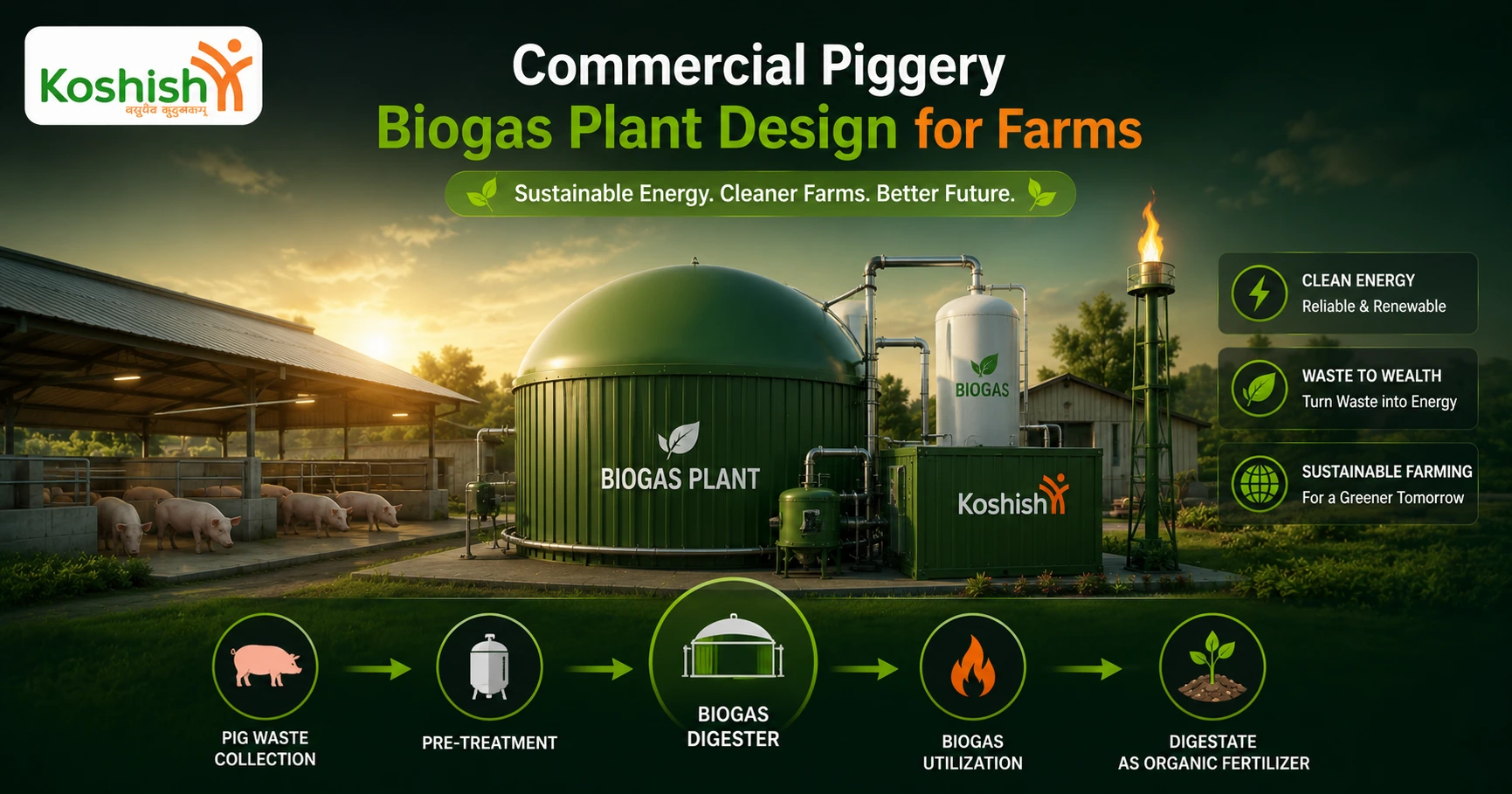
A piggery biogas plant is a system that processes pig manure through anaerobic digestion. In this process, microorganisms break down organic matter in the absence of oxygen, producing biogas. The biogas mainly contains:
- Methane (CH₄)
- Carbon dioxide (CO₂)
This poultry biogas can be used for:
- Generating power and partially cutting the Electricity bill cost
- Production of Cooking gas
- Organic manure is also generated in solid and liquid form known as digestate & slurry.
The leftover digestate can be used as organic fertilizer for agricultural applications.
Why Pig Farms Need Biogas Technology
The pig farms generate a large quantity of organic waste every day. Without proper handling of pig waste, it can create environmental and operational problems. Common Challenges in Pig Farms
- For the bad odour that surrounds the environment
- Wastewater pollution is emitted in huge quantity
- Methane emissions that harm the environment & animals living in the piggery farm
- Fly and pest infestations
- High disposal costs and improper management of the piggery waste
- Complaints from nearby areas
A properly designed pig waste digestion system helps solve these issues while generating renewable energy.
Important Design Parameters for Piggery Biogas Plants
The performance of a biogas plant depends heavily on its design. Several technical factors must be considered during planning.
Daily Waste Generation: Calculate the total piggery waste generation on the farm; accordingly, the piggery biogas plant design will be made.
Hydraulic Retention Time (HRT): The time calculated, in days, that the waste remains in the digester for 45 days in all seasons is the typical HRT. Proper retention time ensures efficient gas production and stable digestion.
Digester Size: The pig waste digestion system is built according to the requirement and quantity of the piggery waste. If it is designed smaller, then the renewable energy can overflow. If the piggery biogas capacity were more, then there would be unnecessary space, plus a huge project cost would be incurred.
Gas Storage Capacity: The biogas storage system should be able to handle daily fluctuations in gas production and consumption.
Feed Handling System in Pig Waste Digestion
An efficient feed handling system is important for smooth plant operation. In itself, many factors should be kept in mind before getting a piggery biogas plant design.
Collection of Pig Waste: Waste is usually collected through scraper systems, flush systems, and manual collection channels. The manure is transferred to a collection tank before entering the digester.
Slurry Preparation: Pig manure is mixed with water in a 1:1 ratio to create waste easy for digestion. When the liquid form gets ready, which is the slurry, it emits methane gas collected into cylinders.
Feeding Mechanism: The feeding system can be manual, semi-automatic, or fully automated. Large pig farms generally adopt an automated pig waste digestion system for consistent feeding and lower labour requirements.
Climate Considerations in Piggery Biogas Plant Design
Climate plays an important role in the efficiency of biogas production. The pointers are as follows:
Temperature Impact: Anaerobic bacteria work best at 30°C-38°C (mesophilic range). Lower temperatures slow down digestion and reduce gas production.
Rainwater Management: Rainfall can spoil the quality of slurry and reduce plant efficiency. Therefore, proper drainage systems, covered feed tanks, and waterproof construction are necessary for long-term operation.
Safety Measures in Pig Farm Biogas Technology
A biogas plant must follow proper safety practices, as many mishaps can take place.
Gas Leak Prevention: The Biogas Plant includes leak-proof pipelines, pressure monitoring systems, and regular maintenance checks. Routine checkups prevent any mishappenings.
Ventilation System: Biogas accumulation in enclosed areas can become dangerous. Proper ventilation should be provided in generator rooms, compressor areas, and gas storage sections.
Fire Safety Measures: Safety equipment should include fire extinguishers, and may other safety equipment to avoid accidents.
Slurry Handling Safety: The slurry must be carefully handled.
Wrapping Up
For all sectors, biogas is designed for convenience. A properly planned piggery biogas plant design provides an efficient solution for managing pig waste while generating renewable energy.
Modern pig farm biogas technology not only improves sustainability but also helps reduce operating costs and environmental impact. As the demand for sustainable farming practices increases, adopting a pig waste digestion system can become a long-term advantage for piggery farm owners.