

What Causes Odour in Piggery Farms?
The unpleasant smell in pig farms mainly comes from the breakdown of organic waste. Pig manure and urine release gases when they decompose in open areas or poorly managed storage. These sources release gases such as ammonia, hydrogen sulphide, and methane, which create strong foul odours and contribute to pollution. Major Odour Sources in Pig Farms:- Collection of Pig manure
- Pig Urine mixing with waste
- Poor drainage systems
- Leaving pig manure idle in the open
Why is Bad Odour important to Control?
Controlling bad odour is important to maintain a healthy, sustainable piggery operation. Proper management of the piggery odour control in farm enhances its reputation. The benefits of pig manure smell control are as follows:- The piggery odour control methods improves the air quality around the farm.
- It also improves the worker’s comfort and health.
- Spreading of harmful bacteria and pathogens on the farm
- Due to piggery odour control measures, the complaints from the nearby neighbours decrease.
- Also creates a healthier and greener environment
Methods for Odour and Pollution Control in Piggery Farms
There are various practical traditional methods that help in piggery odour control of the farm: Pig Waste Management: Piggery Odour Control is only possible if the pig waste management strategy is properly developed and implemented. The pig waste should be collected and dumped in a closed area to minimise the methane gas emission. The best ways to do it are as follows:- The pig manure should be collected and removed daily.
- Should be kept in airtight drums.
- Separate solid and liquid waste
- Proper drainage and cleaning systems
- Controlled composting methods
- The pig waste must be cleaned daily
- Proper ventilation should be provided
- Dry flooring and bedding management done for piggery odour control
- Regular washing of pig feeding areas
- Use chemicals to control the pests and flies
Community Acceptance and Environmental Compliance
Strong bad odours from pig farms often create conflicts with nearby residents. Proper piggery odour control measures improve relationships with surrounding communities and demonstrate responsible farming practices. Overall, livestock farms operate in accordance with the piggery environmental compliance requirements for waste disposal, odour emissions, and water pollution. Sustainable pig farming practices also support environmental conservation by reducing greenhouse gas emissions and protecting soil and water quality.Wrapping Up
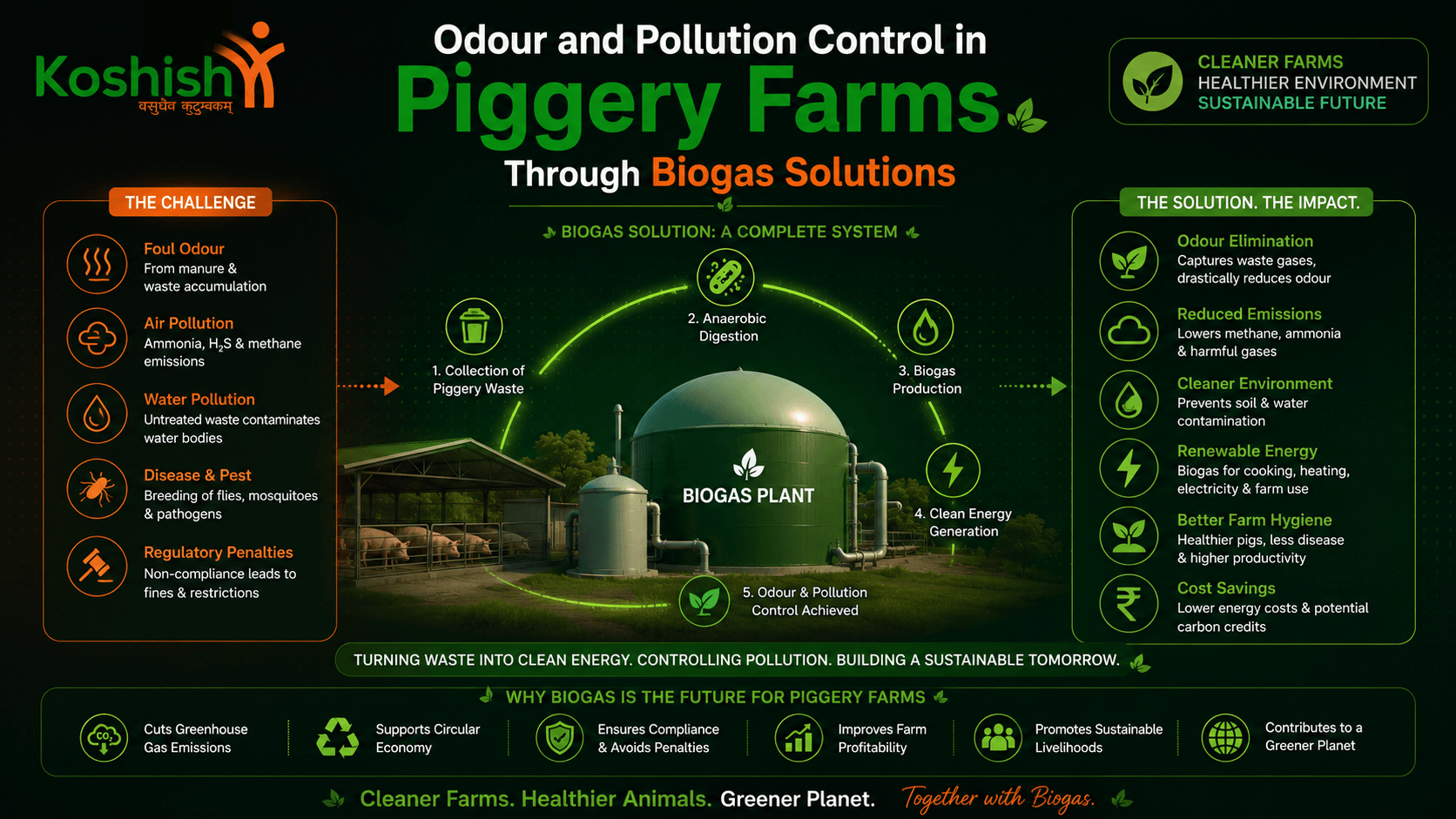
The piggery odour control is the most basic and important for maintaining a clean, healthy, and environmentally responsible operation. For proper pig waste management, methane capture through a commercial biogas plant, improved hygiene, and the elimination of traditional methods for controlling pig manure odours can significantly reduce pollution and foul odours. In the near future, sustainable practises will be adopted rapidly, enabling pig farmers to improve farm conditions, protect the environment, and gain community acceptance. Effective pig farm pollution control is not only beneficial for the farm but also for public health and long-term sustainability.
What causes bad smells in pig farms?
Improper management of pig manure leads to a foul smell on the farm. The manure decomposes, releasing various harmful gases, such as methane and ammonia, which become a health and environmental risk.
How can pig manure smell be controlled?
There are various methods for piggery odour control, such as collecting pig manure in drums, adopting the biogas plant solution, and practising daily hygiene.
What is methane capture in pig farms?
Methane gas is captured in pig farms through anaerobic digestion, a biogas plant, and used for cooking gas, generating electricity, and as fertiliser.
Why is pig waste management important?
Pig waste management is important, as poor management can lead to significant health hazards and environmental issues. Those piggery farms that do not comply with environmental regulations are penalised by the government.
Can biogas plants reduce pig farm pollution?
Definitely, the biogas plant can easily reduce the pig farm’s pollution & piggery odour control. Through the anaerobic digestion process, methane gas is extracted from pig manure, and the remaining slurry is used as fertiliser for crop growth.