

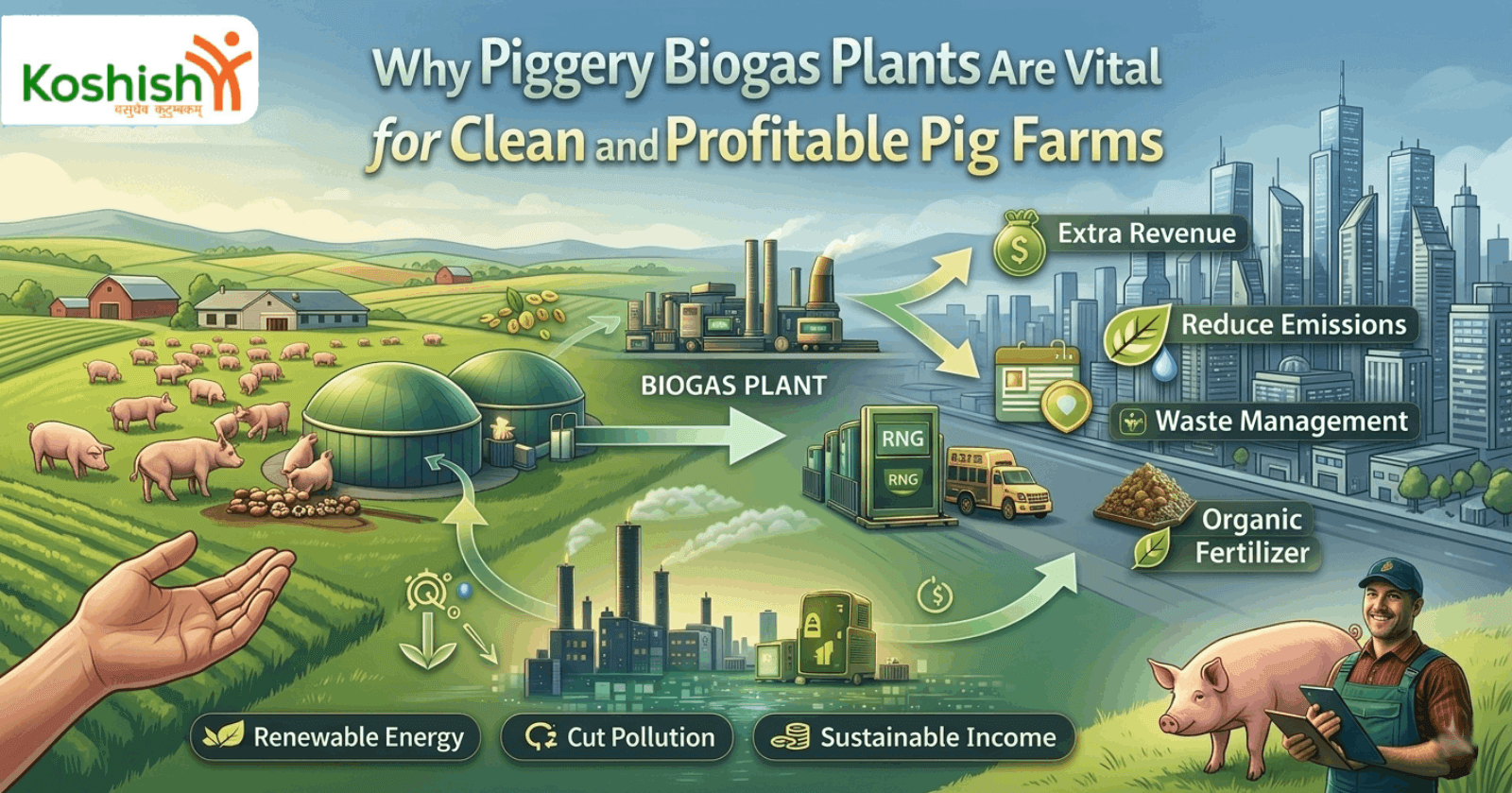
Commercial pig farming in India and other developing economies that manage large volumes of organic waste has become a serious challenge. Pig farms generate significant quantities of manure every day, which, if unmanaged, leads to odour, pollution, regulatory issues, and loss of potential value. This is where a Piggery biogas plant becomes a smart, sustainable, and profitable solution.
By converting pig manure into renewable energy, pig farms can address environmental concerns while reducing operational costs. A piggery biogas plant is not only used to manage waste anymore; it also helps pig farms earn savings and income while promoting clean and hygienic farming practices.
Pig Farm Owners Using Biogas Plants
Pig farm owners are increasingly using biogas systems to manage daily waste more effectively. Large pig farms produce a lot of manure, and old disposal methods are expensive and harmful to the environment. By installing a Piggery biogas plant, farm owners can convert waste into energy for heating, electricity, and cooking. The adoption of pig-waste biogas solutions also helps farms meet increasingly stringent environmental requirements across regions. For pig farm owners focused on long-term profitability, a Piggery biogas plant provides operational savings, energy security, and improved farm hygiene.Pig Manure as a High-Yield Feedstock
Pig manure is considered one of the most efficient organic feedstocks for biogas production. Due to its high organic content and moisture balance, Biogas from pig manure yields a higher methane percentage than that from many other livestock wastes. The consistent availability of manure ensures stable gas production throughout the year. Pig waste biogas systems benefit from faster digestion cycles, making pig farms ideal candidates for anaerobic digestion technology. Using Biogas from pig manure not only recovers energy but also converts raw waste into nutrient-rich slurry that can be used as organic fertiliser, enhancing soil health and reducing dependency on chemical inputs.Odour, Waste, and Pollution Control Benefits
One of the biggest challenges in pig farming is odour control. Unmanaged manure releases harmful gases like ammonia and hydrogen sulfide, affecting both workers and nearby communities. A Piggery biogas plant significantly reduces odour emissions by processing manure in sealed digesters. Effective Piggery waste management through biogas plants prevents groundwater contamination, reduces fly breeding, and minimises disease risks. By adopting Pig waste biogas systems, farms can maintain cleaner surroundings and improve their public image. Additionally, Biogas from pig manure helps cut greenhouse gas emissions by capturing methane that would otherwise escape into the atmosphere, contributing to climate mitigation goals.Suitable Piggery Locations for Biogas Plants
A Piggery biogas plant can be installed in various piggery setups, including rural farms, peri-urban livestock clusters, and integrated agri-business parks. Farms with more than 50–100 pigs are especially suitable for Pig waste biogas generation due to sufficient manure availability. Key factors influencing site suitability include land availability, water access, manure collection systems, and energy demand. Effective Piggery waste management planning ensures smooth integration of biogas plants without disrupting farm operations. Well-designed layouts enable efficient operation of biogas systems from pig manure while maintaining biosecurity standards on pig farms.Energy Generation and Waste Treatment Process
The working of a Piggery biogas plant involves collecting pig manure and feeding it into an anaerobic digester, where microorganisms break down organic matter in the absence of oxygen. This process generates biogas primarily composed of methane. The produced Pig waste biogas can be used for cooking, electricity generation, or thermal applications. Simultaneously, the treated slurry exits the system as a pathogen-free organic fertiliser. Through this process, Piggery waste management becomes a circular system, waste is treated, energy is produced, and nutrients are recycled back into agriculture. This makes Biogas from pig manure both environmentally and economically viable.Long-Term Benefits for Pig Farms
Installing a piggery biogas plant helps farms save on fuel and electricity, reduce waste handling costs, and follow environmental rules more easily. Over time, energy savings and fertiliser value contribute directly to increased farm profitability. Moreover, sustainable Piggery waste management strengthens the farm’s ESG profile, making it authentic in the eyes of the Government. With a growing emphasis on green livestock practices, the adoption of pig waste biogas positions pig farms for future growth.Wrapping Up
A Piggery biogas plant is compulsory for big pig farms, it is a necessity for sustainable growth. By converting waste into energy, improving Piggery waste management, and reducing environmental impact, pig farms can achieve cleaner operations and higher profitability. Adopting pig-waste biogas today for your large-scale pig farms is a strategic step towards a Sustainable future.Frequently Asked Questions
What is a piggery biogas plant?
A Piggery biogas plant is a waste-to-energy system that converts pig manure into biogas and organic fertilizer through anaerobic digestion.
How much energy can be produced from pig waste?
Energy output depends on the number of pigs and manure quantity. Biogas from pig manure can meet the farm’s cooking, heating, and partial electricity needs.
Is pig waste biogas safe to use?
Yes, Pig waste biogas is safe when handled properly. The digestion process significantly reduces pathogens and odors.
Does a biogas plant reduce odors from a pig farm?
Absolutely. A Piggery biogas plant is highly effective in odor control and improves overall farm hygiene.
What happens to waste after biogas production?
The slurry from Biogas pig manure is a nutrient-rich organic fertilizer suitable for crops and fodder.