
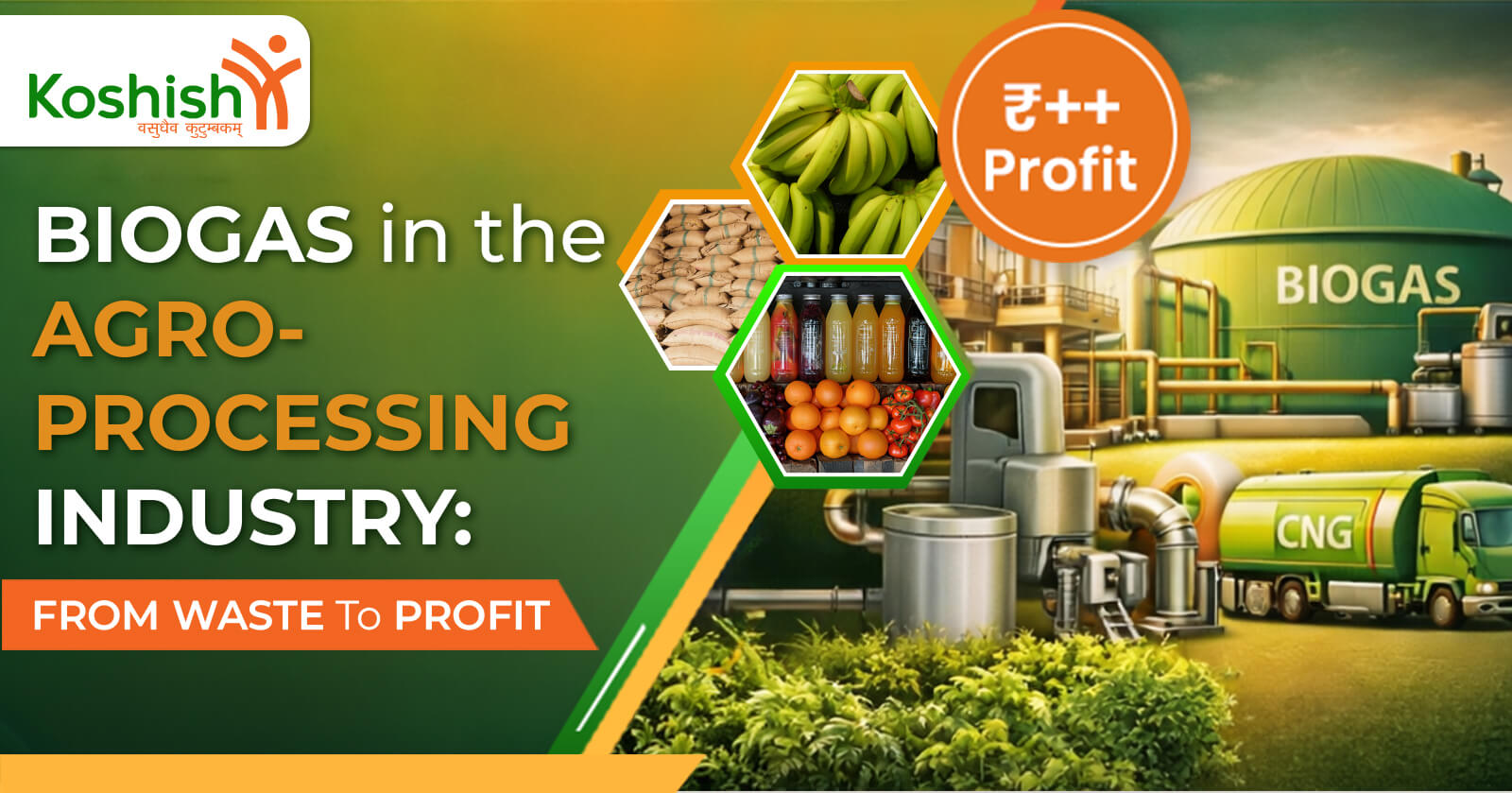
The biogas agro industry uses agricultural waste from the agro-processing industry, which converts farm products like sugarcane, wheat, and fruits into sugar, juice, and more.
At Koshish India, we provide renewable energy solutions for agro plants that turn this waste into electricity, reduce pollution, and produce organic fertilizers.
In this blog, we will explain the types of waste created in agro-processing, how it can be converted into agricultural waste biogas, and how Koshish India’s systems can use it efficiently with other processes.
What Is Agro Processing?
Agro-processing is turning farm products into useful goods, like sugar, flour, or juice. It also generates a lot of organic waste, such as peels, husks, and leftover pulp.
This waste can be used to make biogas, a clean energy that powers the plant, saves money, and reduces pollution.
Waste Types in Agro-Processing
Agro-processing makes food, drinks, textiles, and other products from farm produce. The waste can be used to produce biogas, a renewable energy source.
Crop Residues: After harvesting crops like wheat, rice, maize, or sugarcane, leftover parts such as stalks, husks, leaves, and shells remain. These are rich in organic material and can be easily used for biogas production.
Fruit and Vegetable Waste: Making juice, jams, sauces, or canned foods from fruits and vegetables creates peels, pulp, seeds, and spoiled pieces. This waste can easily be used to make biogas.
Animal By-products: Processing meat, dairy, and poultry creates waste like manure, blood, bones, and skin. This waste has energy that can be turned into biogas, helping the industry use it sustainably.
Food Processing Waste: Mills and factories processing grains, sugar, or oils create leftover materials such as bran, bagasse, husks, and oilcakes. These wastes are perfect for biogas plants and can reduce disposal problems.
Packaging and Processing Residues: Some agro-processing units create plant waste like sugarcane bagasse, leftover grains from breweries, and other biodegradable materials. These, too can be used to produce energy.
Benefits of Agro-Processing in the Biogas Agro Industry
There are more benefits of Agro-Processing in the biogas agro industry, such as:
Adding Value to Raw Materials : This makes farm products more valuable, giving farmers higher income and creating business opportunities. In the biogas agro industry, leftover waste can also be used to make biogas, adding extra value.
Boosting Employment Opportunities : The agro-processing sector creates many jobs, especially in rural areas. From small processing units to large plants, there are opportunities for laborers, technicians, and managers.
This not only supports rural development but also helps reduce migration to cities. Using agricultural waste biogas in these units can further enhance energy efficiency and sustainability.
Reducing Post-Harvest Losses: A lot of harvested produce is lost due to poor storage or handling. Agro-processing preserves food and extends its shelf life, ensuring more products reach consumers.
In addition, waste from these processes can be used to produce biogas, turning potential losses into clean energy for the biogas agro industry.
Meeting Changing Consumer Preferences: With rising incomes and urban lifestyles, people prefer convenience foods and ready-to-cook products.
The agro-processing industry meets these demands by offering nutritious, processed food.
Challenges Faced by the Agro-Processing Sector in the Biogas Agro Industry
The agro-processing industry in India is expanding, but it has challenges, especially when using agricultural waste biogas.
Fragmented supply chains : The supply chain for farm products has many middlemen, which can cause delays, higher costs, and lower quality. Better supply chains and infrastructure help the biogas agro industry run smoothly.
Lack of skilled labor: Agro-processing needs trained workers to run machines and keep quality high. Many rural areas lack skilled labor. Training and skill development are important for growing the sector and using agricultural waste biogas efficiently.
Access to finance: Small and medium agro-processing units often struggle to get loans for equipment, expansion, or adopting technologies like agricultural waste biogas systems. Easier access to credit can help these units grow and strengthen the biogas agro industry.
Benefits of Biogas for Agro-Processing
Biogas is Eco-Friendly : Biogas is a clean, renewable energy made from agricultural waste biogas. It produces no pollution and helps the biogas agro industry reduce greenhouse gases. Using it in an agro plant renewable energy system supports sustainability.
Reduces Soil and Water Pollution : Waste from agro-processing can harm soil and water if not handled properly. Agricultural waste biogas systems turn this waste into energy, kill germs, and lower the risk of waterborne diseases.
Produces Organic Fertilizer : Biogas plants create a by-product called organic digestate, which works as a natural fertilizer. It improves soil health, boosts plant growth, and provides an eco-friendly alternative to chemical fertilizers.
Supports Farmers and Agro-Industries: Industrial biogas systems help agro-processing units and farmers save energy costs, generate extra income, and make farming more sustainable. Turning leftovers into energy and fertilizer is a key benefit of the biogas agro industry.
Promotes Environmental Sustainability : Using agro plant renewable energy through biogas reduces greenhouse gases, supports clean energy, and contributes to a greener environment. The agricultural waste biogas approach ensures long-term sustainability for farms and processing units.
Wrapping Up
Agro-processing turns raw farm products into useful goods, but it also creates a lot of agricultural waste. Instead of throwing it away, this waste can be used in the biogas agro industry to produce clean energy. Using agro plant renewable energy systems helps farms and processing units save energy, reduce pollution, and make organic fertilizer.
With waste-to-energy agriculture, leftover biomass becomes valuable energy, supports sustainable farming, creates jobs in rural areas, and protects the environment. Combining agro-processing with biogas production is a simple and effective way to make farming and industry more eco-friendly and profitable.
Frequently Asked Questions
What is the Biogas Agro Industry?
The biogas agro industry turns agricultural waste from farms and agro-processing units into biogas. This clean energy can run plants, save costs, and help farmers and businesses go green.
What is Agricultural Waste Biogas?
Agricultural waste biogas is the energy produced by breaking down farm and agro-processing leftovers like husks, peels, and manure. It provides a renewable energy source while reducing waste and environmental pollution.
What is Waste-to-Energy Agriculture?
Waste-to-energy agriculture is the process of turning agricultural and farm waste into energy, such as biogas or biofuel.
This approach not only reduces pollution but also supports eco-friendly farming and provides additional income streams for farmers.
What are the benefits of combining agro-processing with biogas production?
Combining agro-processing with agricultural waste biogas systems reduces waste, saves energy, produces organic fertilizers, and supports the biogas agro industry sustainably.