
As you know, with rising concerns about pollution, climate change, and depleting fossil fuels, everyone wants to shift towards sustainable energy solutions. But the big question that comes to everyone’s mind is which renewable energy source is more efficient and reliable?
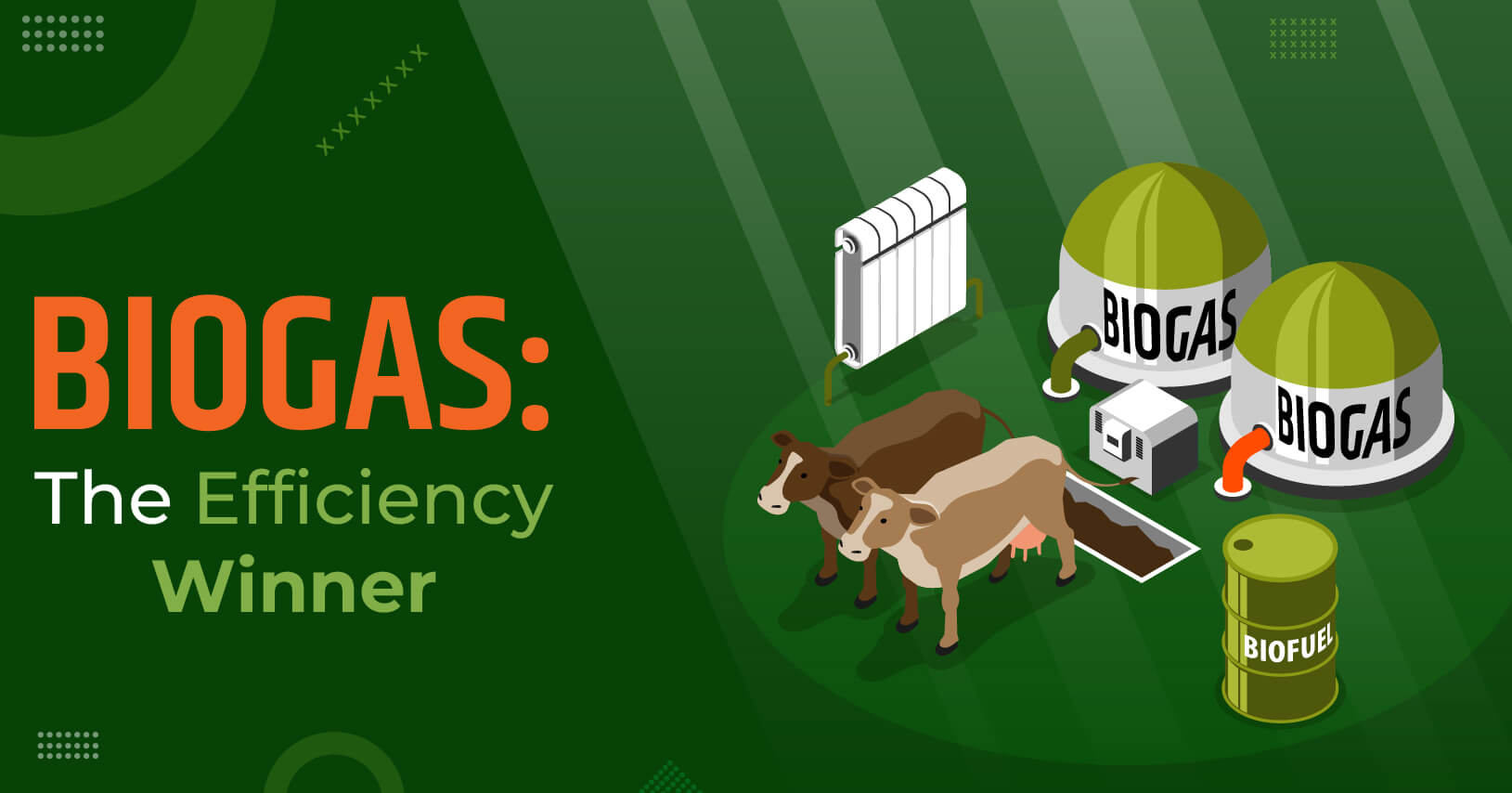
There are more sustainable energy sources, like solar, wind, hydro, and biogas are becoming popular, but each plays a different role. Among these, biogas stands out as it not only produces clean energy but also helps manage organic waste.
In this blog, we will compare Biogas vs Solar and Wind energy sources to find out which option offers better efficiency, affordability, and sustainability for homes, farms, and industries.
Renewable Energy Comparison: Biogas vs Solar and Wind Energy
Let’s understand how various sustainable energy sources compare, such as Biogas vs. Fossil Fuels, Solar Energy, and Wind Energy.
Biogas vs. Solar Energy | ||
|---|---|---|
| Factors | Biogas | Solar Energy |
| Sustainable Energy Sources | It produces energy from organic waste like food waste, crop residue, and animal dung through anaerobic digestion. | It generates energy by capturing sunlight using photovoltaic (PV) panels. |
| Reliable Energy | If feedstock is available, it can provide 24/7 hours of continuous energy. | It depends on sunlight. However, it can provide continuous energy if you install a hybrid solar power system. |
| Benefits | It converts organic waste into sustainable energy sources, reduces landfill use, and methane emissions. | It reduces dependency on fossil fuels, lowers maintenance costs after installation, and provides sustainable energy sources. |
| Disadvantages | Requires a regular organic waste supply & maintenance. | It does not generate energy at night or when cloudy days. |
| Perfect Option for | Rural areas, farms, and industries with access to organic waste. | Homes, businesses, and large solar farms. |
Biogas vs. Wind Energy | ||
|---|---|---|
| Factors | Biogas | Wind Energy |
| Sustainable Energy Sources | It produces sustainable energy from organic waste like crop residue, food scraps, and animal dung. | It produces energy through wind movement, using turbines. |
| Reliable Energy | It can provide continuous energy depending on the organic waste supply. | It totally depends on the wind flow. |
| Benefits | It converts organic waste into energy and fertilizer, reducing waste and methane emissions. | It is a sustainable energy source, providing clean energy without emitting carbon emissions. |
| Disadvantages | Requires a continuous organic waste supply and regular maintenance. | High installation costs depend on wind conditions and require a large area. |
| Perfect for | Rural areas, farms, and industries. | Open areas and high wind zones. |
Biogas vs Fossil Fuels | ||
|---|---|---|
| Factors | Biogas | Fossil Fuels |
| Energy Sources | It is a renewable energy source and generates energy from organic waste like food scraps, crop residue, and animal dung. | It produces energy from natural resources such as coal and crude oil. |
| Reliable Energy | Based on the organic waste supply. | High and reliable energy output, which is used globally. |
| Benefits | It converts organic waste like cow dung, etc, and produces clean and green energy. | It provides continuous energy and well-established infrastructure. |
| Disadvantages | Requires regular organic waste supply, produces limited energy in comparison to fossil fuels. | It generates energy by polluting the air and using non-renewable energy sources. |
| Environmental Impact | Lower impact on the environment. | Higher impact on the environment, it produces energy by emitting carbon emissions. |
| Perfect Option for | Rural areas and farms. | Transportation, large industries, etc. |
Comparing the Carbon Footprint of Renewable Energy Sources
Sustainable energy sources like wind, solar, and hydropower are much better for the environment compared to fossil fuels. But they also produce some emissions, mainly during their system setup and production stages. However, these emissions are much lower than those from fossil fuels.
Understanding the benefits and challenges of Biogas vs Solar and Wind Energy helps individuals and industries make informed decisions for a sustainable and reliable energy solution.
A proper Renewable energy comparison helps individuals to choose the best clean energy option based on efficiency, cost, and energy consumption.
Why does this setup produce carbon?
Production and construction: Setting up wind turbines, solar panels, and hydro plants requires materials like steel and silicon, which produce carbon.
Transport and installation: Moving the equipment and setting it up also causes some emissions due to machinery and vehicles.
Maintenance and dismantling: While daily operation is almost emission-free, small amounts of carbon are released during maintenance and when the system works slowly after its lifespan.
Carbon Footprint of Renewable Energy Sources | |
|---|---|
| Sustainable Energy Sources | Carbon Emissions per kWh (g CO2/kWh) |
| Hydropower | 1 – 30 |
| Solar Energy | 20 – 50 |
| Wind Power | 5 – 12 |
| Onshore Wind Power | 12 – 15 |
| Natural Gas Power Plant | 450 – 500 |
| Coal-Fired Power Plant | 820 – 1.050 |
Energy Storage & Distribution Challenges
Renewable energy sources like solar, wind, and biogas are eco-friendly, but when considering Biogas vs Solar and Wind Energy, storing and distributing this energy can be challenging:
- Sustainable energy sources depend on weather conditions; for example, solar energy depends on sunlight, and wind energy depends on wind. Storing the energy for later use can be challenging.
- A large battery setup is more expensive.
- Without proper electricity flow, sudden drops can affect the electricity quality.
- In a remote location, where there is no grid connection, the supply of energy becomes challenging.
Industries Adopting Biogas Over Other Renewables
Due to strict rules for carbon emissions, many industries are switching to renewable energy sources, such as Wind Power, Solar Energy, Biogas, etc. Biogas is a perfect option for industries because it manages waste and generates clean and green energy.
The government plays an important role in increasing the adoption of biogas across the country. The main goal of the Biogas Government Scheme is to promote awareness about clean, green, and sustainable energy solutions.
In recent months, several policies and initiatives have been introduced to encourage investment and boost growth in the biogas sector, which makes it accessible for industries, farmers, and communities.
Here are some common industries that use Biogas energy:
- Food processing units
- Breweries and distilleries
- Dairy and livestock farms
- Agricultural industries
- Municipal solid waste treatment facilities
Government Scheme for Various Renewable Energy Projects
The India Government supports several renewable energy projects through various schemes, including:
PM-KUSUM (Pradhan Mantri Kisan Urja Suraksha evam Utthaan Mahabhiyan)
This scheme focuses on supporting farmers to reduce their carbon footprints. Under the PM-KUSUM scheme, farmers can install solar pumps, set up grid-connected solar power plants, and convert existing pumps to run on solar energy.
PM Surya Ghar: Muft Bijli Yojana : Under this scheme, homeowners can benefit by taking government subsidies on rooftop solar panel installations. The subsidy depends on system size.
For example, if you live in Uttar Pradesh and install a 3kw solar system, you will get ₹78,000 from the Central Government and ₹30,000 from the State Government.
Other Initiatives
National Solar Mission: Promotes the use and growth of solar energy in India.
SATAT Scheme: The main objective is to set up plants for producing Compressed Bio-Gas (CBG) for cleaner transport fuel.
Biogas Programme: Supports the installation of small, family-sized biogas plants for cooking and energy needs.
PLI Scheme (Production Linked Incentive): Encourages companies to manufacture high-efficiency solar panels within India.
Carbon Credit Trading Scheme: Provides a system where companies can buy and sell carbon credits to reduce emissions.
Can Biogas Become a Mainstream Energy Source?
Yes, biogas has the potential to become a mainstream energy source, especially for specific sectors. It offers a clean, renewable way to produce energy by converting organic waste into useful fuel. Biogas vs Solar and Wind Energy each offer unique benefits that contribute to India’s growing renewable energy solution.
Biogas Advantages
There are more biogas advantages, such as:
- It makes renewable & sustainable energy without emitting carbon emissions.
- One of the key biogas advantages is its ability to convert organic waste into useful energy without emitting carbon emissions.
- Biogas reduces your reliance on fossil fuels.
- It generates more stable and affordable energy.
- You can use energy for cooking, heating or etc.
Final Thoughts
When comparing Biogas vs Solar and Wind Energy, it’s clear that each renewable source has its own advantages. Solar energy is a perfect option for homes and businesses, but it depends on sunlight availability.
Wind energy is clean and works well in windy areas, but it needs open areas or a large space. Biogas is different; it not only produces clean energy but also helps manage organic waste, like cow dung, food scraps, etc.
Biogas is a reliable option for farms, rural areas, and industries where organic waste is easily available. It provides continuous energy if you supply organic waste regularly.
A renewable energy sources efficiency comparison helps decide which clean energy resources, such as biogas, solar, or wind, are best for your location and energy needs.
The main conclusion is that no single source is perfect for everything. But Biogas, Solar, and Wind energy can work together to reduce pollution, save money, and move towards a clean, green future.
Frequently Asked Questions
What is Biogas?
Biogas is a renewable energy source made by breaking down organic waste without oxygen. It is called anaerobic digestion.
It mainly contains methane and carbon dioxide, with small amounts of other gases. Biogas can be produced from organic waste like food waste, crop waste, animal dung, and sewage.
The major difference between Biogas vs Solar and Wind Energy is reliability.
Choosing between Biogas vs Solar and Wind Energy depends on your energy consumption, resource availability, and sustainability priorities.
Biogas provides continuous energy by converting organic waste into fuel, while solar and wind depend on weather conditions.
Biogas is a good option for villages and farms, while solar and wind energy work best in places with strong sunlight or heavy wind.
Why is Renewable Energy Comparison important?
A proper renewable energy comparison helps people understand which energy source is most suitable for their location and energy needs, such as solar, wind, hydro, or biogas. It highlights the benefits, challenges, and efficiency of each option for smarter decisions.
Both Biogas vs Solar and Wind Energy play important roles in reducing carbon emissions and promoting sustainable energy practices.
How does Biogas vs Fossil Fuels impact the environment?
When comparing Biogas vs Fossil Fuels, biogas is a cleaner & renewable energy option. It turns organic waste into energy and reduces pollution, while fossil fuels cause carbon emissions and harm the environment. Biogas also supports waste management and renewable energy growth.
What are Sustainable Energy Sources, and why do they matter?
Sustainable Energy Sources like solar, wind, hydropower, and biogas provide clean energy without depleting natural resources.
They reduce pollution, fight climate change, and help create a long-term energy solution for homes, industries, and communities. A renewable energy efficiency comparison helps individuals understand which source provides the most reliable energy for their needs.
What are the key Biogas Advantages?
The main Biogas Advantages include converting waste into clean energy, reducing methane emissions, producing organic fertilizer, and providing reliable energy.
Biogas also helps reduce dependence on fossil fuels, which makes it the best renewable energy option.