

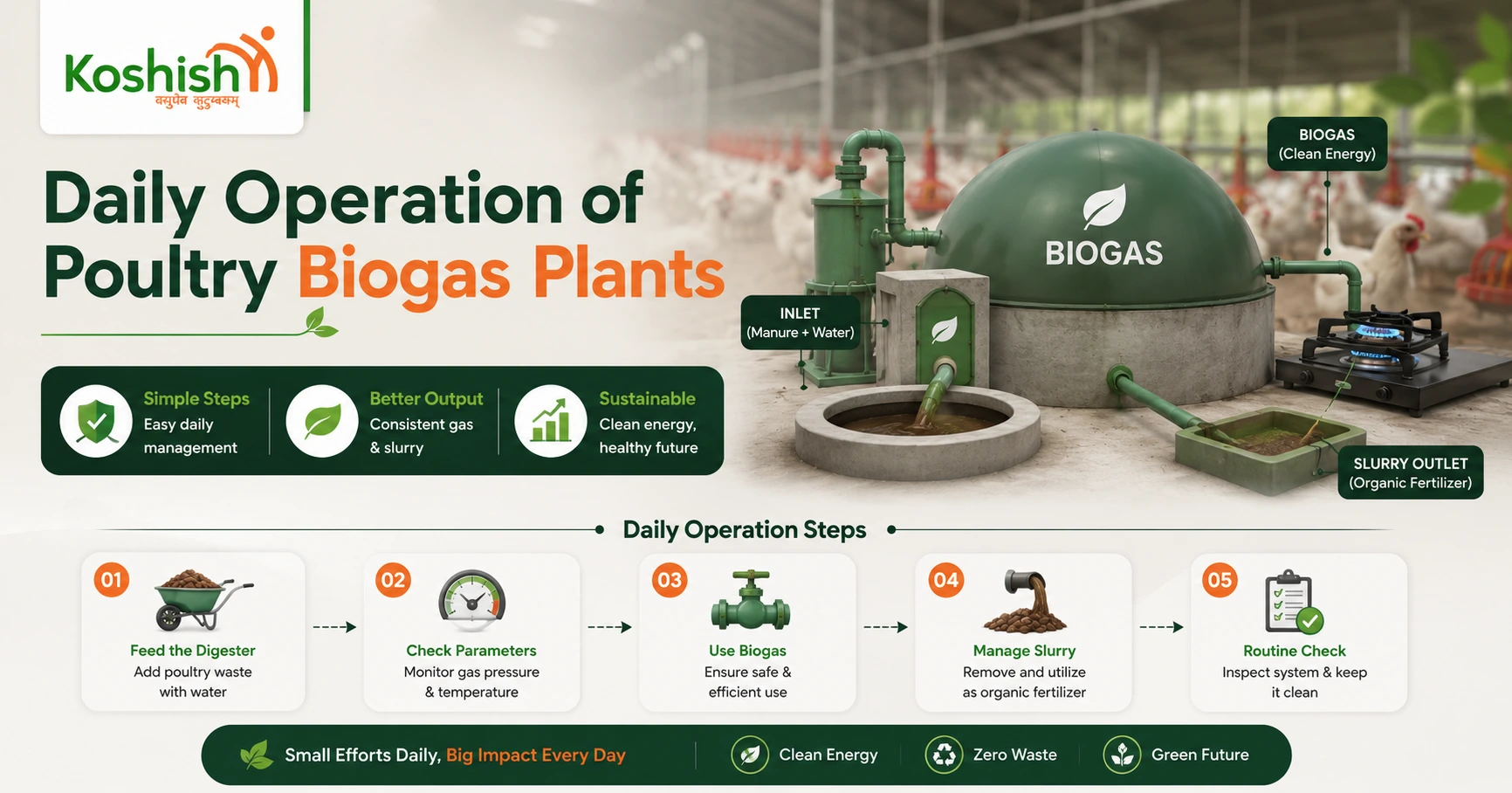
A poultry biogas plant is a simple and smart way of converting poultry waste into renewable energy and organic fertiliser. Proper daily operation ensures a good amount of gas production, stable digester performance, and long-term plant efficiency. The feedstock needs to be maintained, as well as gas output and management.
With rising energy costs and increasing focus on sustainable farming, poultry farms are adopting biogas systems to reduce waste disposal issues and generate clean energy. However, the success of a poultry biogas plant operation depends heavily on disciplined daily management practices.
Understanding Poultry Biogas Plant Operation
A poultry biogas plant uses poultry litter, manure, and organic waste to produce biogas through anaerobic digestion. Inside the digester, microorganisms break down organic matter in the absence of oxygen, producing methane-rich biogas. The daily operation of poultry biogas plants involves:- Feeding the digester with the right amount of waste
- Monitoring digestion parameters
- Managing gas production
- Removing slurry regularly
- Maintaining equipment and pipelines
Feeding Biogas Plant Poultry Waste Correctly
One of the most important aspects of feeding biogas plant poultry waste is maintaining consistency. Poultry waste contains high nitrogen levels, so sudden overfeeding can disturb the microbial balance inside the digester. Recommended Feeding Schedule A proper feeding schedule ensures stable biogas production:- Feed the plant at the same time daily
- Use measured quantities of poultry litter
- Mix waste with water before feeding
- Avoid feeding large amounts at once
- Maintain a balanced solid concentration
- Remove stones, plastics, or non-biodegradable materials
- Maintain proper moisture content
- Use fresh poultry waste whenever possible
- Blend with other organic waste if needed for better carbon-nitrogen balance
Monitoring Parameters for Stable Digestion
Monitoring parameters is essential for maintaining a healthy digester environment. Small changes inside the reactor can significantly impact gas production. Important Parameters to Monitor1. Temperature
Biogas digesters work best within a stable temperature range. Sudden fluctuations can slow microbial activity.- Mesophilic range: 30°C–40°C
- Maintain stable internal conditions
2. pH Level
The ideal pH range is generally between 6.8 and 7.5. Low pH may indicate acid accumulation, while high pH can affect bacterial growth.3. Gas Production
Daily gas output management helps detect operational issues early. Monitor:- Daily gas volume
- Methane quality
- Pressure fluctuations
4. Slurry Consistency
Check the slurry texture and flow regularly. Thick slurry can block pipelines and reduce efficiency. Consistent monitoring improves plant stability and prevents breakdowns.Slurry Removal and Handling
Slurry removal is another critical part of the poultry biogas plant operation. The digested slurry leaving the plant contains valuable nutrients and can be used as organic fertilizer.Best Practices for Slurry Removal
- Remove slurry regularly to avoid overflow
- Prevent accumulation near outlet pipes
- Store slurry in covered tanks or pits
- Use slurry in agricultural fields after proper handling
Gas Output Management
Efficient gas output management ensures optimal utilization of produced biogas. Daily Gas Management Practices- Inspect gas pipelines for leakage
- Check pressure gauges daily
- Clean moisture traps regularly
- Monitor burner or generator performance
- Ensure proper gas storage conditions
Both cooking gas and power generation from Commercial Biogas Plant
A poultry farm with 100,000 birds can easily get a 100 cum biogas plant installed on their poultry farm. And the biogas plant generates ample biogas from which electricity and cooking gas are produced. For example, a single bird produces 120 g of poultry litter per day. Suppose a poultry farm is generating 100 kg of poultry litter per day; then the power generation in a day would be 360 units. Calculation: 100 m³ × 1.5 kWh = 150 kWh 150 ÷ 10 hours = 15 units per hour 15 × 24 = 360 units per day In addition, the commercial biogas plant generates cooking gas as well; then it might be producing 40 kg of cooking biogas every day. Cooking Gas Calculation: 100 m³ × 0.4 kg = 40 kg cooking biogas per day (equivalent to LPG gas)Benefits of Proper Daily Operation
If the poultry farm has well-managed poultry biogas plants, then there are several benefits:- Stable renewable energy production
- Lower waste management costs
- Reduced odour and pollution
- Organic fertiliser generation
- Improved sustainability for poultry farms
Wrapping Up
The success of a poultry biogas plant operation depends on disciplined daily management. Proper feeding schedules, regular monitoring parameters, efficient slurry removal, and careful gas output management help maintain stable biogas production and improve plant performance. By following a proper digester operation guide and maintaining consistent plant maintenance poultry practices, poultry farm owners can maximize energy generation while reducing waste disposal problems. Daily operational efficiency not only enhances profitability but also contributes to sustainable and eco-friendly farming practices.Frequently Asked Questions (FAQ)
What is the ideal feeding schedule for a poultry biogas plant?
A poultry biogas plant should be fed daily at fixed intervals with measured quantities of poultry waste mixed with water for stable digestion.
Why is monitoring parameters important in biogas plants?
Monitoring temperature, pH, slurry consistency, and gas production helps maintain digester stability and prevents operational failures.
How often should slurry removal be done?
Slurry removal should be performed regularly to avoid overflow and maintain proper digester capacity and efficiency.
What are the common maintenance tasks in poultry biogas plants?
Routine maintenance includes checking pipelines, pumps, gas storage systems, valves, mixers, and cleaning filters regularly.
How can gas output management improve efficiency?
Proper gas output management reduces leakage, maintains pressure stability, and ensures efficient utilization of produced biogas.