

What Is Poultry Litter?
Poultry litter includes chicken dung, bedding materials, spilt feed, feathers, and water. The fundamental components of poultry litter include organic material, nitrogen, carbon, and nutrients. Because it has a lot of organic sources, poultry litter is perfect for anaerobic digestion poultry waste systems. Like domestic biogas plants turn kitchen waste into energy, poultry litter can be produce renewable energy and organic fertilizer for farms.How Does the Step-by-Step Poultry Biogas Process Work?
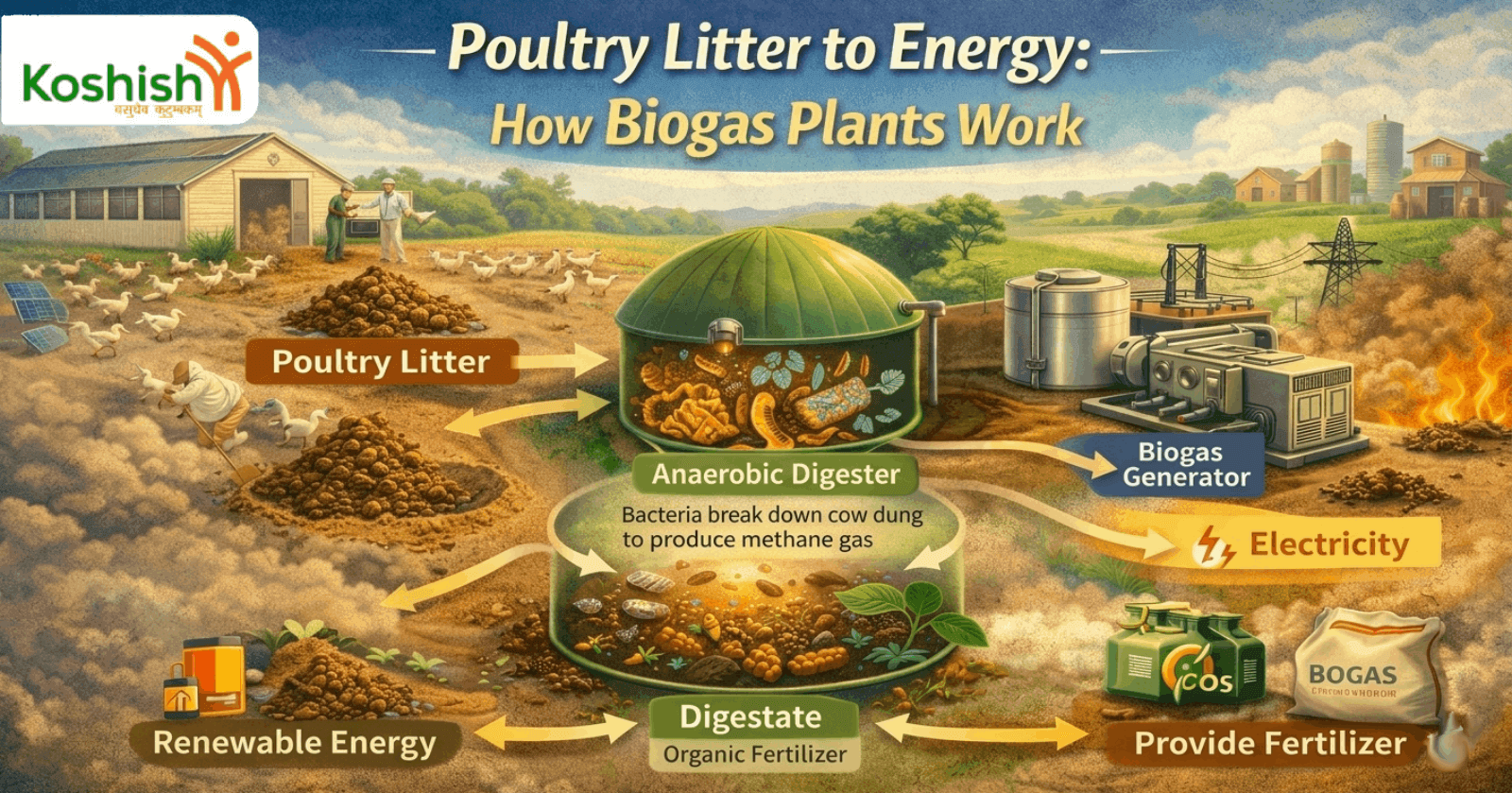
The Poultry Biogas process works in different steps, such as: Collection & Pre-treatment: Poultry litter is collected daily from poultry farms and storage areas. Then screened to remove any harmful bacteria such as stones, plastic, and feathers. Water or organic waste is added to the litter to keep it easy to digest. Feeding into Digester: The prepared slurry is carefully fed into an airtight biogas digester by pumps. Controlled feeding helps with stable digestion, avoids system shock, and keeps gas output consistent throughout the day. Anaerobic Digestion: In the absence of oxygen, microbes that occur naturally in the sealed digester breakdown the organic materials. This biological process generates biogas, which consists mainly of methane and carbon dioxide, while minimising bacteria, odours, and toxic substances found in poultry manure. Gas Collection: The biogas produced is collected at the top of the digester and stored in a gas container or storage balloon. This stored gas is subsequently used for electricity generation, heating, cooking and other on-farm energy needs. Bio-slurry Output: The digester discharges leftover digestate, also known as bio-slurry. This high in nutrients organic fertiliser improves soil health, increases crop output, and lowers the need for chemical fertilisers. The full anaerobic digestion poultry waste system offers safe waste treatment, dependable energy recovery, nutrient recycling, and environmentally friendly farm operations.Poultry Litter Composition and Its Role in Biogas Production
Understanding poultry litter composition is important for optimal biogas production. Poultry litter is high in nitrogen and organic carbon, promoting microbial activity in the digester. However, its high levels of nitrogen can produce ammonia, which may prevent digestion. As a result, sufficient dissolution and feedstock balancing are required for the effective running of poultry litter-to-energy systems.Digestion Challenges in Poultry Waste Biogas Plants
While biogas generation from poultry litter is very useful, some common digestion challenges need proper management: High Ammonia Levels: Poultry manure has high nitrogen content, which can create excess ammonia inside the digester. Too much ammonia can slow down the digestion process and reduce gas production. Proper mixing and dilution help control this problem. Low Moisture Content: Poultry litter is usually dry, which makes digestion difficult. Adding water or liquid organic waste helps maintain the right moisture level for smooth digestion and better biogas generation. Inconsistent Litter Quality: The quality of poultry litter can change depending on feed, bedding material, and farm practices. This can affect gas production. Regular monitoring and controlled feeding help maintain stable performance. Risk of Digester Imbalance: Sudden changes in feeding rate, temperature, or pH can disturb the digestion process. Proper system design and routine monitoring help keep the biogas plant running smoothly.Environmental Benefits of Poultry Litter to Energy Systems
Biogas plants for poultry waste offer many environmental benefits that make poultry farming cleaner and more sustainable: Reduced Greenhouse Gas Emissions: Biogas plants use methane from poultry waste and use it for generating energy. This helps reduce harmful gas emissions and supports a cleaner environment. Odor Control: The digestion process breaks down bad-smelling compounds in poultry litter. It reduces foul odours around farms and improves air quality for workers and nearby areas. Lower Water Pollution: Treating poultry waste in biogas plants prevents dirty water from flowing into soil and water sources. This helps protect groundwater, rivers, and nearby farmland from pollution. Safe Waste Disposal: Biogas systems safely treat poultry litter and reduce harmful bacteria and germs. This reduces health risks and keeps farms cleaner and safer. Production of Organic Fertilizer: The leftover bio-slurry is rich in nutrients and works as natural fertilizer. It improves soil quality, supports better crop growth, and reduces the need for chemical fertilizers.Wrapping Up
Converting chicken litter into energy is a cost-effective and environmentally friendly solution for modern poultry farms. Biogas plants help farms manage waste more efficiently while generating clean, renewable electricity. A complete understanding of chicken litter composition, strict control of digestion issues, and well-designed biogas systems all contribute to a high poultry biogas yield and consistent energy production.Frequently Asked Questions
How can poultry litter to energy benefit my farm?
Converting poultry litter to energy improves waste management, cuts energy costs, and produces nutrient-rich fertilizer. It also promotes agricultural hygiene and long-term operational efficiency.
Why is the poultry biogas process important for farms?
Converting poultry litter to energy improves waste management, cuts energy costs, and produces nutrient-rich fertilizer. It also promotes agricultural hygiene and long-term operational efficiency.
How does anaerobic digestion poultry waste help farms?
Converting poultry litter to energy improves waste management, cuts energy costs, and produces nutrient-rich fertilizer. It also promotes agricultural hygiene and long-term operational efficiency.
What is poultry biogas yield?
Poultry biogas yield is the total amount of biogas produced from poultry litter in a biogas plant. The yield is determined by elements such as litter quality, digester temperature, and retention duration, all of which have an impact on energy production efficiency.