
The poultry industry in India is growing fast because people eat more eggs and chicken. However, this growth also creates a big problem. Poultry farms produce a large amount of waste every day.
As a result, farmers must manage this waste carefully. Otherwise, it can harm the environment and human health. To solve this problem, the Central Pollution Control Board under the Ministry of Environment, Forest and Climate Change has made strict waste rules. These rules support safe waste handling and promote such things as commercial biogas plants and Bio-CNG plants for poultry farmers.
 Therefore, poultry farmers can reduce pollution, save money, and protect nature. In this blog, you will learn simple rules, problems, and solutions for poultry farm pollution control in India.
Therefore, poultry farmers can reduce pollution, save money, and protect nature. In this blog, you will learn simple rules, problems, and solutions for poultry farm pollution control in India.
Why Poultry Farm Pollution Control is Important
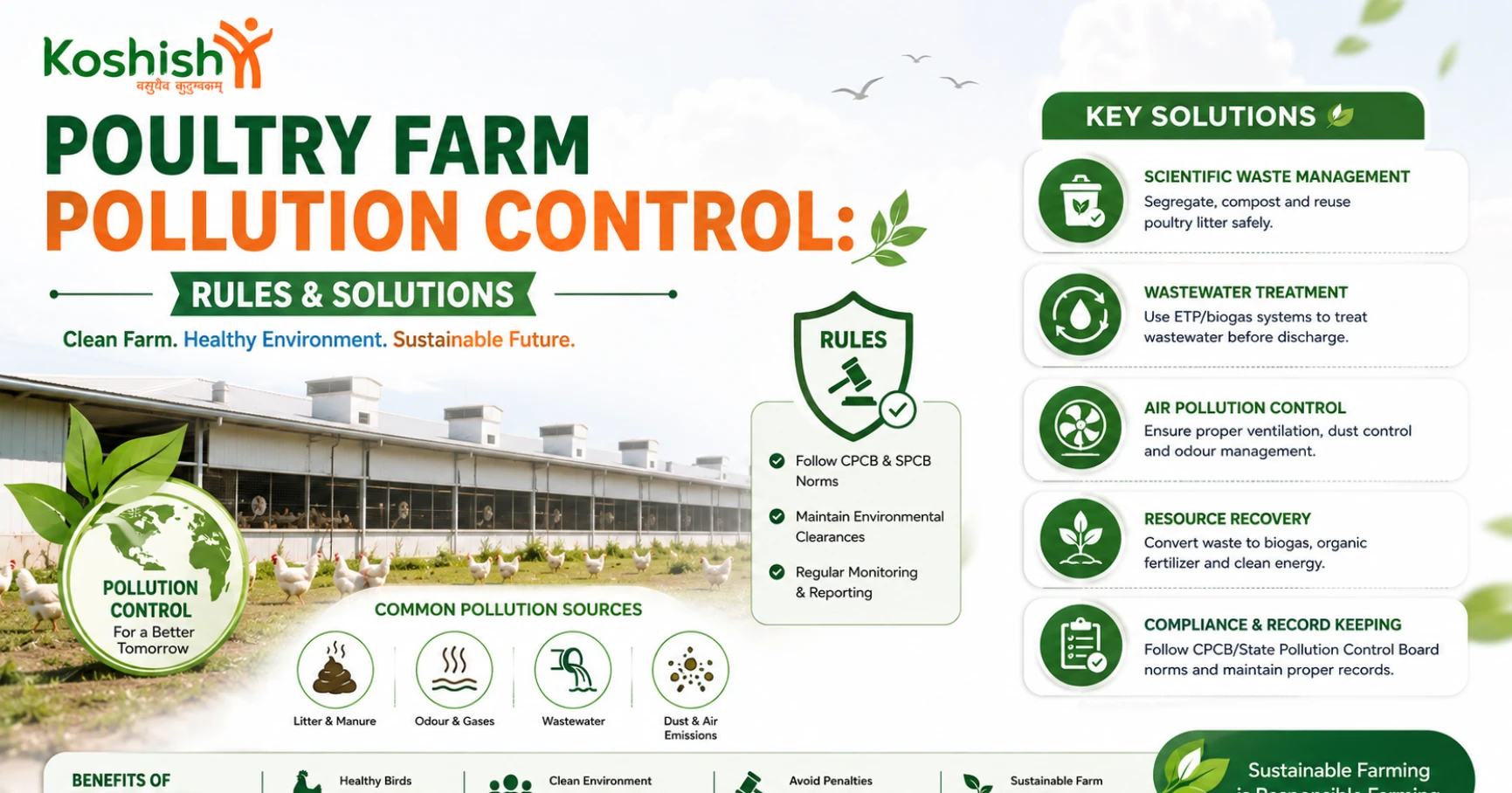
Poultry farms produce a large amount of litter every day. If farmers do not manage it on time, problems start quickly. First, waste releases bad gases like methane, ammonia, and carbon dioxide. These gases pollute the air. Also, they create strong bad smells. Second, waste can mix with water during rain. As a result, it pollutes ponds and rivers. Soil also becomes dirty and less useful for farming. In addition, dirty farms can spread diseases among birds and workers. Therefore, clean waste management is very important for health and safety. So, poultry farm pollution control protects air, water, soil, and people.Environmental Rules for Poultry Farms in India
The CPCB environmental rules help farmers control pollution in a simple way. First, farmers must store poultry waste safely. They should not throw it in open areas. Otherwise, it will pollute land and air. Second, farmers should treat waste using biogas systems. As a result, they can turn waste into clean energy. In addition, farmers must manage wastewater properly. This step helps reduce water pollution. Also, farms must control bad smells and flies. Therefore, the farm stays clean and safe. So, these rules help farmers protect the environment and follow the law.Pollution Rules Poultry Farm Owners Must Follow
Farm owners must follow simple steps to reduce pollution:- First, remove poultry litter every day. This reduces smell and gas.
- Second, use biogas plants to treat waste safely.
- Also, never dump waste in open fields.
- In addition, build proper drainage systems to stop water pollution.
- Finally, keep records and allow inspections.