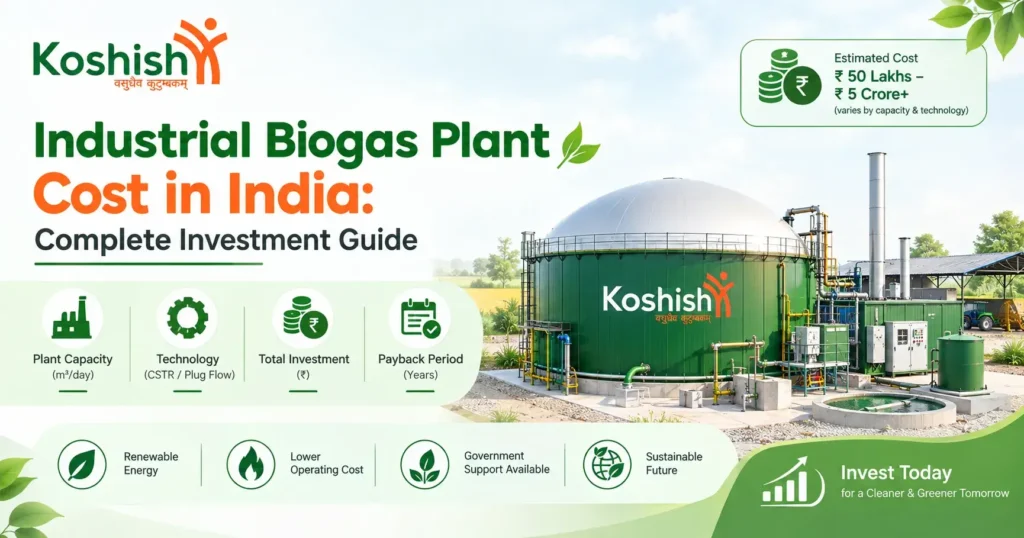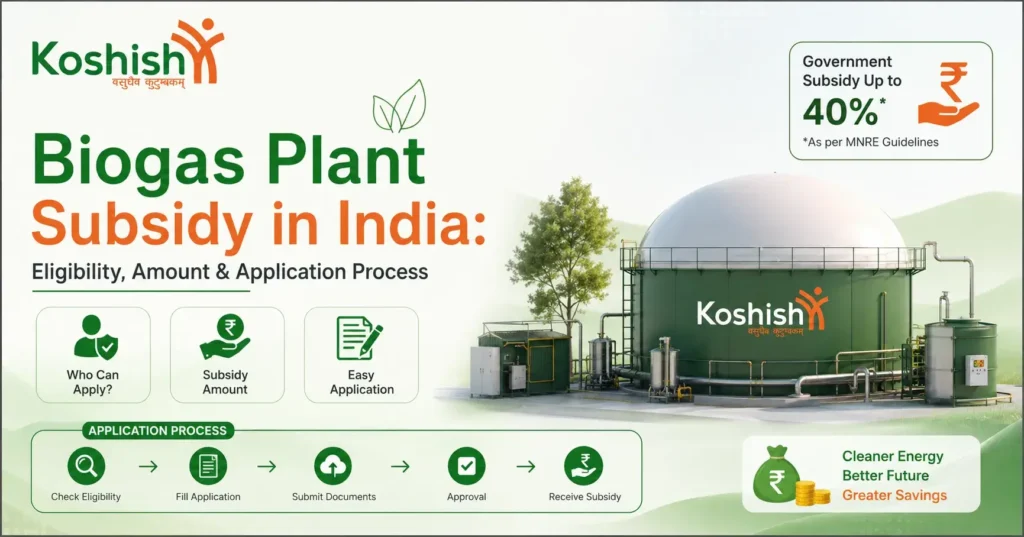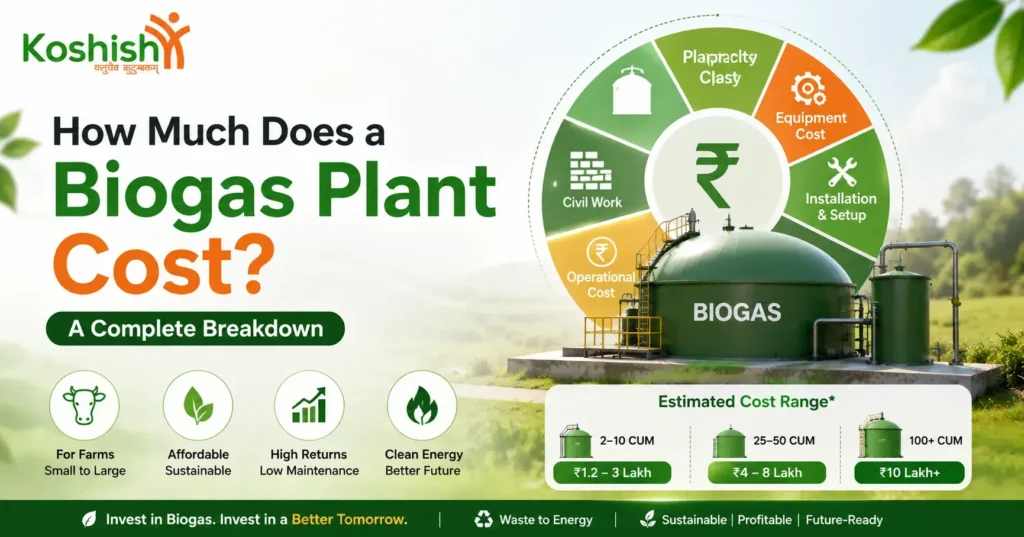

Biogas for industrial clusters is becoming important because many industries face the same challenges, such as too much waste, costly fuel, and strict pollution rules. Mostly factories may not manage waste or set up energy systems on their own.
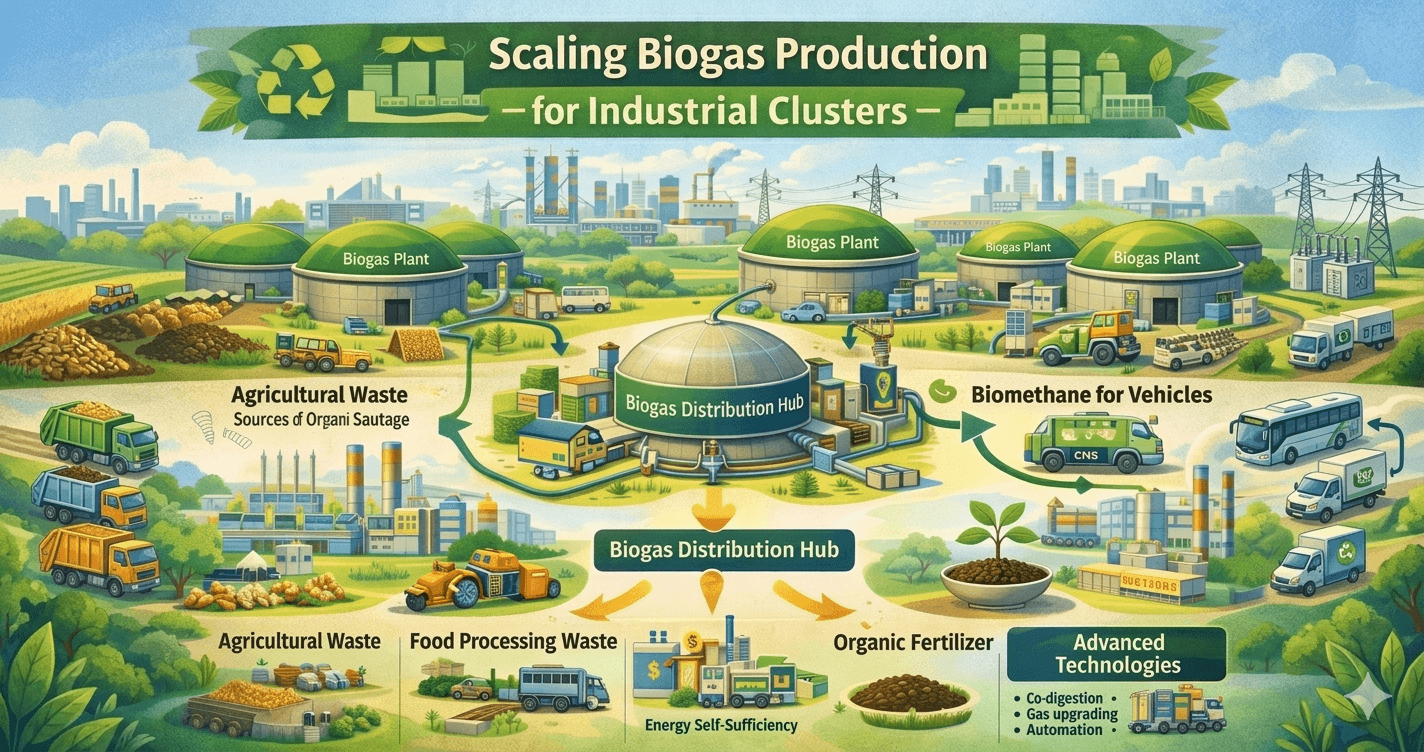
Scaling biogas production for industrial clusters provides a shared biogas plants solution where many industries together convert waste into clean energy. This makes cluster waste management easier and helps businesses save money while using renewable power.
What Are Shared Biogas Plants?
The shared biogas plants are common plant where many users use at the same time. They use anaerobic digestion, a natural process in which bacteria break down organic waste without the need for oxygen. This produces clean fuel for energy and a nutrient rich byproduct that can be used as fertilizer. These plants are able to manage waste easily while generating renewable energy.
Why Choose Biogas for Industrial Clusters?
Biogas is the most effective solutions for industries that generate large amounts of organic waste daily. In industrial clusters, many businesses face same challenges like related to cluster waste management, increasing fuel costs, and sustainability norms. Biogas provides a single solution to all these challenges.
There are many reasons for choosing a biogas for industrial clusters such as, managing waste effectively, generating clean energy, and saving energy costs.
- It helps to manage waste easily by converting cluster waste into a useful resource instead of sending it to landfills.
- By providing cheaper clean energy than diesel, LPG, or natural gas, it helps you to reduce your fuel costs.
- With shared biogas plants, it helps small and medium industries which reduces expenses in day to day activities.
- It helps you to reduce pollution and meet environmental norms.
- Biogas for industrial clusters makes a clean & green industrial environment with handling waste efficiently and reduces dependency on external waste disposal services.
Economic Benefits for Industrial Clusters
Shared biogas plants provide financial advantages for every business operating within an industrial cluster.
By working together and using one central biogas plant, industries can manage waste at a lower cost and get clean & affordable energy.
Here are some benefits of industrial clusters.
Lower Waste Disposal Costs : A shared biogas plant reduces the need for costly waste management processes. Instead of paying for transport to send waste to disposal sites, industries can send their organic waste to a nearby centralized unit. It helps industries to reduce their waste management cost.
Reduce Electricity Costs: Biogas provide a cheaper and more stable fuel option as compared to diesel, natural gas, and LPG. Industries can use this clean energy for several uses such as heating, boilers, managing daily operations, or generating electricity.
Shared Expenses and Lower Costs: Instead of each company investing for its own waste treatment or energy system, a shared biogas plant allows multiple industries to split the biogas plant cost.
This makes it easier and affordable for small and medium businesses to join and ensures better plant management at a lower expense.
Better Return on Investment: When many industries share waste and resources, the biogas plant works better and produces more energy. This helps it pay for itself faster and gives a reliable return, making biogas a smart long-term choice for the cluster.
Successful Biogas Cluster Models in India
India has many industrial clusters that have successfully set up shared biogas and CBG plants. These examples show how different industries can work together to turn waste into clean energy, lower fuel expenses, and reduce overall operating costs.
Surat, Gujarat – Textile and Food Industry Cluster : As we know that Surat is known for its large textile and food processing units. Many of these industries generate large amount of organic waste daily. The cluster sends daily waste to a shared CBG plant, where it is converted into compressed biogas that is perfect for heating, transportation and other uses. This setup has helped industries reduce waste disposal problems and lower fuel expenses.
Pune and Nashik – Agro Processing Clusters: Pune and Nashik are both strong agro-based industries, which include fruit processing, vegetable units and dairy plants. These industries supply their organic waste to shared biogas plants, which produce biogas and biofertilizer.
These industries use clean energy for multiple uses such as for boilers, industrial processing, and electricity generation, while the digestate is sold to farmers.
Pune and Nashik – Agro Processing Clusters: Ludhiana has one of India largest dairy clusters, which produces daily large volumes of cattle waste. The cluster uses biogas plants to convert dung and slurry into clean fuel. The biogas is used for heating water, running boilers, and powering small machinery.
Why Koshish India Is the Trusted Partner for Your Biogas Project?
Koshish India is a trusted partner for biogas projects because we deliver reliable, efficient, and cost effective solutions for all types of industries and cluster systems. With more than ten years of experience in sustainable energy projects, we take care of everything from planning and designing the right system to installation, operation support, and long term maintenance.
Our team ensures that every project runs smoothly, performs well, and gives industries a strong return on investment. We focus on quality work, transparent communication, and results that help businesses reduce waste, lower energy costs, and move towards clean energy.
Frequently Asked Questions
What is biogas for industrial clusters?
Biogas for industrial clusters is a system where multiple industries in the same area convert their organic waste into clean energy. This process helps reduce waste, lower fuel expenses, and support cleaner, more sustainable operations for the entire cluster.
How do shared biogas plants work?
Shared biogas plants collect organic waste from different industries and process it through anaerobic digestion to produce biogas and biofertilizer. Since many users share the same plant, the cost of waste treatment and energy production becomes much lower.
What are industrial renewable energy hubs?
Industrial renewable energy hubs are shared facilities where multiple industries produce and use clean energy such as biogas, solar, or biomass from a common system.
What are industrial renewable energy hubs?
Industrial renewable energy hubs are shared facilities where multiple industries produce and use clean energy such as biogas, solar, or biomass from a common system.